Showing posts with label Adventure Travel. Show all posts
Video: Adventure Is Calling
This past summer, three friends quit their job and hit the road with one another on a two-month long adventure across the U.S. during which they visited some amazing outdoor places, taught photography workshops and caught up with friends old and new. Along the way they also managed to take some amazing photos and stitched together a fantastic timelapse video of their journey. You'll find that breathtaking piece of work below. Perhaps it'll inspire you to heed the call of adventure too.
Adventure Is Calling from Shane Black on Vimeo.
Video: Escape To Beautiful Australia
Want to take a little virtual getaway? Then check out this great video that was shot entirely in Australia. It does a wonderful job of capturing some of the more brilliant highlights of the country that is a fantastic playground for outdoor enthusiasts. There is some great camera work done here and the shots are wonderful. If you haven't been "Down Under" just yet, this will probably make you want to go.
Video: Trekking Mustang Valley In Nepal
Nepal's Mustang Valley is a sacred, hidden place that remains restricted to travelers even today. There is some limited access, with the right permits and guides, but it is far from the well-tread paths of the Khumbu Valley or the Annapurna Circuit. The video below takes us into Mustang, giving us a spectacular glimpse of what it is like there. The valley is a spiritual and cultural place with the dramatic backdrop of the Himalayan Mountains along the horizon. It looks like an amazing destination and I'd love to see it for myself one day.
MUSTANG TREK from Yannick Calonge on Vimeo.
Video: Hit The Road In India On The Mumbai Xpress
The Mumbai Xpress is a 1900 km (1180 mile) race across India that takes place over 13 stages between the cities of Mumbai and Chennai. The catch is, the race is run in tiny little rickshaw vehicles that don't seem built for such a long distance. Recently, two friends - Ric Gazarian and Keith King - competed in the race and have now released a travel documentary of their experience entitled Hit The Road: India. The movie is available on iTunes, Amazon Instant Video and various other digital distribution sources and follows Ric and Keith on this grand odyssey across India. Judging from the trailer below, it looks like it was quite the adventure.
Hit The Road: India - Trailer from Manana Films on Vimeo.
Gear Closet: 180 Watt Cup Inverter

Designed to fit in the cup holder of just about any vehicle, this power inverter comes equipped with four USB ports and a standard AC outlet. When plugged into the DC port (cigarette lighter) of a car it can provide enough juice to power up smartphones, GPS devices, cameras – even a laptop – all at the same time. A small, almost completely silent, fan keeps the interior from overheating so that it can continue pumping out the power indefinitely, making this an essential piece of gear on any driving excursion.
As the name implies, this inverter is capable of cranking out 180 watts of continuous power. That's enough to provide each of the USB ports with up to 2.1 amps, which is sufficient juice to charge a tablet including the notoriously power hungry iPad. All of that energy is shared across all four USB ports however, so if you plug several power-hungry devices in at the same time, they won't quite charge as rapidly as they should. Still, the inverter is efficient enough to keep multiple devices up and running for when you need them.
Energizer has built a very solid and dependable device that looks good for a device that is essentially a portable power strip for mobile devices. The clever shape allows it to slip into nearly any cup holder, which is the perfect place for a device like this one. It put it within easy reach of just about anyone in the vehicle but it also keeps it well out of the way of the driver, keeping it from becoming a distraction.
This is a simple product that works exactly as advertised, which is what you want of course. If you make frequent road trips and need to keep your gadgets charged while you're on the go, this is the perfect device to have in your vehicle. It's MSRP of $44.99 is a great price for something that can charge all your mobile devices and a laptop too. This is the kind of device that will change the way you travel and pay for itself many times over. Buy one, keep it in your car and never be without power again.
Gear Closet: Energizer Ultimate Headlamp
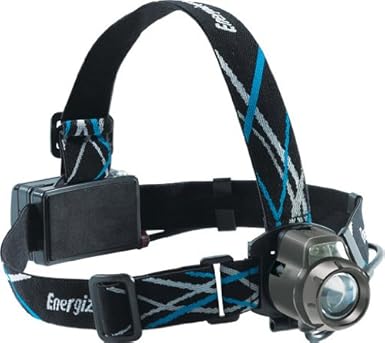
Outdoor enthusiasts will be especially interested in the Energizer Ultimate headlamp. This light was built with extreme adventure in mind and was designed for use in harsh conditions. It's case is built out of an aluminum alloy that is rugged enough to stand up any abuse you dish out while continuing to provide plenty of light. It features a single lamp that is capable of putting out a constant beam of 100 lumens which comes in handy when flying down a dark trail on a mountain bike but is probably brighter than most people will need. But just in case you do need a little extra light, a "boost" button on the side of the housing will temporarily amp it up to 130 lumens, at the expense of battery life of course.
Other modes include low and medium settings which give off 25 and 50 lumens respectively. There is also a flashing strobe mode to signal in an emergency and a night vision option that emits a red light that is easier on the eyes when in a dark space. Battery life varies depending on the level of brightness of course. On the highest setting the batteries will last 10 hours but drop the brightness down to low and that time increases to an impressive 40+. The fact that the Ultimate headlamp uses three replaceable AA batteries (Energizers preferred of course!) means that it is easy to swap out a fresh set when needed.
Other nice touches include a comfortable strap, a pivoting head that allows you to change the direction of the light and a focus ring that allows you tighten up the beam for greater distance. There is also a blinking green light on the back of the battery pack that make it a breeze to find the headlamp in the dark or when it's found its way the bottom of your pack. That can certainly come in handy when you're fumbling around in a tent during the wee hours of the morning.
Energizer had built the Ultimate headlamp to resist the elements and as such it is designed to be weatherproof. While it isn't exactly meant to be immersed in water, it can survive a sudden rainstorm without missing a beat. Better yet, this light is rated for use in extreme temperatures as well. Energizer says that it will operate in a range from -40ºF (-40ºC) to 140ºF (60ºC). That means you can take this light into some pretty remote places and expect it to continue burning bright.
All of these features added up to a great headlamp that is surprisingly versatile and efficient. But what kicks the Energizer Ultimate headlamp into a category all its own is the price. The light carries an MSRP of $44.99, which is a bargain for a piece of gear that performs as well as this one. Even better, you can find the Ultimate at discounted prices online making it an even better bargain. For instance, Amazon has it for just $34.01, which makes it nearly impossible to pass up.
This headlamp is an excellent choice for anyone who needs a quality light. But mountaineers, backpackers, winter campers and other outdoor athletes will really appreciate everything it brings to the table. If you need an affordable headlamp that happens to also be very durable for your next adventure, then look no further. This is the one for you.
Gear Closet: Warm Weather Clothing From Carhartt

Carhartt isn't an apparel brand that quickly comes to mind when you're looking for clothing for outdoor adventures. After all, the company has built itself a reputation for creating comfortable and durable clothing for use in work environments such as construction sites, shipyards and farms. But now Carhartt is applying what it has learned in the work place to make clothes we can sea when we head out to play too and judging from what I saw from them at Outdoor Retailer, I'd say they have some great things in store for us. But until that new gear arrives, here are a couple of products you can buy now to get you through the remainder of the summer.
Men's Rugged Cargo Shorts ($36)
I have to admit, when I first took Carhartt's Rugged cargo shorts out of the box they were shipped to me in, I was a little concerned. The seemed heavier than most of the other pairs of shorts that I typically wear and I was afraid they wouldn't be comfortable in very hot weather. After all, no on likes thick, dense fabrics that don't breathe well in the heat. Turns out I had nothing to worry about however, because these shorts are made out of 100% cotton that is soft and comfortable, while still performing very well in the heat.
For a company that is known for offering clothes that are ultra-durable, it says something that they gave these short the name "Rugged." The fabrics used in their construction are practically bullet proof, shrugging off wear and tear easily and holding their good looks even when they're been put through a gauntlet of abuse. Like their work clothes, these shorts can take punishment and keep coming back for more, all the while keeping the wearer comfortable with their relaxed fit design.
These shorts have a generous amount of pocket space. Not only are there four in the usual spots (two on the front and two on the back) there are also two massive cargo pockets on each of the legs. They are large enough to carry all kinds of small items including a digital camera, GPS device, a headlamp or just about any other small gadget you may want to bring with you when you head out. There is even a pocket specifically built for carrying a smartphone, which is a nice touch for a pair of shorts designed more for leisure than work.
I was incredibly pleased with how the Rugged cargo shorts felt when I put them on and even more impressed after spending a day running errands and going on a short hike with them as well. They performed as well as any of the other shorts in my wardrobe and did so without compromising quality and durability. With a price tag of just $36, I feel these shorts are an incredible bargain as they are built to last a long time and good looking enough to wear to any casual occasion. Summer isn't over just yet and now might be a good time to add the Rugged cargo shorts to your closet too.
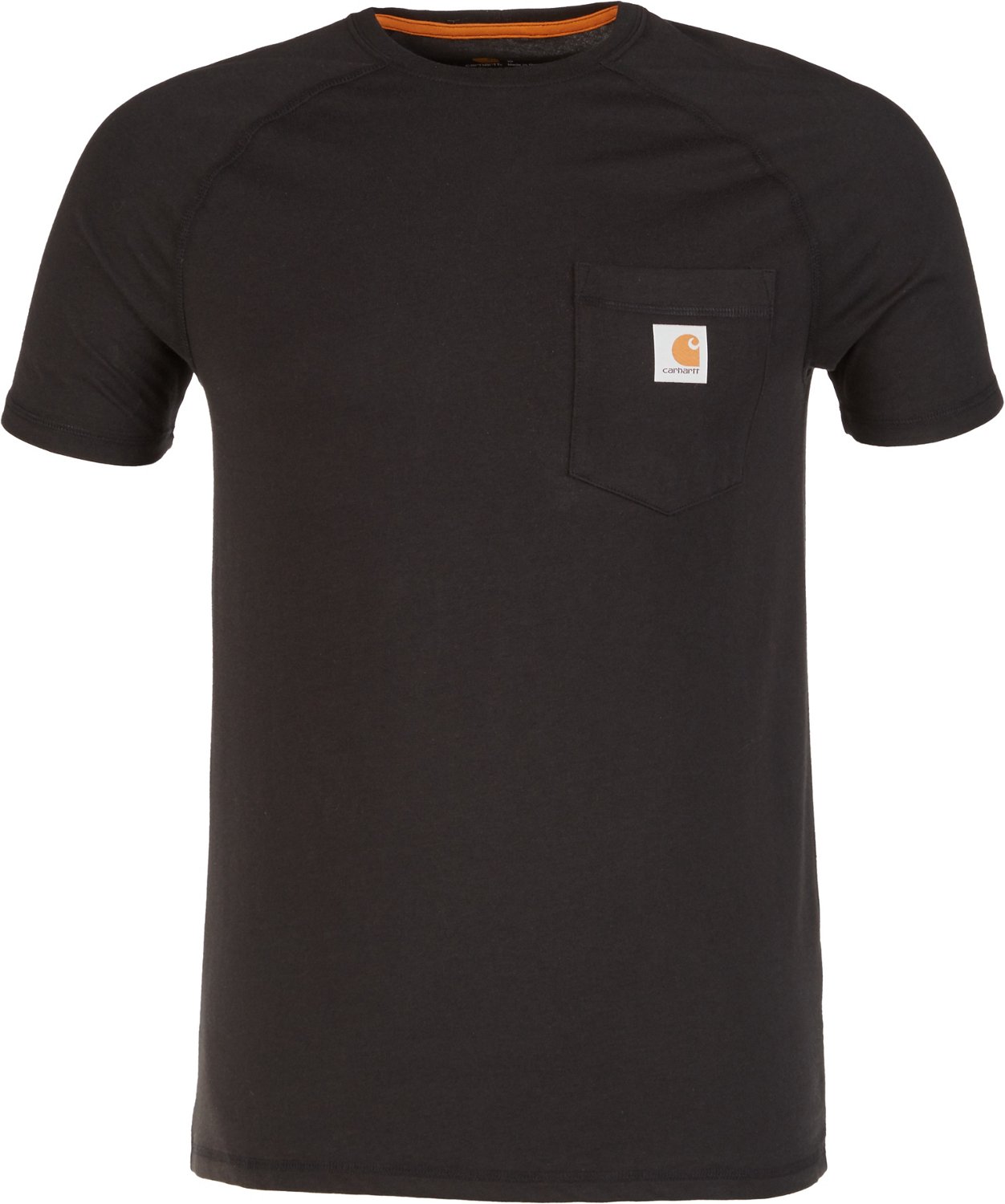
A good pair of shorts is only half the equation when it comes to staying cool and dry in the hot weather. A good shirt plays an even more important role, wicking moisture away from the body and helping the wearer stay as comfortable as possible even as the mercury climbs higher. Carhartt's Force t-shirt is the perfect compliment for the Rugged cargo shorts in that regard as it's cotton/polyester blend is perfect for pulling sweat away from the body and allowing it to quickly evaporate. The result is a more comfortable day out in the sun.
The Force t-shirt not only looks good but incorporates fabrics designed to resist stains that help to keep it that way. Like everything else in the Carhartt line-up, it is durable and built to last. This is anything but a cheap t-shirt that will wear out after you've owned it for a few months. Instead, it is a piece of clothing that is designed to last. And unlike the cargo shorts, you'll want to continue wearing the Force even when the weather starts to get cooler.
Carhartt's understanding of their customer needs shows through in the small touches. For instance, the shirt has a tagless neck collar to prevent chafing and a breast pocket comes in handy for keeping small items close at hand. The design also incorporates Raglan sleeves that don't hinder the range of motion while the relaxed fit of the shirt doesn't bind or restrict movement in any way. In other words, it is great shirt for any time of the year, it just happens to well suited for the summer months too.
The Force t-shirt and Rugged cargo shorts are Carhartt quality brought to the casual market. They look good, are durable and comfortable. Everything you could ask for in warm weather clothing and at affordable prices.
Tales From Down Under: Trekking The Larapinta Trail

Located in Australia's "Red Center," access to the Larapinta Trail is gained via Alice Springs, a small city that serves as the gateway to the Outback in the Northern Territory. Although the region has been home to the Arrernte tribe of Aboriginals for centuries, Alice Springs grew to prominence in the 1870's when it became an important repeater station for the Overland Telegraph Line, which eventually connected Adelaide to Darwin and then out to the rest of the world. Over time, it the city became an important way post for those traveling through the wide-open expanse that is the Australian interior and today it is an excellent base of operations for those exploring the southern region of the Northern Territory.
Fitting with the history of Alice, the trailhead for the first section of the Larapinta Trail is actually located at the old telegraph station. That makes for a convenient start for those who want to hike the route and once on the trail, it isn't long until the trappings of the city are left behind and the true wilderness starts to set in.
The Larapinta wanders through some wild and remote places over the course of its run and the challenge of the walk should not be underestimated. The path climbs up and down some steep gradings and although the distances of each leg may not seem all that great, the reality of the actual hike is much different. The trail is rocky and uneven, which can slow even the best hikers down to a crawl at times. It is also very well marked, which make it easy to navigate from end to end.

On my recent visit to the Northern Territory I didn't have enough time to hike the entire length of the Larapinta but was instead given an abbreviated introduction to what it has to offer. What I saw was enough to convince me that this is one of the premiere long distance hiking routes in the world both in terms of natural beauty and challenge. I hiked a section called the Ormiston Pound but also visited the Simpson Gap, Standley Chasm and other outstanding points along the route. I even visited the Finke River, which is widely regarded as the oldest river in the world. It was fun to take a dip in that waterway but the temperature of the water didn't encourage me to stay in too long.
Hiking the Larapinta isn't just about walking through spectacular scenery, although it is some of the best you'll ever see. The trail is lined with beautiful wild flowers and a variety of other trees and plants that only enhance its character. Sharp eyed hikers will also have the opportunity to spot rock wallabies keeping watch amongst the high cliffs and dozens of unique species of birds too. One of the highlights of my visit was also spotting a white dingo while sitting on a ridge watching the sun come up, which is further indication of the wild nature of the trail.
Like most long distance trekking routes, the Larapinta can be walked end-to-end or in segments depending on how much time you have available. It can also be hiked independently or you can hire a guide in Alice Springs to help lead you through the route. If you choose to make the trek independently, you'll have to deal with the logistics of getting resupplied while out on the route, although the local guide services can assist with that, as well as transfers to and from the trail too. Although the trail is still relatively unknown and hasn't been in operation for all that long, there is already a nice infrastructure in place to help backpackers to gain access to the Larapinta and enjoy it to its fullest. Since traffic on the route remains relatively light, permits aren't even currently required, which is a bit surprising considering the remote nature of the hike. Log books at each end of the 12 sections help to ensure the safety of those out on the trail.
While I was in Alice Springs I worked with the fine folks from Trek Larapinta to get my brief taste of what the trail has to offer and I'd recommend them to anyone thinking of making the trek themselves. You'll have a hard time finding anyone who knows the trail better and this team and they are available to assist independent hikers and those who want the full guided service too. I spent an overnight in one of their camps – even sleeping out under the stars – and was impressed with their dedication to preserving the environment and interacting with it in a natural way. Eco-tourism that puts the emphasis on the "eco" is something that I always appreciate and the Trek Larapinta camps are comfortable, full featured and yet still dedicated to leaving zero impact on the natural setting where they sit.
If your idea of a great vacation is a long hike on beautiful trail, then you'll want to add the Larapinta to your bucket list. It is an unbelievable walk that will stay with you for a lifetime. It also has the added benefit of being in Australia, which is one of the most enjoyable places I've ever had the pleasure of traveling in. The people there are friendly and accommodating and the infrastructure for travelers is top notch. Aussie hospitality is legendary and you'll have an opportunity to discover that first hand while still experiencing the Outback in its purest, wildest form. What more could you ask for?
Video: This Is Backcountry - Go Explore It!
This new promo video from Backcountry is so much more than a commercial for an online gear store. It's an endorsement for the lifestyle that many of us have chosen to pursue. It teases us with images of incredibly beautiful locations but then slaps us in the face with the hardships and challenges we endure in our ongoing search for adventure. This video is inspiring, energizing and the perfect way to send us off into a weekend. Enjoy!
Gear Closet: ECCO Biom Chiappo Sandals

If you were to compare the new Biom Terrain Chiappo sandal to a motorized vehicle you'd say that it looks like an ATV or even a dune buggy. It has a rugged suspension, in this case in the form of an amazing outsole and a comfortable interior that keeps the wearer safe from harm while allowing them to go places they never thought they could. At least not in a shoe like this one.
If you turn the shoe over and only saw the bottom, you'd probably guess you were looking at a light hiking shoe. The sole is flexible, yet incredibly sturdy and offers an excellent grip, even on slick surfaces. ECCO may have built the Chiappo to look like a sandal, but this shoe has the heart of a hiker.
Slipping the shoe on is an eye-opener as well. These sandals cradle the foot nicely and provide an excellent layer of padding that was completely unexpected. I didn't just think the Chiappos were comfortable for a sandal, I just thought that they were comfortable when compared to any shoe. The ergonomically designed footpad felt great and the low profile sole kept my feet well connected to the surfaces that I was scrambling over – something that is very important when moving over uneven terrain.

ECCO wisely included three straps for adjusting the fit of these sandals – two across the top of the foot and one along the back of the heel. This really helps to dial-in how you want these sandals to feel on your feet. Personally, I happen to like my performance shoes to be a little on the snug side. It helps me get a better feeling for the ground and react accordingly much more quickly as well. Tightening up the velcro straps on the Chiappos achieved exactly that goal and kept them from feeling like they were going to fall off my feet unexpectedly, something I've experienced with some other sandals in the past.
Made from yak leather, the shoe's uppers feel soft and comfortable while wrapped around the foot. They also happens to wear very well, resisting scuffs, cuts and other damage with equal aplomb. After putting these shoes to the test on the beach, several hiking trails and while kicking around town, I can honestly say they still look like they have been just taken out of the box. The same level of quality that I saw in ECCO's previous shoes shines through here as well, giving you the sense that these are a pair of shoes that will be with you for years and see you safely through all kinds of adventures.
In terms of styling, I really like the looks of the Chiappos too. Available in four color schemes, I was sent a pair that are dark gray with reddish accents, a combination that is known as Dark Shadows and Lava in ECCO's vernacular. Those color combinations look totally unique and help these sandals to stand out from the crowd. While they do retain a classic sandal styling, the Chiappos also have a design that is modern, unique and all their own.
One thing that was a bit of a disappointment for me was the design choice to make the Chiappo an open toed shoe. That means that they vent well and allow your feet to breathe better, particularly in hot climates, but it also allows more loose debris, sand and dirt to get inside. This is somewhat common with many sandals like these however and is basically something you accept when you choose to wear them. Closed toes do make these shoes a more viable option when visiting certain areas or participating in some outdoor activity. For example, when I visited the Amazon Rainforest a few years back, we weren't allowed to wear open toed sandals as they didn't provide enough protection. But in that case it wasn't protection from dirt and dust that was a concern so much as it was the snakes.
That one nitpick aside however, I have to say that I really love these shoes. I continue to be impressed with how good they feel on my feet and how well they perform in the field. If you've been looking for a lightweight, comfortable and durable sandal that you can hike in, your search is over. Pick up a pair of Ecco Biom Terrain Chiapos and get trekking. Similarly, if you want a comfortable shoe for wearing around camp while backpacking, you can't go wrong either. Your feet will thank you when you slip into them at the end of the day and they won't take up much room in your backpack either.
The Chiapo Sandals carry an MSRP of $130, which is a competitively priced with similar offerings from competitors.
Video: Mountain Biking Afghanistan's Wakhan Corridor
The Wakhan Corridor is a narrow patch of land located in northeast Afghanistan that separates Tajikistan and Pakistan. The Corridor was once used a trade route hundreds of years ago, but as better routes over both land and sea developed, it was all but forgotten. Today it is seldom visited by westerners but by all accounts it is a breathtakingly beautiful and rugged place.
In the video below, professional mountain biker Matt Hunter and some of his closest friends traveled to Afghanistan to ride through Wakhan. They captured their adventure with the new Sony Action Cam and produced an outstanding short film of their experiences. If you're in the mood for a mountain biking adventure, you won't want to miss out on this one.
In the video below, professional mountain biker Matt Hunter and some of his closest friends traveled to Afghanistan to ride through Wakhan. They captured their adventure with the new Sony Action Cam and produced an outstanding short film of their experiences. If you're in the mood for a mountain biking adventure, you won't want to miss out on this one.
Video: What Ever Happened To The Von Trapps?
Movie lovers will no doubt remember the Von Trapps, the family made famous by the film The Sound of Music. At the end of the film the Von Trapps fled Austria as the Germans were invading prior to the start of World War II, crossing the Alps in hopes of evading capture. But what happened to them after that was left up to the viewers imagination.
Recently, Richard Bangs, host of the television show Adventures with Purpose, went looking for the Von Trapps to discover what had become of them. Turns out they settled on a farm in Vermont, where their descendants now run a resort that reflects their Austrian heritage including plenty of outdoor activities. The video below gives fans of the movie an update on what happened with the family after the credits rolled.
Recently, Richard Bangs, host of the television show Adventures with Purpose, went looking for the Von Trapps to discover what had become of them. Turns out they settled on a farm in Vermont, where their descendants now run a resort that reflects their Austrian heritage including plenty of outdoor activities. The video below gives fans of the movie an update on what happened with the family after the credits rolled.
Video: Experience Imagination In South America
To truly get a sense of South America, filmmakers Clemens Krüger, Vincent Urban & Stefan Templer traveled its length in a classic Land Rover, wandering through Argentina, Chile, Bolivia, Paraguay and Brazil. Along the way they captured some striking images from road and compiled them in the amazing video you'll find below. Those images are sometimes haunting, sometimes enchanting and always compelling. I hope you enjoy it as much as I did. Really beautiful footage.
Infographic: National Parks Need Help!
America's National Parks are some of the most spectacular landscapes anywhere in the world. But due to budget cuts, they now face some incredible challenges. Just exactly how big are those challenges? Take a look at the infographic below to get an idea. And yes, I know it's long, but this is a topic that I'm passionate about and other fans of the parks should be aware exactly what's at stake.

Video: Visit Every Country In The World In 4 Minutes
Last November I told you about Graham Hughes, a man who spent four years traveling the planet, visiting every country in the world along the way. He recently released a video that consists of one-second clips of him sending out greetings from each of those places and while it may leave your head spinning as he moves rapidly from one country to the next, it is still fun to see all of those places. So, buckle in and get set for quick round the world tour.
Thanks to Outside Online for sharing.
Thanks to Outside Online for sharing.
Adventurer Making Human Powered Circumnavigation Of The Globe

Dimitri's adventure began in Alaska back in 2005 when he set out on foot from Anchorage. Walking west he eventually reached the Bering Strait, which he trekked, skied and swam across in order to reach Russia at Uelen, Chukotka Okrug in April 2006. From there he continued on foot through the remote eastern regions of that country before reaching Omsukchan where he decided to take a break from the expedition to pursue other goals. He returned to that city in 2011 and began the next phase of the journey on a bike. He, and his then girlfriend and now wife Gulnara, rode 1962 km (1219 miles) along the infamous "road of bones" to reach the town of Yakutsk. Last year, Dimitri returned to that city and rode another 4049 km (2515 miles) to Khakhorin, Mongolia. He is currently in Ulaanbaatar preparing to resume his journey aboard his bike once again. He now has his sights set on China and Kazakhstan.
So far, over the course of his travels, Kieffer has covered 11,391 km (7078 miles) with a total of 409 days of riding, walking and skiing. Of those, 5230 km (3250 miles) were covered over six winters stretching from 2005-2008 and again in 2010. The past two summers he has covered an additional 6161 km (3828 miles), primarily on his bike. Of course, he has a long way to go before he is completely done, but you have to admire Dimitri's focus and dedication to seeing this project through to completion.
You can follow his updates on both his website and Facebook page. Since he will be departing on the next leg of the journey very soon, you should start to see regular dispatches on his progress in the near future. It should be interesting to read about the expedition as it continues to unfold.
Video: A Timelapse Journey To Everest Base Camp
Not planning on visiting Everest Base Camp soon? Better yet, want to relive a previous journey to EBC? Then check out this wonderful timelapse video of the trek from Lukla to Base Camp that will give a great sense of what it is like to make that hike. I think this is a perfect way to end the week.
The Himalayan - Mt.Everest Base Camp trek HD Time Lapse from Amit Haware on Vimeo.
World's First Travel Documentary To Be Aired At Film Fest
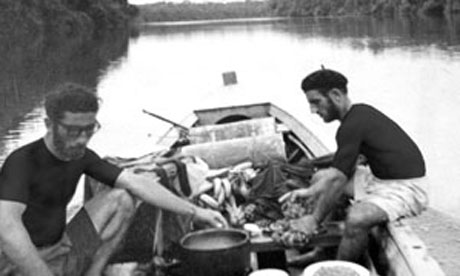
Back in 1954, Abdullah and Issa Omidvar set out on a grand adventure. The two brothers wanted to ride their motorcycles to some of the most remote places possible, while learning more about the cultures they visited along the way. With just $90 in each of their pockets, they packed up their filmmaking equipment and hit the road. They're route took them through Pakistan and India, across Southeast Asia and into Australia. From there they hopped across the Pacific, rode the length of the Andes north and continued on all the way to Alaska and Canada where they crossed above the Arctic Circle. After that, they returned home briefly before returning to the road for another adventure in Africa. All the while they filmed their exploits, capturing some incredible footage of an evolving world that was still reeling from the changes brought on by a post-World War II shift in politics and imperialism.
The Omidvar spent ten years traveling the world, taking in as much culture, history and adventure as they could. And when they were finished, one went to Chile to found a film company while the other returned home to Iran, where he became a celebrity for his works. But over time, the western world had mostly forgotten about their contribution to cinema as their documentary films haven't been seen in years.
But Lois Pryce, who has ridden her motorcycle the length of the Americas and Africa, and written two wonderful books about the experience, learned about Abdullah and Issa's story and went searching for copies of some of their films for the Adventure Travel Film Festival which she co-founded. Pryce called in many favors and went to great lengths to find the films, eventually ending up with copies being sent her way from Issa himself. Those films will be shown at the fest, which will take place in Dorset in the U.K. on August 16-18. It will be a rare opportunity to see these vintage travel films, which are a time capsule of sorts, giving us a window into the past.
It must have been quite the adventure for the two brothers to travel the world during the 50's and early 60's. The planet was evolving a lot back then and some of the places that they visited aren't even there any more. It would be fun to see these films and compare the conditions for travel back then with now. We've come a long way since those films were made, but we've lost much along the way as well.
Thanks to CuChullaine for sharing this fascinating story.
Video: A Father-Son Motorcycle Adventure In The Himalaya
Here's a great story of a father and son duo who traveled through the Himalaya with one another on motorcycles, covering 4500 km (2800 miles) in the process. The son is an experienced motocross rider to whom being on the back of a bike is second nature. The father was new this type of travel but the pair bonded over their shared adventure through some pretty amazing landscapes. The entire journey was captured on GoPro cameras of course and makes for quite the compelling short film.
Adventurer Bags Britain's Six Peaks While Cycling Between Mountains
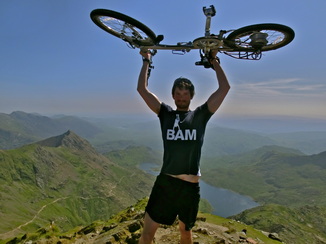
Leon shares some of the details of his expedition in a recent blog post on his site, although he promises more updates in the days ahead. The entire journey took 19 days to complete and like any good adventure it didn't always go as planned. Still, it seems like he managed to improvise quite nicely and ended up having a fun and incredibly satisfying adventure during which he rode his bike between the mountains and carried it on his back when he trekked to the summits.
So exactly which peaks did he climb? The list looks like this: Slieve Donard (850 m/2789 ft) in Northern Ireland; Carrantoohill (1038 m/3406 ft) in the Republic of Ireland; Snowdon (1085 m/3560 ft) in Wales; Snaefell (620 m/2034 ft) on the Isle of Man; Scafell Pike (978 m/3209 ft) in England and Ben Nevis (1344 m/4409 ft) in Scotland. Leon says that each of the climbs was completed in unusually warm and sunny weather, with the exception of Ben Nevis, which can be notoriously foggy, damp and cold. In this case, it continued to live up to that reputation.
Aside from the peak bagging, Leon also says that he had a fantastic time riding his bike between each of the mountains. The landscapes that he passed through were scenic and made for some of the best cycling he's ever encountered. The fantastic summer that the U.K. is experiencing didn't hurt the situation either.
Reading the text of his blog post, it is clear that this was an enjoyable experience all around and it is another example of finding adventure in your own backyard. He didn't have to travel off to some far flung locale for this expedition and yet it was still very satisfying. Well done Leon!
Subscribe to:
Posts (Atom)


Follow Us
Were this world an endless plain, and by sailing eastward we could for ever reach new distances