Energizer is a company that is well known for making batteries that power everything from watches to cars. Their power cells are amongst the best in the business and help keep our gadgets up and running when we need them most. But Energizer also makes a line of outstanding lighting products that are durable, bright and perform extremely well even in harsh conditions. They also happen to be extremely affordable, providing an excellent alternative to some of the more well known brands that typically cost twice as much.
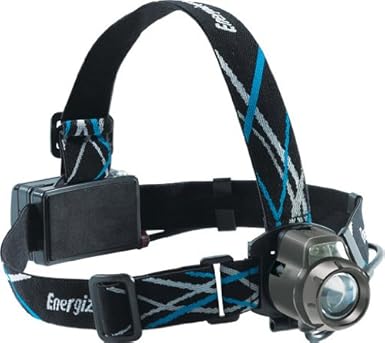
Outdoor enthusiasts will be especially interested in the Energizer Ultimate headlamp. This light was built with extreme adventure in mind and was designed for use in harsh conditions. It's case is built out of an aluminum alloy that is rugged enough to stand up any abuse you dish out while continuing to provide plenty of light. It features a single lamp that is capable of putting out a constant beam of 100 lumens which comes in handy when flying down a dark trail on a mountain bike but is probably brighter than most people will need. But just in case you do need a little extra light, a "boost" button on the side of the housing will temporarily amp it up to 130 lumens, at the expense of battery life of course.
Other modes include low and medium settings which give off 25 and 50 lumens respectively. There is also a flashing strobe mode to signal in an emergency and a night vision option that emits a red light that is easier on the eyes when in a dark space. Battery life varies depending on the level of brightness of course. On the highest setting the batteries will last 10 hours but drop the brightness down to low and that time increases to an impressive 40+. The fact that the Ultimate headlamp uses three replaceable AA batteries (Energizers preferred of course!) means that it is easy to swap out a fresh set when needed.
Other nice touches include a comfortable strap, a pivoting head that allows you to change the direction of the light and a focus ring that allows you tighten up the beam for greater distance. There is also a blinking green light on the back of the battery pack that make it a breeze to find the headlamp in the dark or when it's found its way the bottom of your pack. That can certainly come in handy when you're fumbling around in a tent during the wee hours of the morning.
Energizer had built the Ultimate headlamp to resist the elements and as such it is designed to be weatherproof. While it isn't exactly meant to be immersed in water, it can survive a sudden rainstorm without missing a beat. Better yet, this light is rated for use in extreme temperatures as well. Energizer says that it will operate in a range from -40ºF (-40ºC) to 140ºF (60ºC). That means you can take this light into some pretty remote places and expect it to continue burning bright.
All of these features added up to a great headlamp that is surprisingly versatile and efficient. But what kicks the Energizer Ultimate headlamp into a category all its own is the price. The light carries an MSRP of $44.99, which is a bargain for a piece of gear that performs as well as this one. Even better, you can find the Ultimate at discounted prices online making it an even better bargain. For instance, Amazon has it for just $34.01, which makes it nearly impossible to pass up.
This headlamp is an excellent choice for anyone who needs a quality light. But mountaineers, backpackers, winter campers and other outdoor athletes will really appreciate everything it brings to the table. If you need an affordable headlamp that happens to also be very durable for your next adventure, then look no further. This is the one for you.
Showing posts with label Backpacking. Show all posts
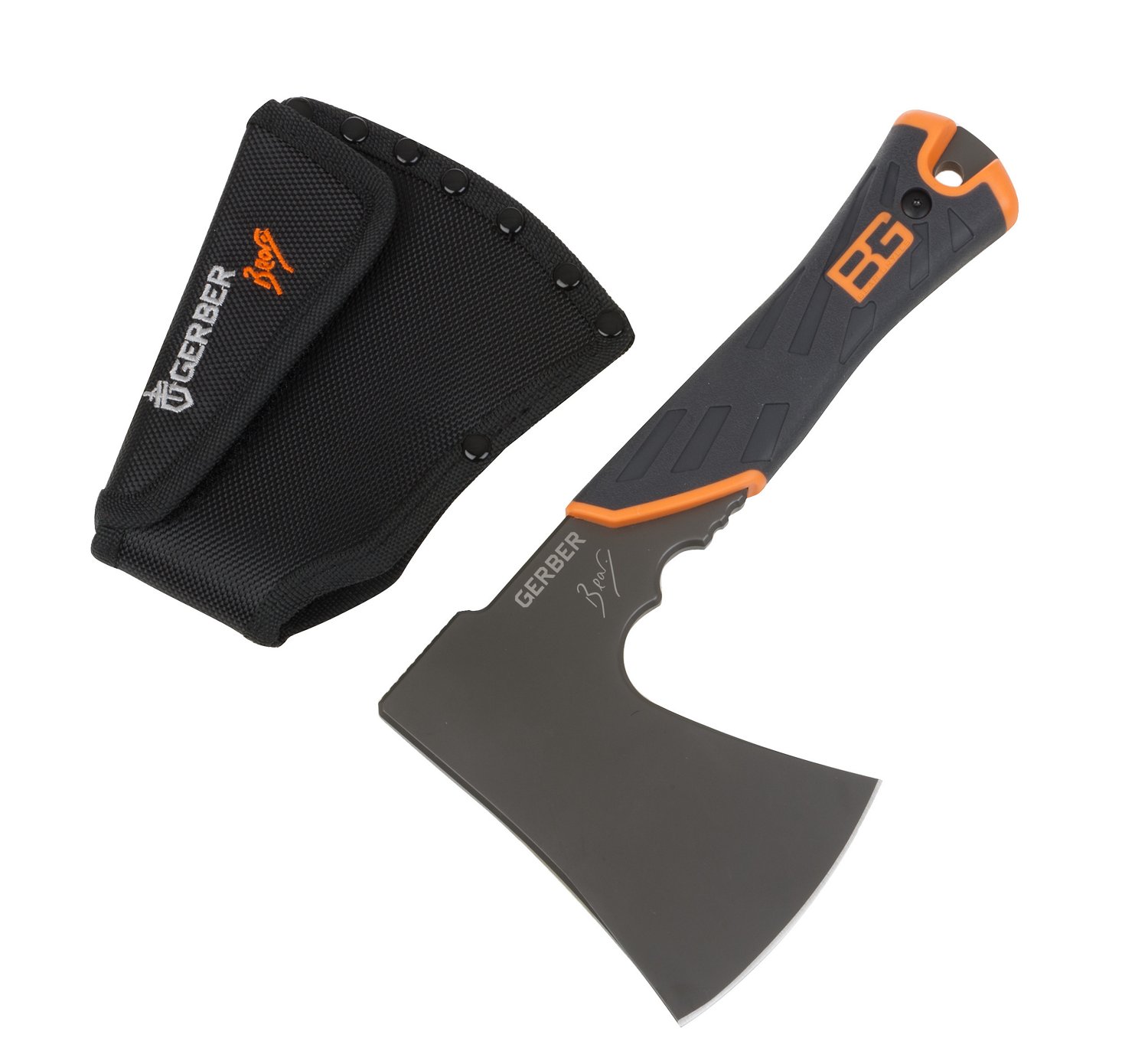
Gear Closet: Bear Grylls Gerber Survival Hatchet
Say what you will about Bear Grylls but the man certainly is a survivor. And I'm not just talking about his talent for staying alive in the wilderness. It wasn't all that long ago that he was weathering the storm of the revelation that his television show Man vs. Wild had staged some segments for dramatic effect. At the time, it was quite a scandal in the outdoor world, but Bear has proven to be a resilient guy and he has managed to put that speed bump behind him and become more popular than ever.
The Bear Grylls name has proven valuable to gear companies too. He has put his name on a line of clothing from Craghoppers, a nifty new stand-up paddleboard/tent combo and a number of knives and other tools from Gerber. I've had the good fortune of testing and reviewing several items in the Bear Grylls Gerber catalog and I have continually come away impressed. The blades are always high quality, the handles are sturdy and each of the products comes across as a well designed and built for use in the backcountry. Recently I got my hands on the Bear's Survival Hatchet and true to form it continues the legacy of a high quality and useful tool that you'll want in your pack.
First impressions are always important with any piece of gear and this hatchet makes a good one. It feels incredibly sturdy and well balanced in your hand. The hand axe weighs a mere 20.8 ounces (590 g) but when it strikes its target it hits with more punch than that weight would typically imply. That means this is a tool that feels great on your pack but still offers plenty of power when it comes time to put it to use.
The hatchet's rubberized handle make it easy to grip, even in wet conditions. It has a couple of finger notches ergonomically incorporated into the base, closer to the blade itself, that help you to wield the axe with more precision when doing fine fork. Slide your hand further down the handle when you need to strike with power. Either way, this is a hatchet that can handle all of your backcountry needs without missing a beat.
The blade is a mere 3.5 inches (8.9 cm) in length, which gives you an idea of just how compact this hatchet really is. Despite that, the sharp, incredibly durable blade will slice through wood with ease. Need some firewood? The Survival Hatchet will have you warm and dry in no time at all. The opposite end of the blade features a second striking surface, this time one that is flat and very versatile. Roll the axe over and you have a great hammer for pounding in tent stakes for instance, which will be much appreciated when pitching your tent on hard ground.
Gerber has included a nice nylon sheath for the axe that fits the blade nicely but doesn't detract from the compact nature of the axe. The sheath includes a pair of loops that make it easy to attach to your pack or your belt, keeping it within easy reach when needed. As with all of Bear's other products from Gerber, the Survival Hatchet also comes with a mini survival guide that has plenty of tips for staying alive in the backcountry.
All in all, this is another great product from Gerber and Bear. If you need a compact, lightweight hatchet for your backcountry adventures, than this is the perfect choice to add to your own gear closet. It is a durable, versatile and high quality tool that will prove to be worth its weight in gold.
Gerber prices the Survival Hatchet $48 but it can be found online for less. For instance, Walmart sells the axe for just $32.35, which is an incredible bargain for a tool like this one. The online store has other Bear Grylls products available as well, most of which can be found by clicking here.
The Bear Grylls name has proven valuable to gear companies too. He has put his name on a line of clothing from Craghoppers, a nifty new stand-up paddleboard/tent combo and a number of knives and other tools from Gerber. I've had the good fortune of testing and reviewing several items in the Bear Grylls Gerber catalog and I have continually come away impressed. The blades are always high quality, the handles are sturdy and each of the products comes across as a well designed and built for use in the backcountry. Recently I got my hands on the Bear's Survival Hatchet and true to form it continues the legacy of a high quality and useful tool that you'll want in your pack.
First impressions are always important with any piece of gear and this hatchet makes a good one. It feels incredibly sturdy and well balanced in your hand. The hand axe weighs a mere 20.8 ounces (590 g) but when it strikes its target it hits with more punch than that weight would typically imply. That means this is a tool that feels great on your pack but still offers plenty of power when it comes time to put it to use.
The hatchet's rubberized handle make it easy to grip, even in wet conditions. It has a couple of finger notches ergonomically incorporated into the base, closer to the blade itself, that help you to wield the axe with more precision when doing fine fork. Slide your hand further down the handle when you need to strike with power. Either way, this is a hatchet that can handle all of your backcountry needs without missing a beat.
The blade is a mere 3.5 inches (8.9 cm) in length, which gives you an idea of just how compact this hatchet really is. Despite that, the sharp, incredibly durable blade will slice through wood with ease. Need some firewood? The Survival Hatchet will have you warm and dry in no time at all. The opposite end of the blade features a second striking surface, this time one that is flat and very versatile. Roll the axe over and you have a great hammer for pounding in tent stakes for instance, which will be much appreciated when pitching your tent on hard ground.
Gerber has included a nice nylon sheath for the axe that fits the blade nicely but doesn't detract from the compact nature of the axe. The sheath includes a pair of loops that make it easy to attach to your pack or your belt, keeping it within easy reach when needed. As with all of Bear's other products from Gerber, the Survival Hatchet also comes with a mini survival guide that has plenty of tips for staying alive in the backcountry.
All in all, this is another great product from Gerber and Bear. If you need a compact, lightweight hatchet for your backcountry adventures, than this is the perfect choice to add to your own gear closet. It is a durable, versatile and high quality tool that will prove to be worth its weight in gold.
Gerber prices the Survival Hatchet $48 but it can be found online for less. For instance, Walmart sells the axe for just $32.35, which is an incredible bargain for a tool like this one. The online store has other Bear Grylls products available as well, most of which can be found by clicking here.
Tales From Down Under: Trekking The Larapinta Trail
Australia's Northern Territory is an adventure travelers paradise. Not only does it have some of the most spectacular landscapes on the entire continent, it also has a number of very diverse and unique ecosystems to explore as well. For instance, Kakadu National Park offers visitors is an intriguing mix of stunning scenery and ancient culture, while the Mary River puts them in close contact with all kinds of wildlife including both freshwater and saltwater crocodiles. Of course, the NT is also home to Uluru – aka Ayers Rock – which just might be the most iconic destination in the entire country. But for the truly adventurous there is the Larapinta Trail – a 223 km (139 mile), 12-stage hiking route that stretches through the West MacDonnell Mountain Range, taking trekkers into some of the roughest, yet utterly breathtaking, backcountry that they will ever see.
Located in Australia's "Red Center," access to the Larapinta Trail is gained via Alice Springs, a small city that serves as the gateway to the Outback in the Northern Territory. Although the region has been home to the Arrernte tribe of Aboriginals for centuries, Alice Springs grew to prominence in the 1870's when it became an important repeater station for the Overland Telegraph Line, which eventually connected Adelaide to Darwin and then out to the rest of the world. Over time, it the city became an important way post for those traveling through the wide-open expanse that is the Australian interior and today it is an excellent base of operations for those exploring the southern region of the Northern Territory.
Fitting with the history of Alice, the trailhead for the first section of the Larapinta Trail is actually located at the old telegraph station. That makes for a convenient start for those who want to hike the route and once on the trail, it isn't long until the trappings of the city are left behind and the true wilderness starts to set in.
The Larapinta wanders through some wild and remote places over the course of its run and the challenge of the walk should not be underestimated. The path climbs up and down some steep gradings and although the distances of each leg may not seem all that great, the reality of the actual hike is much different. The trail is rocky and uneven, which can slow even the best hikers down to a crawl at times. It is also very well marked, which make it easy to navigate from end to end.
It will take most people roughly two weeks – give or take a few days – to walk from the start at Alice Springs to the official end of the Larapinta on the summit of Mt. Sonder, a 1380 meter (4528 ft) mountain that caps the trek. Along the way they'll pass through a number of memorable canyons and gorges, along high ridges and across wide open expanses. Some of the highlights include the famous Simpson Gap, Standley Chasm and Serpantine Gorge. Each of those locations happens to be an access point between two segments of the trail, but perhaps more importantly, they are each scenic locations that highlight just how amazingly beautiful the Larapinta truly is.
On my recent visit to the Northern Territory I didn't have enough time to hike the entire length of the Larapinta but was instead given an abbreviated introduction to what it has to offer. What I saw was enough to convince me that this is one of the premiere long distance hiking routes in the world both in terms of natural beauty and challenge. I hiked a section called the Ormiston Pound but also visited the Simpson Gap, Standley Chasm and other outstanding points along the route. I even visited the Finke River, which is widely regarded as the oldest river in the world. It was fun to take a dip in that waterway but the temperature of the water didn't encourage me to stay in too long.
Hiking the Larapinta isn't just about walking through spectacular scenery, although it is some of the best you'll ever see. The trail is lined with beautiful wild flowers and a variety of other trees and plants that only enhance its character. Sharp eyed hikers will also have the opportunity to spot rock wallabies keeping watch amongst the high cliffs and dozens of unique species of birds too. One of the highlights of my visit was also spotting a white dingo while sitting on a ridge watching the sun come up, which is further indication of the wild nature of the trail.
Like most long distance trekking routes, the Larapinta can be walked end-to-end or in segments depending on how much time you have available. It can also be hiked independently or you can hire a guide in Alice Springs to help lead you through the route. If you choose to make the trek independently, you'll have to deal with the logistics of getting resupplied while out on the route, although the local guide services can assist with that, as well as transfers to and from the trail too. Although the trail is still relatively unknown and hasn't been in operation for all that long, there is already a nice infrastructure in place to help backpackers to gain access to the Larapinta and enjoy it to its fullest. Since traffic on the route remains relatively light, permits aren't even currently required, which is a bit surprising considering the remote nature of the hike. Log books at each end of the 12 sections help to ensure the safety of those out on the trail.
While I was in Alice Springs I worked with the fine folks from Trek Larapinta to get my brief taste of what the trail has to offer and I'd recommend them to anyone thinking of making the trek themselves. You'll have a hard time finding anyone who knows the trail better and this team and they are available to assist independent hikers and those who want the full guided service too. I spent an overnight in one of their camps – even sleeping out under the stars – and was impressed with their dedication to preserving the environment and interacting with it in a natural way. Eco-tourism that puts the emphasis on the "eco" is something that I always appreciate and the Trek Larapinta camps are comfortable, full featured and yet still dedicated to leaving zero impact on the natural setting where they sit.
If your idea of a great vacation is a long hike on beautiful trail, then you'll want to add the Larapinta to your bucket list. It is an unbelievable walk that will stay with you for a lifetime. It also has the added benefit of being in Australia, which is one of the most enjoyable places I've ever had the pleasure of traveling in. The people there are friendly and accommodating and the infrastructure for travelers is top notch. Aussie hospitality is legendary and you'll have an opportunity to discover that first hand while still experiencing the Outback in its purest, wildest form. What more could you ask for?
Located in Australia's "Red Center," access to the Larapinta Trail is gained via Alice Springs, a small city that serves as the gateway to the Outback in the Northern Territory. Although the region has been home to the Arrernte tribe of Aboriginals for centuries, Alice Springs grew to prominence in the 1870's when it became an important repeater station for the Overland Telegraph Line, which eventually connected Adelaide to Darwin and then out to the rest of the world. Over time, it the city became an important way post for those traveling through the wide-open expanse that is the Australian interior and today it is an excellent base of operations for those exploring the southern region of the Northern Territory.
Fitting with the history of Alice, the trailhead for the first section of the Larapinta Trail is actually located at the old telegraph station. That makes for a convenient start for those who want to hike the route and once on the trail, it isn't long until the trappings of the city are left behind and the true wilderness starts to set in.
The Larapinta wanders through some wild and remote places over the course of its run and the challenge of the walk should not be underestimated. The path climbs up and down some steep gradings and although the distances of each leg may not seem all that great, the reality of the actual hike is much different. The trail is rocky and uneven, which can slow even the best hikers down to a crawl at times. It is also very well marked, which make it easy to navigate from end to end.
It will take most people roughly two weeks – give or take a few days – to walk from the start at Alice Springs to the official end of the Larapinta on the summit of Mt. Sonder, a 1380 meter (4528 ft) mountain that caps the trek. Along the way they'll pass through a number of memorable canyons and gorges, along high ridges and across wide open expanses. Some of the highlights include the famous Simpson Gap, Standley Chasm and Serpantine Gorge. Each of those locations happens to be an access point between two segments of the trail, but perhaps more importantly, they are each scenic locations that highlight just how amazingly beautiful the Larapinta truly is.
On my recent visit to the Northern Territory I didn't have enough time to hike the entire length of the Larapinta but was instead given an abbreviated introduction to what it has to offer. What I saw was enough to convince me that this is one of the premiere long distance hiking routes in the world both in terms of natural beauty and challenge. I hiked a section called the Ormiston Pound but also visited the Simpson Gap, Standley Chasm and other outstanding points along the route. I even visited the Finke River, which is widely regarded as the oldest river in the world. It was fun to take a dip in that waterway but the temperature of the water didn't encourage me to stay in too long.
Hiking the Larapinta isn't just about walking through spectacular scenery, although it is some of the best you'll ever see. The trail is lined with beautiful wild flowers and a variety of other trees and plants that only enhance its character. Sharp eyed hikers will also have the opportunity to spot rock wallabies keeping watch amongst the high cliffs and dozens of unique species of birds too. One of the highlights of my visit was also spotting a white dingo while sitting on a ridge watching the sun come up, which is further indication of the wild nature of the trail.
Like most long distance trekking routes, the Larapinta can be walked end-to-end or in segments depending on how much time you have available. It can also be hiked independently or you can hire a guide in Alice Springs to help lead you through the route. If you choose to make the trek independently, you'll have to deal with the logistics of getting resupplied while out on the route, although the local guide services can assist with that, as well as transfers to and from the trail too. Although the trail is still relatively unknown and hasn't been in operation for all that long, there is already a nice infrastructure in place to help backpackers to gain access to the Larapinta and enjoy it to its fullest. Since traffic on the route remains relatively light, permits aren't even currently required, which is a bit surprising considering the remote nature of the hike. Log books at each end of the 12 sections help to ensure the safety of those out on the trail.
While I was in Alice Springs I worked with the fine folks from Trek Larapinta to get my brief taste of what the trail has to offer and I'd recommend them to anyone thinking of making the trek themselves. You'll have a hard time finding anyone who knows the trail better and this team and they are available to assist independent hikers and those who want the full guided service too. I spent an overnight in one of their camps – even sleeping out under the stars – and was impressed with their dedication to preserving the environment and interacting with it in a natural way. Eco-tourism that puts the emphasis on the "eco" is something that I always appreciate and the Trek Larapinta camps are comfortable, full featured and yet still dedicated to leaving zero impact on the natural setting where they sit.
If your idea of a great vacation is a long hike on beautiful trail, then you'll want to add the Larapinta to your bucket list. It is an unbelievable walk that will stay with you for a lifetime. It also has the added benefit of being in Australia, which is one of the most enjoyable places I've ever had the pleasure of traveling in. The people there are friendly and accommodating and the infrastructure for travelers is top notch. Aussie hospitality is legendary and you'll have an opportunity to discover that first hand while still experiencing the Outback in its purest, wildest form. What more could you ask for?
Hiker To Set New Record On PCT
Back in early June I posted a story about vegan hiker Josh Garrett who was about to attempt to set a new record for thru-hiking the Pacific Crest Trail. At the time, Josh was just starting out on his adventure and still had most of the 2655-mile (4272 km) route still ahead of him. Now, nearly two months later, he is nearing the end and a new record for this epic hike is now in sight.
According to Josh's support team he should be approaching the finish line at the border between the U.S. and Canada later today. He is expected to wrap up his journey in the early afternoon local time. While we'll have to wait to see what his official time will be, he will complete the hike in under 60 days. The previous record was 64 days, 11 hours and 19 minutes. That means that for the past two months, Josh has been averaging more than 44 miles (70 km) per day, on foot, through some rather rugged terrain. That is an impressive stat to say the least.
The 30-year old Garrett is a college track coach who has hiked the PCT before. Back in 2009 he did it a more leisurely pace (at least for him!) completing the route in 88 days. This time out he not only wanted to set a new record but he was also raising funds for Mercy For Animals, a nonprofit dedicated to stamping out the cruel treatment of animals.
For updates on Josh's progress, watch his Facebook page. It should be updated shortly after he completes the trek and hopefully provides us with an official time.
Not a bad way to spend your summer. Take a little hike on one of the world's best long distance trails, maybe set a new speed record in the process. Congrats to Josh on a job well done!
According to Josh's support team he should be approaching the finish line at the border between the U.S. and Canada later today. He is expected to wrap up his journey in the early afternoon local time. While we'll have to wait to see what his official time will be, he will complete the hike in under 60 days. The previous record was 64 days, 11 hours and 19 minutes. That means that for the past two months, Josh has been averaging more than 44 miles (70 km) per day, on foot, through some rather rugged terrain. That is an impressive stat to say the least.
The 30-year old Garrett is a college track coach who has hiked the PCT before. Back in 2009 he did it a more leisurely pace (at least for him!) completing the route in 88 days. This time out he not only wanted to set a new record but he was also raising funds for Mercy For Animals, a nonprofit dedicated to stamping out the cruel treatment of animals.
For updates on Josh's progress, watch his Facebook page. It should be updated shortly after he completes the trek and hopefully provides us with an official time.
Not a bad way to spend your summer. Take a little hike on one of the world's best long distance trails, maybe set a new speed record in the process. Congrats to Josh on a job well done!
Gear Closet: Light & Motion Solite 250EX Headlamp
Light & Motion is a company that has earned itself a reputation for making excellent lights for cycling, diving and other outdoor activities. Their products are popular amongst backpackers, adventure racers and other outdoor athletes who require lightweight, comfortable and bright lights to see them through their adventures. Their products are tough, dependable and built to survive in the most difficult of environments.
In the past I've reviewed the Solite 150 and 250 headlamps and came away impressed both times. Those two products were exactly what you would hope for in a headlamp. They are lightweight, comfortable to wear, versatile and incredibly bright. They also have outstanding battery life from a built-in USB rechargeable lithium ion power cell, lasting for hours on a single charge. The Solite 250 is so good in fact that it just might be the best headlamp I've ever used, which left me wondering how Light & Motion could possibly top it. Recently I had the opportunity to find out in the form of the new Solite 250EX, a product that has minor – but welcome – upgrades that refine an already great product even further.
In terms of performance, there is virtually no difference between the standard Solite 250 and the new 250EX. They both put out a stunning 250 lumens on their highest settings, which is blindingly bright when used in a very dark setting. Both weight 149 grams (5.2 ounces) and both feature six modes on their lights, including high, medium, low, pulse, SOS and camp/read. Each of those has a different level of brightness and the battery life depends on which mode you use at any given time.
Battery life is exactly where these two headlamps diverge in terms of performance. The 250EX clearly has a bigger power cell, as it is rated for 4 hours of battery life on its highest setting, while the 250 can only mange to muster approximately 2.5 hours. The EX also manages to best its sibling on every other power setting, providing much longer burn times at all levels of brightness. The downside of this larger power cell is that it takes much longer to charge as well. Taking as much as 8 hours to full charge when compared to 5 hours on the standard 250 model.
Cosmetically the 250EX has a slightly different appearance as well. While the standard 250 is bronze in color, the new model is an elegant white. At first glance, it is difficult to even tell the difference between the two lights when they are sitting next to one another, which is why Light & Motion elected to vary the appearance slightly I'm sure. Both lights have the same wide headband that is comfortable and stabilizing, holding the light in place even when you're running or riding a bike. Both version of the headlamp also have the ability to transform into a handheld torch by removing the battery pack and lamp from the headband and attaching them to one another. This is a nice touch for those who don't always want, or need, a head torch on their adventures.
The 250EX has an integrated battery life indicator that lets you know when it is time to charge it and red side lighting that provides a wider range of visibility. Those small, but useful touches, show how well Light & Motion knows its customers and market and caters to their needs nicely.
If you're in the market for a lightweight and powerful headlamp, you'll have a tough time finding anything on the market that beats any of the Solite offerings. Each of them is a real powerhouse, although they don't exactly come cheap. The new 250EX carries a price tag of $179, which is $30 more than its predecessor. Whether or not you feel it is worth the extra money totally depends on how much you'll need to use the light. If it is a gear item that you'll be using on a regular basis, then spending the extra dough is probably worth it for the extended battery. But if you're someone who needs an excellent headlamp on an occasional basis, then either the 150 or 250 will likely meet your needs.
The 250EX will likely appeal to adventure racers and mountain bikers in particular. The light is incredibly bright, can go a long time on a single charge and is comfortable to wear over an extended period. In short, an already great product has gotten even better and those who need this level of performance will not be disappointed.
In the past I've reviewed the Solite 150 and 250 headlamps and came away impressed both times. Those two products were exactly what you would hope for in a headlamp. They are lightweight, comfortable to wear, versatile and incredibly bright. They also have outstanding battery life from a built-in USB rechargeable lithium ion power cell, lasting for hours on a single charge. The Solite 250 is so good in fact that it just might be the best headlamp I've ever used, which left me wondering how Light & Motion could possibly top it. Recently I had the opportunity to find out in the form of the new Solite 250EX, a product that has minor – but welcome – upgrades that refine an already great product even further.
In terms of performance, there is virtually no difference between the standard Solite 250 and the new 250EX. They both put out a stunning 250 lumens on their highest settings, which is blindingly bright when used in a very dark setting. Both weight 149 grams (5.2 ounces) and both feature six modes on their lights, including high, medium, low, pulse, SOS and camp/read. Each of those has a different level of brightness and the battery life depends on which mode you use at any given time.
Battery life is exactly where these two headlamps diverge in terms of performance. The 250EX clearly has a bigger power cell, as it is rated for 4 hours of battery life on its highest setting, while the 250 can only mange to muster approximately 2.5 hours. The EX also manages to best its sibling on every other power setting, providing much longer burn times at all levels of brightness. The downside of this larger power cell is that it takes much longer to charge as well. Taking as much as 8 hours to full charge when compared to 5 hours on the standard 250 model.
Cosmetically the 250EX has a slightly different appearance as well. While the standard 250 is bronze in color, the new model is an elegant white. At first glance, it is difficult to even tell the difference between the two lights when they are sitting next to one another, which is why Light & Motion elected to vary the appearance slightly I'm sure. Both lights have the same wide headband that is comfortable and stabilizing, holding the light in place even when you're running or riding a bike. Both version of the headlamp also have the ability to transform into a handheld torch by removing the battery pack and lamp from the headband and attaching them to one another. This is a nice touch for those who don't always want, or need, a head torch on their adventures.
The 250EX has an integrated battery life indicator that lets you know when it is time to charge it and red side lighting that provides a wider range of visibility. Those small, but useful touches, show how well Light & Motion knows its customers and market and caters to their needs nicely.
If you're in the market for a lightweight and powerful headlamp, you'll have a tough time finding anything on the market that beats any of the Solite offerings. Each of them is a real powerhouse, although they don't exactly come cheap. The new 250EX carries a price tag of $179, which is $30 more than its predecessor. Whether or not you feel it is worth the extra money totally depends on how much you'll need to use the light. If it is a gear item that you'll be using on a regular basis, then spending the extra dough is probably worth it for the extended battery. But if you're someone who needs an excellent headlamp on an occasional basis, then either the 150 or 250 will likely meet your needs.
The 250EX will likely appeal to adventure racers and mountain bikers in particular. The light is incredibly bright, can go a long time on a single charge and is comfortable to wear over an extended period. In short, an already great product has gotten even better and those who need this level of performance will not be disappointed.
The Best Gear Of Outdoor Retailer (Part 2)
A few days ago I shared my thoughts on the best gear that I saw at this year's Outdoor Retailer Summer Market. But the half-dozen items that I spotlighted at the time were just a tiny fraction of the new outdoor equipment that was on display there. Here are a few more items that caught my eye and may of interest to you when they hit store shelves over the next few months.
Kelty TraiLogic
One of the more impressive set of products that I saw at OR this year was the new TraiLogic system from Kelty. The company has gone back to its roots, creating a collection of gear that is designed to work well with one another in a very efficient manner. The TraiLogic product line includes a tent, sleeping pad, Dry-down sleeping bag and a backpack that converts from a 50-liter bag designed for backpacking to a 35-liter day pack in seconds. It is difficult to sum up all of the innovation that I saw in the TraiLogic designs but just know that Kelty is focused on making a complete backpacking system that is lightweight and affordable. How lightweight and affordable you ask? The entire collection weighs less than 10 pounds and will cost just $800-$900 depending on which configuration you select. Expect to hear much more about this product as it gets closer to launch next spring.
Adventure Medical Kits Fire Cubes
I've been a big fan of Adventure Medical Kits for years and absolutely love the products they've designed for travel, adventure racing and backpacking. At OR, the company was showing off another new innovative product in the form of their All Weather Fire Cubes. Somewhat resembling small marshmallows, the cubes are designed to help you easily start a fire in the backcountry. They are designed to ignite easily with the included fire sparker, even when wet and they are capable of generating a flame that burns as hot as 1300ºF (704ºC) for about 10-12 minutes. In other words, they burn long enough for you to get your tinder going so you can build a fire when ever you need one. Available in the spring, a $12 bag will include 48 cubes, which can actually be broken down into 8 smaller pieces should the need arise.
Brunton Hydrogen Reactor
One of the more ambitious projects that I saw at the show this year was the new Hydrogen Reactor from Brunton. The device uses hydrogen fuel cells to power our USB-chargeable gadgets such as headlamps, smartphones, GPS devices and so on. The fuel cells are good for approximately six charges of a typical smartphone and when depleted they can be refilled at a local gear store or swapped out for a fresh cell as needed. There will even be a $250 device available to charge you own fuel cells if you find yourself going through them quickly. The point of the reactor is to provide clean, renewable power to our devices from a lightweight and rugged source. The device works great, but Brunton is still building an infrastructure with retailers to support it. You have to commend them for their efforts at the very least.
Mountain Hardwear Optic 2.5 Tent
I'm a big fan of Mountain Hardwear gear so admittedly they can sway me pretty easily with their new products. That said, it is hard to not like the new Optic 2.5 tent that is designed for two people and features a door on both one side and one end. When both are opened you get a nice panoramic view of the landscapes around you that will make you wonder why someone didn't incorporate this design sooner. With a trail weight of 5 pounds, 13 ounces it is a bit heavier than most of the new two-person tents I saw at the show, but it comes with a pretty sweet price tag to help balance it out. The Optic 2.5 costs just $240, which is a great entry level for anyone who wants to buy a Mountain Hardwear tent.
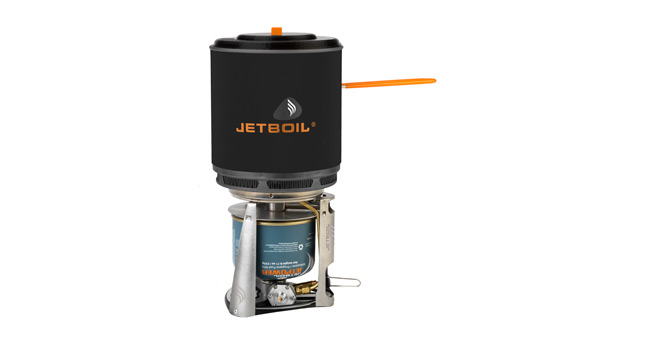
Jetboil Joule Group Cooking System
Jetboil pretty much set the standard for a lightweight cooking system when they released their original
stove a few years back. Since then the competition in this space has gotten stiffer and the company has continued to improve and expand its product line to meet the needs of its customers. The new Joule stove, due in the spring, is large enough to feed 3-5 people and yet still packs down small enough to easily carry with you in your pack. It features a unique design that puts the fuel canister up-side-down which should improve the consistency of performance even as the canister runs low or the temperature begins to drop. The Joule is a cinch to use, heats up extremely quickly and provides ample space for the backwoods gourmet.
Mio Alpha Fitness Watch
If you've ever been to Outdoor Retailer you probably know that some of the more innovative products are often found tucked away in the pavilions that are located across from the main hall. That's where I came across the new Mio Alpha fitness watch which is designed to help athletes train and race better. The watch is capable of monitoring the heart rate of the wearer without the need for a cumbersome and uncomfortable heartrate strap. The watch can then give visual feedback on how much the athlete is pushing him or herself and help them perform better. The watch itself is comfortable and attractive, and can connect to a smartphone via Bluetooth for use with some of the more popular fitness apps out there.
I have a few more products I'll probably spotlight in the next few days. As you can see, there were a lot of items to checkout and excellent improvements and innovation from a number of sources. All of this gear may make your wallet groan a bit, but we're living in a time where things are continually improving and we get to reap the benefits.
Kelty TraiLogic
One of the more impressive set of products that I saw at OR this year was the new TraiLogic system from Kelty. The company has gone back to its roots, creating a collection of gear that is designed to work well with one another in a very efficient manner. The TraiLogic product line includes a tent, sleeping pad, Dry-down sleeping bag and a backpack that converts from a 50-liter bag designed for backpacking to a 35-liter day pack in seconds. It is difficult to sum up all of the innovation that I saw in the TraiLogic designs but just know that Kelty is focused on making a complete backpacking system that is lightweight and affordable. How lightweight and affordable you ask? The entire collection weighs less than 10 pounds and will cost just $800-$900 depending on which configuration you select. Expect to hear much more about this product as it gets closer to launch next spring.
Adventure Medical Kits Fire Cubes
I've been a big fan of Adventure Medical Kits for years and absolutely love the products they've designed for travel, adventure racing and backpacking. At OR, the company was showing off another new innovative product in the form of their All Weather Fire Cubes. Somewhat resembling small marshmallows, the cubes are designed to help you easily start a fire in the backcountry. They are designed to ignite easily with the included fire sparker, even when wet and they are capable of generating a flame that burns as hot as 1300ºF (704ºC) for about 10-12 minutes. In other words, they burn long enough for you to get your tinder going so you can build a fire when ever you need one. Available in the spring, a $12 bag will include 48 cubes, which can actually be broken down into 8 smaller pieces should the need arise.
Brunton Hydrogen Reactor
Mountain Hardwear Optic 2.5 Tent
I'm a big fan of Mountain Hardwear gear so admittedly they can sway me pretty easily with their new products. That said, it is hard to not like the new Optic 2.5 tent that is designed for two people and features a door on both one side and one end. When both are opened you get a nice panoramic view of the landscapes around you that will make you wonder why someone didn't incorporate this design sooner. With a trail weight of 5 pounds, 13 ounces it is a bit heavier than most of the new two-person tents I saw at the show, but it comes with a pretty sweet price tag to help balance it out. The Optic 2.5 costs just $240, which is a great entry level for anyone who wants to buy a Mountain Hardwear tent.
Jetboil Joule Group Cooking System
Jetboil pretty much set the standard for a lightweight cooking system when they released their original
stove a few years back. Since then the competition in this space has gotten stiffer and the company has continued to improve and expand its product line to meet the needs of its customers. The new Joule stove, due in the spring, is large enough to feed 3-5 people and yet still packs down small enough to easily carry with you in your pack. It features a unique design that puts the fuel canister up-side-down which should improve the consistency of performance even as the canister runs low or the temperature begins to drop. The Joule is a cinch to use, heats up extremely quickly and provides ample space for the backwoods gourmet.
Mio Alpha Fitness Watch
If you've ever been to Outdoor Retailer you probably know that some of the more innovative products are often found tucked away in the pavilions that are located across from the main hall. That's where I came across the new Mio Alpha fitness watch which is designed to help athletes train and race better. The watch is capable of monitoring the heart rate of the wearer without the need for a cumbersome and uncomfortable heartrate strap. The watch can then give visual feedback on how much the athlete is pushing him or herself and help them perform better. The watch itself is comfortable and attractive, and can connect to a smartphone via Bluetooth for use with some of the more popular fitness apps out there.
I have a few more products I'll probably spotlight in the next few days. As you can see, there were a lot of items to checkout and excellent improvements and innovation from a number of sources. All of this gear may make your wallet groan a bit, but we're living in a time where things are continually improving and we get to reap the benefits.
20 Famous Hikers Pick Their Favorite Trails
Looking for a new backpacking or hiking challenge? Want to experience some of the best trails in the world? Then you'll definitely want to check out the list of 20 top trails as picked by 20 famous hikers that was put together by the team over at National Geographic Adventure. They poled some well known figures from the world of exploration and adventure and shared their selections for their ultimate dream hikes. The results are a list of hikes that range from legendary to those you may not even have heard of.
Some of the walking routes that earn a place on the list include the Sierra High Route in California, which was selected by über-hiker Andrew Skurka and the Pacific Crest Trail, which is a favorite of ultrarunning phenom Scott Jurek. Unsurprisingly, American mountaineer Jim Whittaker names the trek to Everest Base Camp as his favorite hike, while Sally McCoy, the CEO of CamelBak loves the 200-mile (321 km) Snowman Trek in Bhutan.
As you can tell, there are some very diverse and interesting hikes on the list that were selected by a very diverse and interesting group of people. But one of the hikes isn't even officially open yet, although it continues to evolve into a true world-class trekking route that will draw backpackers from around the globe. That is the Sir Samuel and Lady Florence Baker Historical Trail that runs through South Sudan and Uganda. This route, which I first told you about several months back, is 360 miles (580 km) in length and runs from Gondokora near Juba, in South Sudan, to Baker’s View, which overlooks Lake Albert in Uganda. This particular trail was suggested for the Nat Geo list by explorer Julian Monroe Fisher, who has been instrumental in its creation. It is set to open in 2014 with the first trekkers walking its length shortly there after. The photo above is actually a shot of an existing plaque commemorating the Bakers in one of the villages along the trail. Official trail markers will be added alongside it soon.
If you're planning a new treking adventure in the near future then you'll certainly want to check-out the trails that made Nat Geo's list. There are some excellent options for sure and whether you want to hike a well known classic route or take on a complete new one, there is a little something for everyone.
Some of the walking routes that earn a place on the list include the Sierra High Route in California, which was selected by über-hiker Andrew Skurka and the Pacific Crest Trail, which is a favorite of ultrarunning phenom Scott Jurek. Unsurprisingly, American mountaineer Jim Whittaker names the trek to Everest Base Camp as his favorite hike, while Sally McCoy, the CEO of CamelBak loves the 200-mile (321 km) Snowman Trek in Bhutan.
As you can tell, there are some very diverse and interesting hikes on the list that were selected by a very diverse and interesting group of people. But one of the hikes isn't even officially open yet, although it continues to evolve into a true world-class trekking route that will draw backpackers from around the globe. That is the Sir Samuel and Lady Florence Baker Historical Trail that runs through South Sudan and Uganda. This route, which I first told you about several months back, is 360 miles (580 km) in length and runs from Gondokora near Juba, in South Sudan, to Baker’s View, which overlooks Lake Albert in Uganda. This particular trail was suggested for the Nat Geo list by explorer Julian Monroe Fisher, who has been instrumental in its creation. It is set to open in 2014 with the first trekkers walking its length shortly there after. The photo above is actually a shot of an existing plaque commemorating the Bakers in one of the villages along the trail. Official trail markers will be added alongside it soon.
If you're planning a new treking adventure in the near future then you'll certainly want to check-out the trails that made Nat Geo's list. There are some excellent options for sure and whether you want to hike a well known classic route or take on a complete new one, there is a little something for everyone.
Adventure Tech: Android Powered GPS By Garmin
Garmin, one of the leaders in consumer GPS technology, has taken the wraps off a new handheld device today that looks to be a promising new entry for outdoor enthusiasts. At least those with some extra cash to spend.
The new Monterra is expected to begin shipping in the third quarter (read: July or August) and will be powered by the Android operating system that is so common on many mobile phones these days. In fact, Garmin's new device resembles a mobile phone in many ways, simply lacking the ability to actually make calls.
The device comes equipped with built-in WiFi, enabling the user to download updates and add apps to the Monterra without ever connecting it to a a computer. It also features an 8-megpixel camera, 6GB of internal memory (expandable through the use of microSD cards) and a 4-inch touch screen that has been optimized to be used in the outdoors without the need for battery-crushing backlighting. As you would expect, the handheld is ruggedized and waterproof (IPX7) and can run off of either the included rechargeable battery pack or AA batteries. It includes Bluetooth 3.0, NFC technology, an FM radio complete with NOAA weather, a UV sensor for keeping track of the intensity of the sun and a barometer/altimeter that measure not only your changes in altitude but possible changes to the weather as well. Preinstalled apps will enhance functionality further and the Google Play Store will obviously be available to get Angry Birds on this bad-boy as well.
There is no word on exactly which version of Android the Monterra is running but I suspect it'll be the most recent release of Android 4.2 (Jelly Bean) that is available when it begins shipping. Battery life remains a questions as well, but that is always the case with a GPS device these days. Prices start at $650 for the base unit with a built-in world map while $700 will get you a version preloaded with U.S. Topo maps as well.
This looks like it'll be a great device and I'm sure it'll be a hit with the geocaching crowd considering how easy it should be to add cache's to the device. The price seems a bit steep but it seems like it packs in a lot of functionality. If it can provide good battery life, this may just be the new GPS handheld to beat.
The new Monterra is expected to begin shipping in the third quarter (read: July or August) and will be powered by the Android operating system that is so common on many mobile phones these days. In fact, Garmin's new device resembles a mobile phone in many ways, simply lacking the ability to actually make calls.
The device comes equipped with built-in WiFi, enabling the user to download updates and add apps to the Monterra without ever connecting it to a a computer. It also features an 8-megpixel camera, 6GB of internal memory (expandable through the use of microSD cards) and a 4-inch touch screen that has been optimized to be used in the outdoors without the need for battery-crushing backlighting. As you would expect, the handheld is ruggedized and waterproof (IPX7) and can run off of either the included rechargeable battery pack or AA batteries. It includes Bluetooth 3.0, NFC technology, an FM radio complete with NOAA weather, a UV sensor for keeping track of the intensity of the sun and a barometer/altimeter that measure not only your changes in altitude but possible changes to the weather as well. Preinstalled apps will enhance functionality further and the Google Play Store will obviously be available to get Angry Birds on this bad-boy as well.
There is no word on exactly which version of Android the Monterra is running but I suspect it'll be the most recent release of Android 4.2 (Jelly Bean) that is available when it begins shipping. Battery life remains a questions as well, but that is always the case with a GPS device these days. Prices start at $650 for the base unit with a built-in world map while $700 will get you a version preloaded with U.S. Topo maps as well.
This looks like it'll be a great device and I'm sure it'll be a hit with the geocaching crowd considering how easy it should be to add cache's to the device. The price seems a bit steep but it seems like it packs in a lot of functionality. If it can provide good battery life, this may just be the new GPS handheld to beat.
Hiker Attempting Speed Record On Pacific Crest Trail While Raising Awareness For A Cause
Yesterday, long distance hiker Josh Garrett launched his attempt to set a new record for hiking the Pacific Crest Trail end-to-end. The 30-year old track coach at Santa Monica College will be trekking the entire 2655 mile (4272 km) this summer as he also hopes to raise funds and awareness for a cause that is very near and dear to his heart.
The current speed record for the PCT is 64 days, which means in order to break the record, Garrett will need to average close to 42 miles per day for more than two months. Thats a pretty grueling pace for most of us, although he does have the benefit of having walked the entire trail before. Back in 2009 he backpacked the PCT in 88 days, which is a great effort for someone who wasn't even considering a speed record at the time.
While on his hike this summer, Garrett hopes to raise funds and awareness for the Mercy For Animals organization. It's a non-profit dedicated to preventing cruelty to farmed animals. Over the past 18 months Josh has become a vegan and that lifestyle has inspired him to want to do more for improving the way we treat animals in general. The MFA website has posted an interview with him discussing his efforts. They also have a page in place for anyone who wants to sponsor Josh. He is hoping to raise $26,550 and is already nearly 10% of the way there.
The Pacific Crest Trail wanders from the border of Mexico to the border of Canada along the far-western portion of the United States. The route goes through the Sierra Nevada and Cascade mountain ranges, providing hikers with some extremely scenic landscapes along the way. It passes through California, Oregon and Washington, avoiding civilization almost entirely. It is considered one of the best long-distance hiking routes in the world and true gem amongst backpackers the world over.
You can follow Josh on his adventure along the PCT at his Twitter feed which is @VeganHiker. Not too many updates so far, but hopefully we'll hear from him regularly as he attempts the new speed record.
The current speed record for the PCT is 64 days, which means in order to break the record, Garrett will need to average close to 42 miles per day for more than two months. Thats a pretty grueling pace for most of us, although he does have the benefit of having walked the entire trail before. Back in 2009 he backpacked the PCT in 88 days, which is a great effort for someone who wasn't even considering a speed record at the time.
While on his hike this summer, Garrett hopes to raise funds and awareness for the Mercy For Animals organization. It's a non-profit dedicated to preventing cruelty to farmed animals. Over the past 18 months Josh has become a vegan and that lifestyle has inspired him to want to do more for improving the way we treat animals in general. The MFA website has posted an interview with him discussing his efforts. They also have a page in place for anyone who wants to sponsor Josh. He is hoping to raise $26,550 and is already nearly 10% of the way there.
The Pacific Crest Trail wanders from the border of Mexico to the border of Canada along the far-western portion of the United States. The route goes through the Sierra Nevada and Cascade mountain ranges, providing hikers with some extremely scenic landscapes along the way. It passes through California, Oregon and Washington, avoiding civilization almost entirely. It is considered one of the best long-distance hiking routes in the world and true gem amongst backpackers the world over.
You can follow Josh on his adventure along the PCT at his Twitter feed which is @VeganHiker. Not too many updates so far, but hopefully we'll hear from him regularly as he attempts the new speed record.
Gear Closet: AKU SL Sintesti GTX Hiking Boots
Last summer I reviewed a pair of SL Trek GTX hiking boots from AKU and came away highly impressed. At the time, I lauded the boots for being comfortable, breathable and durable with great traction on a variety of trail conditions. Since then, I've only become more impressed with the boots, which continue to hold up well with many more miles of trail under their heels. So when AKU offered to let me try out their new SL Sintesti GTX hiking boots, I jumped at the chance, eager to see if the same level of quality could be found in a lighter and more affordable shoe. Considering the mountaineering legacy that the company brings to the table, I should have known that I wouldn't be disappointed.
AKU says that the Sintesti is designed for hiking and backpacking on a variety of terrain up to medium altitudes. Lightweight and comfortable, these are the kind of shoes that you can wear on your favorite local trail or take with you on a trek through the Himalaya or up Kilimanjaro. The shoe provides plenty of protection for your feet, keeping them well shielded from rocky trails. In fact, the ground here in Central Texas is actually very rocky, but the Sintesti had no problem keeping my feet from getting battered or overly tired, even on long walks.
These boots feature a Vibram Mulaz outsole that is tough as nails and provides excellent footing whether you're scrambling over rock or through deep snow and mud. When combined with a triple-layer internal midsole, it provides a rigid, yet comfortable ride that nicely cradles the foot and protects it from harm. Because of that rigidness, these shoes aren't quite as flexible as some lighter weight hiking footwear from the competition, although their performance is light years better.
Despite this outstanding level of protection for the foot, the Sintesti don't feel heavy or bulky when worn at all. On the contrary, they actually feel so good that you'll almost believe that AKU custom made them especially for you. The footpad molds itself nicely to the shape of your foot and the break-in period is quite fast, ensuring that your new pair of boots feels like a comfortable old pair of boots in no time.
Other features include a precision lacing system that extends to just above the toes, allowing you to cinch the boots to your liking. I personally prefer a snug fit when hiking, although I know others don't like their feet to feel confined. What ever your preference is, you'll be able to adjust the Sintesti to an optimal fit quickly and easily. The suede upper conforms nicely to your needs as well, wrapping the foot in an incredibly durable – not to mention good looking – shell.
AKU has incorporated a Gore-Tex liner which helps to keep the feet dry in a variety of conditions. When your they start to heat up, the liner wicks moisture away and when you're hiking through wet conditions, Gore-Tex will keep unwanted moisture out as well. As is typical with all products that use Gore-Tex, performance was excellent and my feet remained dry and happy at all times.
Like the SL Trek GTX boots that I reviewed last year, I am once again impressed with the high level durability that AKU has managed to instill in the Sintesti. These boots can take everything you throw at them and still come out looking just as good as new. I took them on muddy trails, across very rocky terrain, up and over boulders and through rushing streams, and except for showing a little dirt, they look like they've barely been worn. A good pair of hiking boots are an investment and this level of durability ensures that the Sintesti are a wise investment indeed. I would wager that anyone who buys these boots will have footwear to accompany them on their adventures for years to come.
AKU sells these boots for $249, which is about $80 less than the SL Treks that I recommended so highly last year. The Sintesti GTX delivers a similar level of performance with those boots but at a more affordable price. If you're in the market for a new pair of boots that can accompany you on nearly any hiking adventure, these are just the shoes you've been looking for. They are comfortable, durable and perform well even under the worst of conditions. Not all footwear displays that level of dependability, but you'll get all of that and more in AKU's SL Sintesti GTX hiking boots. And chances are, your feet will thank you.
AKU says that the Sintesti is designed for hiking and backpacking on a variety of terrain up to medium altitudes. Lightweight and comfortable, these are the kind of shoes that you can wear on your favorite local trail or take with you on a trek through the Himalaya or up Kilimanjaro. The shoe provides plenty of protection for your feet, keeping them well shielded from rocky trails. In fact, the ground here in Central Texas is actually very rocky, but the Sintesti had no problem keeping my feet from getting battered or overly tired, even on long walks.
These boots feature a Vibram Mulaz outsole that is tough as nails and provides excellent footing whether you're scrambling over rock or through deep snow and mud. When combined with a triple-layer internal midsole, it provides a rigid, yet comfortable ride that nicely cradles the foot and protects it from harm. Because of that rigidness, these shoes aren't quite as flexible as some lighter weight hiking footwear from the competition, although their performance is light years better.
Despite this outstanding level of protection for the foot, the Sintesti don't feel heavy or bulky when worn at all. On the contrary, they actually feel so good that you'll almost believe that AKU custom made them especially for you. The footpad molds itself nicely to the shape of your foot and the break-in period is quite fast, ensuring that your new pair of boots feels like a comfortable old pair of boots in no time.
Other features include a precision lacing system that extends to just above the toes, allowing you to cinch the boots to your liking. I personally prefer a snug fit when hiking, although I know others don't like their feet to feel confined. What ever your preference is, you'll be able to adjust the Sintesti to an optimal fit quickly and easily. The suede upper conforms nicely to your needs as well, wrapping the foot in an incredibly durable – not to mention good looking – shell.
AKU has incorporated a Gore-Tex liner which helps to keep the feet dry in a variety of conditions. When your they start to heat up, the liner wicks moisture away and when you're hiking through wet conditions, Gore-Tex will keep unwanted moisture out as well. As is typical with all products that use Gore-Tex, performance was excellent and my feet remained dry and happy at all times.
Like the SL Trek GTX boots that I reviewed last year, I am once again impressed with the high level durability that AKU has managed to instill in the Sintesti. These boots can take everything you throw at them and still come out looking just as good as new. I took them on muddy trails, across very rocky terrain, up and over boulders and through rushing streams, and except for showing a little dirt, they look like they've barely been worn. A good pair of hiking boots are an investment and this level of durability ensures that the Sintesti are a wise investment indeed. I would wager that anyone who buys these boots will have footwear to accompany them on their adventures for years to come.
AKU sells these boots for $249, which is about $80 less than the SL Treks that I recommended so highly last year. The Sintesti GTX delivers a similar level of performance with those boots but at a more affordable price. If you're in the market for a new pair of boots that can accompany you on nearly any hiking adventure, these are just the shoes you've been looking for. They are comfortable, durable and perform well even under the worst of conditions. Not all footwear displays that level of dependability, but you'll get all of that and more in AKU's SL Sintesti GTX hiking boots. And chances are, your feet will thank you.
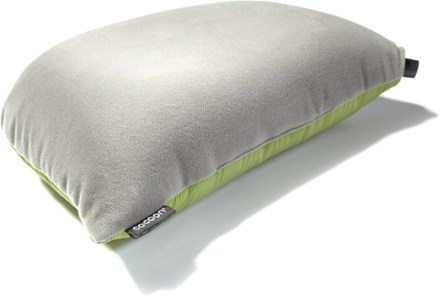
Gear Closet: Cocoon Ultralight Air-Core Hood Camp Pillow
Remember the days when you would go camping and you would have to leave some amenities behind simply because they either didn't exist in a portable format or they were just too bulky and cumbersome to bring along? Those days almost seem laughable now considering how lightweight and compact our gear has become. Now days when we hit the trail, there are very few things we have to leave behind, making our time in the great outdoors more comfortable then ever. I was reminded of this recently while testing the new Ultralight Air-Core Hood Camp Pillow from Cocoon. It is a surprisingly comfortable camp pillow that takes up almost no room in your pack and weighs next to nothing, making it a no brainer to carry with you on all of your adventures.
The pillow is made of a durable nylon fabric that is designed to stand-up to the rigors of travel. Whether you're spending the weekend in a local campsite or thru-hiking the Appalachian Trail, this pillow will be with you every step of the way. Best of all, you will barely know it is in your pack, at least until the end of the day when you're ready to curl up for a good night's sleep. The Ultralight Air-Core pillow weighs in at just 3.5 ounces (100 grams) and when stored inside its included stuff sack, it is smaller than a can of Coke.
Removing the pillow from the stuff-sack reveals that is bigger than I had initially expected. It covers an area of 12" x 16" (30 x 40 cm), which is large enough for all but the most restless of campers. In one corner there is a high quality air valve that allows you to quickly inflate it to its full size with just a few breaths. The valve also helps you to adjust the level of firmness as well, setting it to your personal level of comfort. I found it best to fill the pillow to capacity and then seal it with a quick twist of the valve. From there, its a cinch to slowly release the air to get everything just right.
Cocoon has put quite a bit of thought into the design of this product that helps to make it easy to recommend to backpackers, campers and even adventure travelers. For instance, half of the pillow is covered in a soft microfiber while the other half remains nylon. The microfiber makes for a warmer sleeping experience, but if you get too warm, you can simply flip the pillow over for a cooler surface on which to rest.
The unique shape of this pillow (it is rounded across the top) makes it perfect fit for the hood of a mummy bag. I happen to be a fan of that style of sleeping bag and having a pillow that fits neatly and easily into the hood is a very nice option. The air valve that is so useful in setting the firmness of the Air-Core also helps in adjusting its size of your mummy bag hood as well. This adds a nice level of versatility to this pillow as well, as I feel it is large enough to be used outside of a sleeping bag, but can fit snuggly into a mummy bag when traveling through colder environments.
If you're in the market for a comfortable and durable camping pillow for your next backpacking trip, it's hard not to recommend Cocoon's excellent offering. It is everything you could ask for – small, lightweight and versatile. On top of that, it is also highly affordable. MSRP is just $25.95. At that price, how can you afford to not have one in your pack?
The pillow is made of a durable nylon fabric that is designed to stand-up to the rigors of travel. Whether you're spending the weekend in a local campsite or thru-hiking the Appalachian Trail, this pillow will be with you every step of the way. Best of all, you will barely know it is in your pack, at least until the end of the day when you're ready to curl up for a good night's sleep. The Ultralight Air-Core pillow weighs in at just 3.5 ounces (100 grams) and when stored inside its included stuff sack, it is smaller than a can of Coke.
Removing the pillow from the stuff-sack reveals that is bigger than I had initially expected. It covers an area of 12" x 16" (30 x 40 cm), which is large enough for all but the most restless of campers. In one corner there is a high quality air valve that allows you to quickly inflate it to its full size with just a few breaths. The valve also helps you to adjust the level of firmness as well, setting it to your personal level of comfort. I found it best to fill the pillow to capacity and then seal it with a quick twist of the valve. From there, its a cinch to slowly release the air to get everything just right.
Cocoon has put quite a bit of thought into the design of this product that helps to make it easy to recommend to backpackers, campers and even adventure travelers. For instance, half of the pillow is covered in a soft microfiber while the other half remains nylon. The microfiber makes for a warmer sleeping experience, but if you get too warm, you can simply flip the pillow over for a cooler surface on which to rest.
The unique shape of this pillow (it is rounded across the top) makes it perfect fit for the hood of a mummy bag. I happen to be a fan of that style of sleeping bag and having a pillow that fits neatly and easily into the hood is a very nice option. The air valve that is so useful in setting the firmness of the Air-Core also helps in adjusting its size of your mummy bag hood as well. This adds a nice level of versatility to this pillow as well, as I feel it is large enough to be used outside of a sleeping bag, but can fit snuggly into a mummy bag when traveling through colder environments.
If you're in the market for a comfortable and durable camping pillow for your next backpacking trip, it's hard not to recommend Cocoon's excellent offering. It is everything you could ask for – small, lightweight and versatile. On top of that, it is also highly affordable. MSRP is just $25.95. At that price, how can you afford to not have one in your pack?
New Long Distance Trail To Open In South Sudan And Uganda
Backpackers and mountain bikers will be interested to learn that a new long distance trail is set to open in Africa in early 2014. The new trail will give adventure seekers the opportunity to follow in the footsteps of a legendary explorer while also visiting the newest country on the planet – South Sudan. Along the way they'll get the chance to experience parts of Africa that remain wild and undeveloped, passing through landscapes that have remained largely unchanged for centuries.
The Sir Samuel and Lady Florence Baker Historical Trail will stretch from Juba in South Sudan to Baker's View, which overlooks Lake Albert in western Uganda. The route will cover approximately 575 km (357 miles) along the same path that the Bakers followed on their two expeditions to Africa, which took place in the 1860's and 70's. The route will end at the point where Sir Samuel became the first European to ever set eyes on Lake Albert, which he himself named after Prince Albert.
The trail is being created through the efforts of anthropologist and explorer Julian Monroe Fisher who is working closely with the Uganda Ministry of Tourism, Wildlife & Antiquities, The Uganda Wildlife Authority and the Ministry of Wildlife, Conservation & Tourism for South Sudan. The descendants of Sir Samual and Lady Florence Baker are also taking part in the creation of this new route, which is being developed with the support of RailRiders Adventure Clothing and Costa Del Mar Sunglasses, both of which are sponsors of Fisher's Great African Expedition. It was during Phase Two of that expedition that he discovered the exact location of Baker's View and is credited by the Ugandan Government with correcting key locations on maps. Fisher will return to Uganda in June to begin placing historical markers along the trail which will designate places that the Bakers camped while they were exploring the region.
During the 1860's and 70's, Samuel Baker explored much of central Africa and later along the path of the Nile. His wife, Lady Florence, traveled with him on his expeditions as he wandered throughout much of what is now Uganda and South Sudan. One of his early adventures took him to the shores of Lake Albert, which he discovered in 1864. In addition to their contributions towards filling in the blank spots on the map, the Bakers were also staunchly against slavery. The couple publicly called for the abolition of the slave trade, a fact that is not forgotten in the region even in the 21st century.
The new trail is set to officially open in January of 2014 in commemoration of the 150th anniversary of Baker's expedition. Unlike many trails of this kind, access will not only be granted to hikers, but also mountain bikers and eventually 4x4 vehicles as well. Future extensions to the trail will expand on its length, including a long loop in South Sudan that will lead to the summit of Mount Kinyeti, the tallest peak in the region at 3187 meters (10,456 ft).
The trail is also being seen as an economic boon for both Uganda and South Sudan. The hope is that the scenic route will lure trekkers to the area bring much needed in flux of tourism dollars.
The Sir Samuel and Lady Florence Baker Historical Trail will stretch from Juba in South Sudan to Baker's View, which overlooks Lake Albert in western Uganda. The route will cover approximately 575 km (357 miles) along the same path that the Bakers followed on their two expeditions to Africa, which took place in the 1860's and 70's. The route will end at the point where Sir Samuel became the first European to ever set eyes on Lake Albert, which he himself named after Prince Albert.
The trail is being created through the efforts of anthropologist and explorer Julian Monroe Fisher who is working closely with the Uganda Ministry of Tourism, Wildlife & Antiquities, The Uganda Wildlife Authority and the Ministry of Wildlife, Conservation & Tourism for South Sudan. The descendants of Sir Samual and Lady Florence Baker are also taking part in the creation of this new route, which is being developed with the support of RailRiders Adventure Clothing and Costa Del Mar Sunglasses, both of which are sponsors of Fisher's Great African Expedition. It was during Phase Two of that expedition that he discovered the exact location of Baker's View and is credited by the Ugandan Government with correcting key locations on maps. Fisher will return to Uganda in June to begin placing historical markers along the trail which will designate places that the Bakers camped while they were exploring the region.
During the 1860's and 70's, Samuel Baker explored much of central Africa and later along the path of the Nile. His wife, Lady Florence, traveled with him on his expeditions as he wandered throughout much of what is now Uganda and South Sudan. One of his early adventures took him to the shores of Lake Albert, which he discovered in 1864. In addition to their contributions towards filling in the blank spots on the map, the Bakers were also staunchly against slavery. The couple publicly called for the abolition of the slave trade, a fact that is not forgotten in the region even in the 21st century.
The new trail is set to officially open in January of 2014 in commemoration of the 150th anniversary of Baker's expedition. Unlike many trails of this kind, access will not only be granted to hikers, but also mountain bikers and eventually 4x4 vehicles as well. Future extensions to the trail will expand on its length, including a long loop in South Sudan that will lead to the summit of Mount Kinyeti, the tallest peak in the region at 3187 meters (10,456 ft).
The trail is also being seen as an economic boon for both Uganda and South Sudan. The hope is that the scenic route will lure trekkers to the area bring much needed in flux of tourism dollars.
Gear Closet: Carhartt Huron Rain Jacket
If there is anyone on the planet who demands as much performance out of their gear as outdoor enthusiasts it is construction workers. Day in and day out they go to work in demanding, often harsh, environments. In order to do their jobs effectively, the need apparel that keeps them comfortable, doesn't restrict motion and is durable enough to survive the wear and tear that comes with a construction site. Carhartt is a company that has built a reputation for manufacturing tough, high performance clothing for the work place and over the years their gear has become incredibly popular with many people who have to work out in the elements.
This spring, the company has released a new line of rainwear that brings its considerable experience with performance apparel to the outdoor crowd. Carhartt has released three new rain jackets of various weights that will certainly be popular options for both the workplace and the trail. I've been lucky enough to put the Huron jacket to the test this spring and I've found that it is a worthy addition to a gear closet already full of rain gear from a number of well known and popular outdoor companies.
The Huron is built from 100% nylon ripstop fabrics that are designed to be both lightweight and breathable. The jacket succeeds on both counts keeping the wearer comfortable and dry, even in heavy downpours. Lesser rain jackets are often good at keeping water from getting inside, but their poor level of breathability means you end up cooking under the extra layers. But Carhartt has managed to create a jacket that performs surprisingly well, even when the rain is dropping by the bucket and temperatures are warm.
Designed for use in warmer environments, the Huron is the thinnest and lightest of the new jackets from Carhartt. It's heavier brothers include the Steelhead and the Bad Axe, both of which are built for increasingly cooler weather. You won't need either of them until fall at the earliest however, as the Huron will serve you quite well through the rest of spring, summer and into early fall. This is the kind of jacket you'll want in your pack on a long hike or backpacking trip. To that end, this jacket can pack down to a relatively small footprint and stores itself inside a back pocket, which make sit easy to bring along on any trip without taking up too much space.
Speaking of pockets, the Huron has two rather large zippered hand pocks and a spacious chest pocket that seals nicely with a couple of snaps. Each of these pockets are great for keeping moisture away from your small, valuable equipment, for example I carried my phone in the breast pocket during a heavy downpour and it stayed completely safe and dry the entire time. That same pocket includes a media port that allows you to pass your earbuds through so you never have to miss a call or stop listening to your tunes.
Other nice touches include a hood with an adjustable draw-cord that can be pulled tight around the face in particularly bad rainstorms or expanded to fit over a helmet as needed. Fully gusseted seams help to further seal out the elements while a high quality zipper pulls smoothly and easily – wet or dry. Additionally, side seams help with ventilation while a tapered cut ensures that the jacket doesn't impede movement when on an active excursion or working hard on the job site.
Whether you're looking for a tough, durable jacket for your next outdoor adventure or something that you can wear at work, Carhartt's Huron Jacket is a winner. I am very impressed with how well this jacket performs, particularly coming from a company that isn't known for making outdoor gear. The company brings the Huron to market with a price tag of $120, which is competitively priced with similar jackets from competitors, most of whom won't be nearly as rugged or versatile.
This spring, the company has released a new line of rainwear that brings its considerable experience with performance apparel to the outdoor crowd. Carhartt has released three new rain jackets of various weights that will certainly be popular options for both the workplace and the trail. I've been lucky enough to put the Huron jacket to the test this spring and I've found that it is a worthy addition to a gear closet already full of rain gear from a number of well known and popular outdoor companies.
The Huron is built from 100% nylon ripstop fabrics that are designed to be both lightweight and breathable. The jacket succeeds on both counts keeping the wearer comfortable and dry, even in heavy downpours. Lesser rain jackets are often good at keeping water from getting inside, but their poor level of breathability means you end up cooking under the extra layers. But Carhartt has managed to create a jacket that performs surprisingly well, even when the rain is dropping by the bucket and temperatures are warm.
Designed for use in warmer environments, the Huron is the thinnest and lightest of the new jackets from Carhartt. It's heavier brothers include the Steelhead and the Bad Axe, both of which are built for increasingly cooler weather. You won't need either of them until fall at the earliest however, as the Huron will serve you quite well through the rest of spring, summer and into early fall. This is the kind of jacket you'll want in your pack on a long hike or backpacking trip. To that end, this jacket can pack down to a relatively small footprint and stores itself inside a back pocket, which make sit easy to bring along on any trip without taking up too much space.
Speaking of pockets, the Huron has two rather large zippered hand pocks and a spacious chest pocket that seals nicely with a couple of snaps. Each of these pockets are great for keeping moisture away from your small, valuable equipment, for example I carried my phone in the breast pocket during a heavy downpour and it stayed completely safe and dry the entire time. That same pocket includes a media port that allows you to pass your earbuds through so you never have to miss a call or stop listening to your tunes.
Other nice touches include a hood with an adjustable draw-cord that can be pulled tight around the face in particularly bad rainstorms or expanded to fit over a helmet as needed. Fully gusseted seams help to further seal out the elements while a high quality zipper pulls smoothly and easily – wet or dry. Additionally, side seams help with ventilation while a tapered cut ensures that the jacket doesn't impede movement when on an active excursion or working hard on the job site.
Whether you're looking for a tough, durable jacket for your next outdoor adventure or something that you can wear at work, Carhartt's Huron Jacket is a winner. I am very impressed with how well this jacket performs, particularly coming from a company that isn't known for making outdoor gear. The company brings the Huron to market with a price tag of $120, which is competitively priced with similar jackets from competitors, most of whom won't be nearly as rugged or versatile.
Adventure Tech: Meet Earl - A High-Tech Tablet Built For The Backcountry
Lets face it, we all love our iPads and various Android tablets, but they aren't always the best devices to have with us when we head into the backcountry. Sure, they pack a lot of functionality into a relatively small frame, but they don't have all the features we could truly use while out on the trail. A new start-up called Sqigle INC is hoping to bring a very different tablet to the market, one that is designed with the outdoor adventurer in mind. Their product will offer a lot of the features you would expect from similar products from other companies, but with some key differences that backpackers, climbers and others will find very useful.
The new tablet is named Earl, which is derived from some of the device's primary functions: explore, alter, relay and listen. Powered by Android 4.1, Earl uses an e-ink display much like those found on the original Amazon Kindle. Those screens are easy on the eyes but don't offer the same wow factor that you find on an LCD screen such as the Retina display found on Apple's iPad. But the e-ink screen has one big thing going for it – it consumes much less power, which is crucial for battery life when traveling in places where you won't have access to a power outlet for some time.
Speaking of battery life, Earl is rated to last 20 hours on its built-in rechargeable power cell. After that, you'll need to either plug it in to charge it again or use the device's integrated solar panel to start refilling the battery. Yep, that's right, this tablet has its own solar cell built in too.
But what really makes Earl interesting is that the gadget comes with some nice options specifically designed for outdoor enthusiasts. For instance, it features a full-blown GPS chipset and trail maps for charting your way through the backcountry. It also supports both Bluetooth and ANT+ technologies for connecting to a variety of heart rate monitors and other external devices. The device comes equipped with a thermometer, barometer and hygrometer for tracking weather and altitude, while an anemometer will even display the current windspeed.
That's not all however, as Earl can also serve as a walkie-talkie while in the backcountry, transmitting on FRS, GMRS and MURS transceivers to help users to stay in touch. It can even transmit weather reports, locational data and route information as well. It even comes with a built-in radio receiver to listen to AM/FM transmissions as well as to get weather alerts and more.
Rugged and built to withstand the elements, Earl comes preloaded with trail maps for the U.S., Canada and Mexico. The device is runs all Android apps and will even connect to the Internet when within range of WiFi. Sqigle INC is hoping to get the tablet into production in June and with that goal in mind they've launched a crowdsourcing campaign designed to raise the $250,000 needed to get the device off the ground. Currently they've raised about 11% of the money they need with 32 days to go. They're hoping to bring the device to market for under $300.
This looks like a promising device. It'll be interesting to see if they hit their fund raising goal.
The new tablet is named Earl, which is derived from some of the device's primary functions: explore, alter, relay and listen. Powered by Android 4.1, Earl uses an e-ink display much like those found on the original Amazon Kindle. Those screens are easy on the eyes but don't offer the same wow factor that you find on an LCD screen such as the Retina display found on Apple's iPad. But the e-ink screen has one big thing going for it – it consumes much less power, which is crucial for battery life when traveling in places where you won't have access to a power outlet for some time.
Speaking of battery life, Earl is rated to last 20 hours on its built-in rechargeable power cell. After that, you'll need to either plug it in to charge it again or use the device's integrated solar panel to start refilling the battery. Yep, that's right, this tablet has its own solar cell built in too.
But what really makes Earl interesting is that the gadget comes with some nice options specifically designed for outdoor enthusiasts. For instance, it features a full-blown GPS chipset and trail maps for charting your way through the backcountry. It also supports both Bluetooth and ANT+ technologies for connecting to a variety of heart rate monitors and other external devices. The device comes equipped with a thermometer, barometer and hygrometer for tracking weather and altitude, while an anemometer will even display the current windspeed.
That's not all however, as Earl can also serve as a walkie-talkie while in the backcountry, transmitting on FRS, GMRS and MURS transceivers to help users to stay in touch. It can even transmit weather reports, locational data and route information as well. It even comes with a built-in radio receiver to listen to AM/FM transmissions as well as to get weather alerts and more.
Rugged and built to withstand the elements, Earl comes preloaded with trail maps for the U.S., Canada and Mexico. The device is runs all Android apps and will even connect to the Internet when within range of WiFi. Sqigle INC is hoping to get the tablet into production in June and with that goal in mind they've launched a crowdsourcing campaign designed to raise the $250,000 needed to get the device off the ground. Currently they've raised about 11% of the money they need with 32 days to go. They're hoping to bring the device to market for under $300.
This looks like a promising device. It'll be interesting to see if they hit their fund raising goal.
Adventure Tech: Suunto Ambit2 GPS Watch
There is no question that one of the more well received GPS watches to hit the market the past couple of years has been the Ambit from Suunto. The watch was marketed as being designed for explorers and it showed in its functionality. With good GPS integration, the watch was perfect for heading out on the trails, as it provided directions, trackbacks, data on speed, altitude and so on. Now, the company has unveiled its second generation Abmit project, this time bringing more features for the outdoor athlete.
Available in two versions, the Ambit2 and Ambit2 S, the new version of the watch keeps its core functionality while adding some nice new options to the mix. For instance, the 2 S, which is the sport model aimed at endurance athletes, is a bit lighter and thinner than the original Ambit. It features ANT+ technology that allows it to connect to heart rate monitors, cycling power meter. That means it can provide all of the data to track your training efforts and improve performance. It does give up the thermometer, barometric sensor and altimeter that were part of the original Ambit package. The Ambit2 on the other hands, retains all of the abilities from the original model and mixes in the new multi-sport features from the 2 S. Both versions have the ability to run the simple Ambit apps as well.
The Ambit2 and Ambit2 S will be available to purchase this month. Prices haven't gone down any since the original Ambit was released. The Ambit2 will set you back $500-$650 depending on which unit you buy, while the 2 S will run $400 on its own and $450 with a heart monitor.
Available in two versions, the Ambit2 and Ambit2 S, the new version of the watch keeps its core functionality while adding some nice new options to the mix. For instance, the 2 S, which is the sport model aimed at endurance athletes, is a bit lighter and thinner than the original Ambit. It features ANT+ technology that allows it to connect to heart rate monitors, cycling power meter. That means it can provide all of the data to track your training efforts and improve performance. It does give up the thermometer, barometric sensor and altimeter that were part of the original Ambit package. The Ambit2 on the other hands, retains all of the abilities from the original model and mixes in the new multi-sport features from the 2 S. Both versions have the ability to run the simple Ambit apps as well.
The Ambit2 and Ambit2 S will be available to purchase this month. Prices haven't gone down any since the original Ambit was released. The Ambit2 will set you back $500-$650 depending on which unit you buy, while the 2 S will run $400 on its own and $450 with a heart monitor.
Outside Magazine Selects 2013 Gear Of The Year (Summer Edition)
Still looking to add some new gear to your collection this spring? Then Outside magazine has you covered. Outside editors have announced their selection for the best gear for the summer season in their 2013 Gear of the Year awards.
This time out 15 great pieces of outdoor equipment made the list, providing shoppers with some excellent choices in the way of new backpacks, tents, running shoes and more. Each of these items is obviously designed for use the warmer spring and summer months, although much of it is versatile enough to be used all year round.
Earning a spot on the Gear of the Year list this time around is the new Mica FL2 tent from the North Face, which is a lightweight and durable three-season shelter. Osprey's new Xenith 88 pack earns a nod as well. It is lauded for being a big pack that is both comfortable and easy to fit. Salomon's S-Lab Sense Ultra trail shoes is the selection for runners, while the new Rip 9 RDO from Niner comes highly recommended for the mountain bike crowd.
This is just a taste of the items that make the list. There are plenty of other suggestions in the area of footwear, sunglasses, cycling and more. Of course, the ubiquitous GoPro Hero 3 Black edition gets a mention too and at this point we all know how good of a camera that is.
If you're in the mood to spend a little cash, take a look what Outside recommends you add to your gear closet. I'm sure there is something on their you'll find hard to resist.
This time out 15 great pieces of outdoor equipment made the list, providing shoppers with some excellent choices in the way of new backpacks, tents, running shoes and more. Each of these items is obviously designed for use the warmer spring and summer months, although much of it is versatile enough to be used all year round.
Earning a spot on the Gear of the Year list this time around is the new Mica FL2 tent from the North Face, which is a lightweight and durable three-season shelter. Osprey's new Xenith 88 pack earns a nod as well. It is lauded for being a big pack that is both comfortable and easy to fit. Salomon's S-Lab Sense Ultra trail shoes is the selection for runners, while the new Rip 9 RDO from Niner comes highly recommended for the mountain bike crowd.
This is just a taste of the items that make the list. There are plenty of other suggestions in the area of footwear, sunglasses, cycling and more. Of course, the ubiquitous GoPro Hero 3 Black edition gets a mention too and at this point we all know how good of a camera that is.
If you're in the mood to spend a little cash, take a look what Outside recommends you add to your gear closet. I'm sure there is something on their you'll find hard to resist.
Gear Closet: Duluth Trading Co. Armachillo Shirt And Cargo Shorts
When you live deep in the heart of Texas you really only have two seasons. You have the comfortably warm days between November and May, and then you have the blast furnace known as summer that runs June through October when the mercury rises to 100ºF (38ºC) and pretty much stays there for weeks on end. If you're an outdoor enthusiast you don't want to stay cooped up inside for all those months, so you have to find ways to enjoy your favorite activities while remaining as cool and comfortable as possible. Thanks to improvements in our technical clothing this has become easier than ever before. Our apparel is now breathable and moisture wicking, while remaining stylish at the same time.
The Duluth Trading Co., a clothing company that has earned a reputation for making durable and good looking apparel for the workplace, has turned its nearly 25 years of experience on the outdoor market. Their talented designers have come up with a unique way to create clothing that is noticeably cooler than gear from competitors. They decided to weave microscopic jade particles into the fabric under the theory that those tiny particles will reflect the heat and keep the wearer nice and cool. Those same fabrics also happen to be ultra-lightweight, wicking and breathable, while also remaining durable enough to wear on our demanding outdoor adventures.
In theory, this combination of qualities should make for a fantastic piece of gear for use in warm conditions. How does it perform in the real world? I recently put two of their pieces of gear to the test in order to find out.
Men's Long Sleeve Armachillo Shirt ($59.50)
The Duluth Trading Co. has long been known for their excellent work shirts. The company was founded by two brothers working in the construction business who identified qualities that they would need out of their apparel while on a job site. Over the years, their designs have evolved and become more refined to the point that their shirts have become highly functional and good looking at the same time. That legacy shows through in the Armachillo shirt's design as well and the result is a great looking shirt that you can comfortably wear while hanging around home, running errands around town or traveling to the far flung corners of the globe.
This shirt weighs next to nothing (2.35 ounces/66.6 grams) and features two large, functional pockets right on the chest. The left pocket includes a handy pencil holder while the right incorporates a cell phone sleeve. High quality buttons and durable fabrics round out this attractive, classic looking shirt that has both a modern and throwback look at the same time.
As mentioned the shirt uses high-tech fabrics that breathe well, wick moisture away from the skin and offer UPF 40 levels of protection from the sun. Those same fabrics are covered in an antimicrobial finish that helps fight odors and of course they have those tiny chips of jade incorporated into the design. All of that makes for a great shirt for anyone who is outside for extended periods of time as it truly is comfortable and cool.
I haven't had a chance to test this shirt in the blazing heat yet, but temperatures have already been quite warm on several occasions here this spring. I've worn this Armachillo shirt while on afternoon hikes and on nights out on the town and it has performed extremely well thus far. Best of all, it is quite comfortable and I happen to like the way it looks and fits too.
If you're in the market for a great shirt to wear while hiking, backpacking or traveling, this is certainly an impressive option. I love that it is versatile enough to do all of those things while also serving well as a work shirt or a casual out-on-the-town shirt. I'm not sure how much the integrated jade particles help, but the Armachillo long sleeve shirt definitely lives up to the marketing hype.
Armachillo Cargo Shorts ($54.50)
When the mercury rises I pretty much live in a pair of shorts. I wear them constantly and expect them to be comfortable without restricting motion. Plenty of deep pockets are nice too and it helps if they also breathe to help keep me cool. It doesn't hurt if they look good too so I can wear them just about everywhere.
The Duluth Trading Co.'s Armachillo Cargo Short meet those qualifications and then some. Made from high quality ripstop nylon, these shorts are quick drying, lightweight and form fitting without preventing natural movements. It has nicely sized cargo pockets that are perfect for carrying a cell phone or other small items you want to keep close at hand. The elastic waistline includes an integrated belt that does its job nicely without sticking out like a sore thumb.
Of course, these shorts also feature DTC's ingrained jade chips to help keep the wearer cooler as well as all the other great features found on the Armachillo shirt. They breathe well, they protect from the sun (UPF 40) and they also feature the same antimicrobial treatment. All of that comes in handy on active days on the trail or just relaxing at the beach.
I have to admit that when I first put these shorts on I was a little concerned about the fit. They were a bit snug around my legs, which I thought would bother me once I went for a hike or did something else fairly active. Turns out after a few minutes I didn't even think about it any longer and never noticed it after that. Because they're so good at moving with your body as it goes through its natural motions, these are the kind of shorts you're going to want to wear no matter what you're doing.
These two pieces of clothing complimented each other very well, both in looks and performance. Now that I have them in my wardrobe, I'm not so concerned about the impending heat-wave that we call summer here in Texas. I feel like I'm outfitted to enjoy the season without compromise. And I'll even look good doing it.
The Duluth Trading Co., a clothing company that has earned a reputation for making durable and good looking apparel for the workplace, has turned its nearly 25 years of experience on the outdoor market. Their talented designers have come up with a unique way to create clothing that is noticeably cooler than gear from competitors. They decided to weave microscopic jade particles into the fabric under the theory that those tiny particles will reflect the heat and keep the wearer nice and cool. Those same fabrics also happen to be ultra-lightweight, wicking and breathable, while also remaining durable enough to wear on our demanding outdoor adventures.
In theory, this combination of qualities should make for a fantastic piece of gear for use in warm conditions. How does it perform in the real world? I recently put two of their pieces of gear to the test in order to find out.
Men's Long Sleeve Armachillo Shirt ($59.50)
The Duluth Trading Co. has long been known for their excellent work shirts. The company was founded by two brothers working in the construction business who identified qualities that they would need out of their apparel while on a job site. Over the years, their designs have evolved and become more refined to the point that their shirts have become highly functional and good looking at the same time. That legacy shows through in the Armachillo shirt's design as well and the result is a great looking shirt that you can comfortably wear while hanging around home, running errands around town or traveling to the far flung corners of the globe.
This shirt weighs next to nothing (2.35 ounces/66.6 grams) and features two large, functional pockets right on the chest. The left pocket includes a handy pencil holder while the right incorporates a cell phone sleeve. High quality buttons and durable fabrics round out this attractive, classic looking shirt that has both a modern and throwback look at the same time.
As mentioned the shirt uses high-tech fabrics that breathe well, wick moisture away from the skin and offer UPF 40 levels of protection from the sun. Those same fabrics are covered in an antimicrobial finish that helps fight odors and of course they have those tiny chips of jade incorporated into the design. All of that makes for a great shirt for anyone who is outside for extended periods of time as it truly is comfortable and cool.
I haven't had a chance to test this shirt in the blazing heat yet, but temperatures have already been quite warm on several occasions here this spring. I've worn this Armachillo shirt while on afternoon hikes and on nights out on the town and it has performed extremely well thus far. Best of all, it is quite comfortable and I happen to like the way it looks and fits too.
If you're in the market for a great shirt to wear while hiking, backpacking or traveling, this is certainly an impressive option. I love that it is versatile enough to do all of those things while also serving well as a work shirt or a casual out-on-the-town shirt. I'm not sure how much the integrated jade particles help, but the Armachillo long sleeve shirt definitely lives up to the marketing hype.
Armachillo Cargo Shorts ($54.50)
When the mercury rises I pretty much live in a pair of shorts. I wear them constantly and expect them to be comfortable without restricting motion. Plenty of deep pockets are nice too and it helps if they also breathe to help keep me cool. It doesn't hurt if they look good too so I can wear them just about everywhere.
The Duluth Trading Co.'s Armachillo Cargo Short meet those qualifications and then some. Made from high quality ripstop nylon, these shorts are quick drying, lightweight and form fitting without preventing natural movements. It has nicely sized cargo pockets that are perfect for carrying a cell phone or other small items you want to keep close at hand. The elastic waistline includes an integrated belt that does its job nicely without sticking out like a sore thumb.
Of course, these shorts also feature DTC's ingrained jade chips to help keep the wearer cooler as well as all the other great features found on the Armachillo shirt. They breathe well, they protect from the sun (UPF 40) and they also feature the same antimicrobial treatment. All of that comes in handy on active days on the trail or just relaxing at the beach.
I have to admit that when I first put these shorts on I was a little concerned about the fit. They were a bit snug around my legs, which I thought would bother me once I went for a hike or did something else fairly active. Turns out after a few minutes I didn't even think about it any longer and never noticed it after that. Because they're so good at moving with your body as it goes through its natural motions, these are the kind of shorts you're going to want to wear no matter what you're doing.
These two pieces of clothing complimented each other very well, both in looks and performance. Now that I have them in my wardrobe, I'm not so concerned about the impending heat-wave that we call summer here in Texas. I feel like I'm outfitted to enjoy the season without compromise. And I'll even look good doing it.
Best Hike Treks South Africa's Otter Trail
No one hikes more unique and unusual trails that Rick McCharles, the writer of the always interesting Best Hike Blog. When he isn't busy coaching gymnastics in some bustling gym, Rick can usually be found backpacking his way along hiking routes in all kinds of remote corners of the globe. His most recent journey took him to South Africa to walk the Otter Trail, a route he tells me is spectacularly beautiful, little known in the West and celebrating its 50th anniversary this year.
The Otter Trail stretches for 41 km (25 miles) along South Africa's popular Garden Route. The OT seldom ventures far from the breathtaking coast but it does wander through some rough terrain, climbing up and down rocky shorelines as it meanders across a spectacular region in a country that is filled with amazing locales. It generally takes about five days to hike the trail and there are comfortable huts situated along its length, making it easy find shelter at the end of the day.
Rick is now sharing that experience with readers kicking off his blog coverage with his first Otter Trail post today. Over the next five days he'll continue adding his thoughts on the experience, including some amazing photos of the things that he saw along the way. Today we start with Day 0, during which he shares some thoughts on just getting to the start of the hike. Starting tomorrow, we'll actually get into the trek itself.
What I always love about Rick's writing at Best Hike is that he does an excellent job of introducing us to long distance trails that many of us probably didn't even know existed. Through his well chosen words and beautiful photos, he also has a knack for inspiring us to follow in his footsteps. I have no doubt that his Otter Trail reports will continue that tradition.
The Otter Trail stretches for 41 km (25 miles) along South Africa's popular Garden Route. The OT seldom ventures far from the breathtaking coast but it does wander through some rough terrain, climbing up and down rocky shorelines as it meanders across a spectacular region in a country that is filled with amazing locales. It generally takes about five days to hike the trail and there are comfortable huts situated along its length, making it easy find shelter at the end of the day.
Rick is now sharing that experience with readers kicking off his blog coverage with his first Otter Trail post today. Over the next five days he'll continue adding his thoughts on the experience, including some amazing photos of the things that he saw along the way. Today we start with Day 0, during which he shares some thoughts on just getting to the start of the hike. Starting tomorrow, we'll actually get into the trek itself.
What I always love about Rick's writing at Best Hike is that he does an excellent job of introducing us to long distance trails that many of us probably didn't even know existed. Through his well chosen words and beautiful photos, he also has a knack for inspiring us to follow in his footsteps. I have no doubt that his Otter Trail reports will continue that tradition.
Gear Closet: Scarpa Kailash GTX Hiking Boots
Scarpa is a brand of outdoor footwear that has been around for a long, long time. The company can trace its roots back to 1938 in the Asolo region of Italy. That was an area well known for its shoe craftsmen, many of whom specialized in creating the best footwear possible for mountaineering. Today, Scarpa continues the tradition of designing and building some of the best shoes possible for the outdoor athlete, and while they now offer everything from trail running shoes to loafers for kicking around town, their legacy remains in the high altitude mountaineering boots that have made them so famous.
That legacy can be seen in other shoes across their line as well, including the new Kailash GTX hiking boot. Rugged and durable, these boots have an aggressive styling that hints at the company's decades of mountaineering history while still being designed from the ground up with the serious trekker in mind. The shoe features a rigid sole that provides great protection for the foot, while still offering a surprising amount of flexibility too. And the high ankle support gives the wearer a reassuring amount of stability with out impeding movement. The tension lacing system makes it easy to secure these boots around your feet, providing a snug fit right out of the box.
This combination of features was most welcome while putting the Kailash GTX boots through their paces on the rocky trails of central Texas. The ground here is greatly lacking in top soil and as a result, the hiking paths can be really punishing on the feet. But these boots handled the challenges of those rocky trails with ease, keeping my feet comfortable and well protected for miles on end. The solid toe-box was also a welcome design choice as it saved my toes from getting bashed on outcropping that threatened to trip me on more than one occasion.
The sole of the boot holds a tight grip on just about any surface, even when wet. On two occasions while testing these boots I was caught out on an afternoon hike when a sudden rainstorm sprung up, coating the trail in a mixture of slick rocks and greasy mud. But both times I slogged on without really noticing much of a change. It is nice to know that you can depend on sure footing, even when conditions take a turn for the worse.
My feet also stayed nicely dry during those unexpected downpours thanks to the Gore-Tex lining that Scarpa has incorporated into the Kailash GTX. Gore-Tex remains a wonderful option for waterproofing our footwear and it is a welcome addition to any boot of this caliber. It also happens to breathe well most of the time, although I will admit that my feet did get a little warm on a couple of abnormally hot spring days.
Scarpa's boots are a great option for the serious hiker or backpacker. They are an extremely well built shoe that will hold up well even after hundreds of miles on the trail. But before you set out on that epic hike that you've been planning for years, make sure that you break these shoes in first. On my first few outings in the Kailash GTX's I found that things started off well and my feet quite comfortable. But after an hour or so into a hike, I started to develop a couple of blisters, even through excellent hiking socks. Considering how stiff the soles of these shoes are however, I knew that they had to be well broken in before I could get a legitimate look at how they performed. After two or three moderate-length hikes, the boots began to finally loosen up and my feet started to get far more comfortable in them. Another hike or two and they were very comfortable to wear indeed. If you're planning on buying a pair of Kailash GTX's for yourself, know that you're buying an excellent pair of boots, just be sure to show a little patience while you go through the break-in period.
These boots carry a price tag of $209, which is actually far less than I expected when I first set my eyes on them. That price is a real bargain for a pair of boots that will see you through many years of adventures. Scarpa has built a high quality, versatile boot here that is sure to please any outdoor enthusiast. Whether you're hiking, backpacking or bagging a peak, these boots will see you through the challenge and then some.
That legacy can be seen in other shoes across their line as well, including the new Kailash GTX hiking boot. Rugged and durable, these boots have an aggressive styling that hints at the company's decades of mountaineering history while still being designed from the ground up with the serious trekker in mind. The shoe features a rigid sole that provides great protection for the foot, while still offering a surprising amount of flexibility too. And the high ankle support gives the wearer a reassuring amount of stability with out impeding movement. The tension lacing system makes it easy to secure these boots around your feet, providing a snug fit right out of the box.
This combination of features was most welcome while putting the Kailash GTX boots through their paces on the rocky trails of central Texas. The ground here is greatly lacking in top soil and as a result, the hiking paths can be really punishing on the feet. But these boots handled the challenges of those rocky trails with ease, keeping my feet comfortable and well protected for miles on end. The solid toe-box was also a welcome design choice as it saved my toes from getting bashed on outcropping that threatened to trip me on more than one occasion.
The sole of the boot holds a tight grip on just about any surface, even when wet. On two occasions while testing these boots I was caught out on an afternoon hike when a sudden rainstorm sprung up, coating the trail in a mixture of slick rocks and greasy mud. But both times I slogged on without really noticing much of a change. It is nice to know that you can depend on sure footing, even when conditions take a turn for the worse.
My feet also stayed nicely dry during those unexpected downpours thanks to the Gore-Tex lining that Scarpa has incorporated into the Kailash GTX. Gore-Tex remains a wonderful option for waterproofing our footwear and it is a welcome addition to any boot of this caliber. It also happens to breathe well most of the time, although I will admit that my feet did get a little warm on a couple of abnormally hot spring days.
Scarpa's boots are a great option for the serious hiker or backpacker. They are an extremely well built shoe that will hold up well even after hundreds of miles on the trail. But before you set out on that epic hike that you've been planning for years, make sure that you break these shoes in first. On my first few outings in the Kailash GTX's I found that things started off well and my feet quite comfortable. But after an hour or so into a hike, I started to develop a couple of blisters, even through excellent hiking socks. Considering how stiff the soles of these shoes are however, I knew that they had to be well broken in before I could get a legitimate look at how they performed. After two or three moderate-length hikes, the boots began to finally loosen up and my feet started to get far more comfortable in them. Another hike or two and they were very comfortable to wear indeed. If you're planning on buying a pair of Kailash GTX's for yourself, know that you're buying an excellent pair of boots, just be sure to show a little patience while you go through the break-in period.
These boots carry a price tag of $209, which is actually far less than I expected when I first set my eyes on them. That price is a real bargain for a pair of boots that will see you through many years of adventures. Scarpa has built a high quality, versatile boot here that is sure to please any outdoor enthusiast. Whether you're hiking, backpacking or bagging a peak, these boots will see you through the challenge and then some.
Backpackers To Trek PCT For Two Important Causes
Two intrepid backpackers are about to embark on an epic journey that will take them along the entire length of the Pacific Crest Trail. Their adventure will cover hundreds of miles of backcountry through some of the most scenic and remote areas in the entire U.S., sending them off on one of the truly great long-distance hikes in the world. But these men aren't just taking this walk for the pure adventure, as both of them are trekking for an important cause that is near and dear to their hearts.
On April 15 – Monday of next week – Tim Deatherage and Zach Barnard will begin their hike near the Mexican border in Southern California. From there, they'll trek north, following the spectacular PCT the entire way. The 2663 mile (4285 km) journey will take them approximately five to six month to complete, ending in Manning Park, Canada. Along the way they'll pass through Sequoia and Yosemite National Parks, wander past Mt. Shasta and Rainier, and over Snoqualmie Pass and northern Cascade Mountains.
As I mentioned, both men will be trekking to raise funds for their own individual causes. For Tim, a former military officer who served for 11 years, that cause is the Operation Warrior Wellness program. OWW seeks to help veterans suffering Post-Traumatic Stress Disorder through the use of Transcendental Meditation techniques. Zach on the other hand will be walking to raise funds and awareness of Cystic Fibrosis, a disease that attacks the lungs and digestive system of those afflicted. Zach has a close family member who has struggled with CF their entire life and so his efforts will go towards helping the Cystic Fibrosis Foundation.
Once underway next week, you'll be able to follow Tim and Zach's progress on their website Trek4ACause.com or on their Trek4ACause Facebook page. Good luck guys and enjoy the PCT.
Thanks to Amanda Lee for sharing this great story!
On April 15 – Monday of next week – Tim Deatherage and Zach Barnard will begin their hike near the Mexican border in Southern California. From there, they'll trek north, following the spectacular PCT the entire way. The 2663 mile (4285 km) journey will take them approximately five to six month to complete, ending in Manning Park, Canada. Along the way they'll pass through Sequoia and Yosemite National Parks, wander past Mt. Shasta and Rainier, and over Snoqualmie Pass and northern Cascade Mountains.
As I mentioned, both men will be trekking to raise funds for their own individual causes. For Tim, a former military officer who served for 11 years, that cause is the Operation Warrior Wellness program. OWW seeks to help veterans suffering Post-Traumatic Stress Disorder through the use of Transcendental Meditation techniques. Zach on the other hand will be walking to raise funds and awareness of Cystic Fibrosis, a disease that attacks the lungs and digestive system of those afflicted. Zach has a close family member who has struggled with CF their entire life and so his efforts will go towards helping the Cystic Fibrosis Foundation.
Once underway next week, you'll be able to follow Tim and Zach's progress on their website Trek4ACause.com or on their Trek4ACause Facebook page. Good luck guys and enjoy the PCT.
Thanks to Amanda Lee for sharing this great story!
Subscribe to:
Posts (Atom)


Follow Us
Were this world an endless plain, and by sailing eastward we could for ever reach new distances