Showing posts with label Canada. Show all posts

Video: The Fields - A Short Film About Bouldering

I came across this short film this morning and thought it was well worth sharing. It is an 11-minute documentary about climber Andy White, who suffered a major injury when he fell while climbing a few years back. That accident impacted his approach to the sport, so he turned to bouldering to get his fix without having to deal with higher heights. Lucky for him, he has a great bouldering playground in his backyard in the form of the Boulderfields outside of Kelowna, British Columbia in Canada. The video shares Andy's story and gives us a glimpse of his passion for his new climbing obsession.

The Fields - A Bouldering Film from Clayton Arnall on Vimeo.

Video: What Happens In Nature When We're Not Around?

Have you ever wondered what goes on in the wilderness when we're not there to watch? The video below will give you a little insight. It was shot by a wildlife camera stationed in Kananaskis Country located in Alberta, Canada. It starts off relatively simple enough. A bear wanders by and later a deer. After that another bear takes a liking to one of the trees, which serves as a great scratching post. But about 55 seconds in a bear party breaks out around that same tree that is simply comical to watch. Funny stuff for sure and will likely put a smile on your face.

Thanks to The Goat for sharing this one.

Rowing The Northwest Passage: The Last First Expedition Set To Get Underway

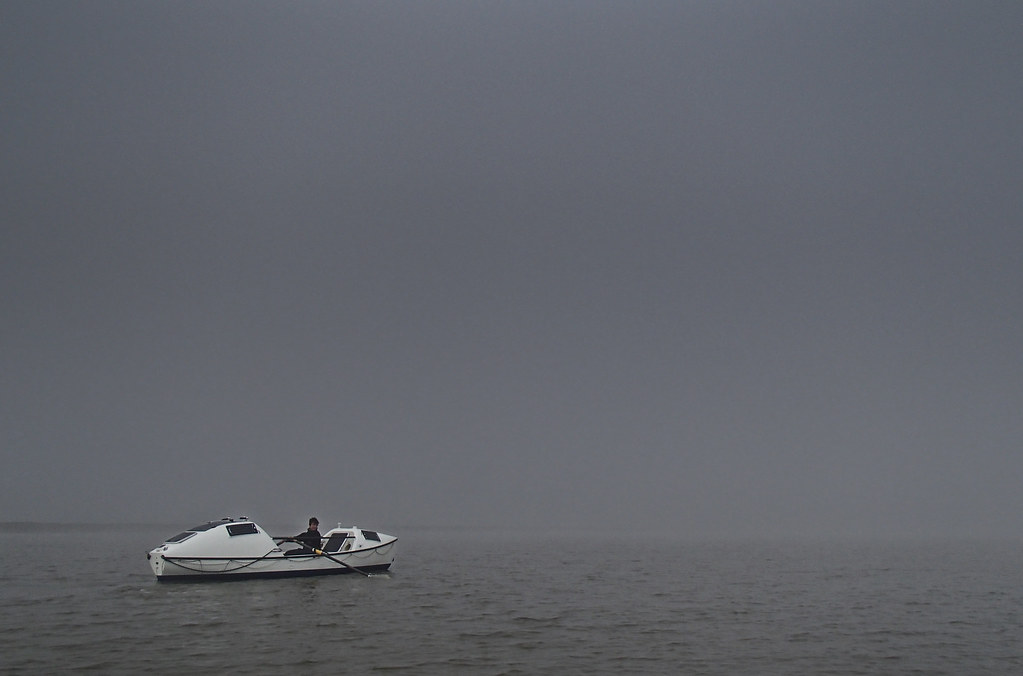
Way back in August of last year I wrote about a potential expedition that as set to take place this summer. The plan was for four adventurers to row across the Northwest Passage in a single season, something that has never been accomplished before. At the time, the expedition was still in the early planning stages with just a few details to be shared. Now, the team is en route to their starting position and will soon hit the water for a 3000 km (1865 mile) journey through some of the most challenging waters on the planet.

Dubbed the Last First Expedition, the plan is to set off from Inuvik in northernwest Canada and row to Pond Inlet in the northeastern part of that country. Along the way they team of rowers will make their way through incredibly cold waters strewn with icebergs and other hazards as they hope to complete their journey while also helping to raise awareness of the impact of climate change. It wasn't all that long ago that the Northwest Passage was accessible only by steel-hulled ships designed to slice through the ice. Now, it is freely navigable for several months of the year and while that window remains a narrow one, the fact that it is possible at all is a dramatic departure from what we've known in the past.

The four men making the journey include an experienced team of adventurers. They are led by Kevin Vallely who has skied to the South Pole, covered the length of the Iditarod trail on skis and raced in some of the toughest adventure races on the planet. He is joined by Paul Gleeson, who has rowed across the Atlantic and ridden his bike across Australia. Frank Wolf is an award-winning filmmaker who has traveled more than 2400 km (1491 miles) on foot, bike and pack raft through some of Canada's most remote wildernesses. Denis Barnett is the final member of the team and he has a background that involves rugby and sailing, but this will be his first major expedition.

As I write this, the team is now driving to Inuvik and should be there sometime in the next couple of days. Once there, they'll get their boat ready for the Passage and will set out in a matter of days. You'll be able to track their progress on the expedition's website as well as on Twitter and Facebook.


Introduction from Mainstream Last First on Vimeo.

Rowers Look To Set New Speed Record On Yukon River

Next Wednesday marks the start of the 2013 Yukon River Quest, an annual canoe and kayak race down the Yukon River in Canada. The course runs from White Horse to Dawson City and covers a distance 715 km (444 miles), making this the longest yearly race of its kind in the world. The grueling event is a marathon that tests the strength and endurance of everyone who enters as they face a number of challenges along the way.

The year, a two-man team of rowers has decided to challenge the speed record for the race down the Yukon. Steve Price and Colin Angus hope to beat the current time of 49 hours and 32minutes to paddle from White Horse to Dawson City. That record was set in 2008 by a six-person team paddling a voyager canoe, who actually had to take a mandatory 10 hour rest, which was included in their time. So, with that in mind, Steve and Colin are actually aiming at rowing non-stop with a target time of 39 minutes as their goal.

Since rowers aren't allowed in the Yukon River Quest, the two men won't actually be competing in that race. They will however be running concurrently with that competition when it gets under way next week. Because they won't be official entrants of the YRQ, they won't have to adhere to the mandatory 10 hour rest time either, so they intend to push on, non-stop.

They'll be rowing a boat that was designed and built by Colin to be fast yet stable in the Class II and III whitewater they'll face along the way. The 16-foot (4.8 meter) rowboat tips the scales at a mere 56 pounds (25.4 kg) which should hopefully make it light and fast on the water. This will be the first shakedown cruise for the vessel, which is called the Oxford Wherry.

Colin and Angus intend to row the boat non-stop with each man taking two-hour shifts. You'll be able to track their progress via their SPOT page when they get underway next week.

Good luck guys!

Video: Highlights Of The Redbull Divide And Conquer

The Redbull Divide and Conquer is a three-stage race during which a three-person team has one member of their team cover each leg. This year's event took place on June 8 on Vancouver's spectacular North Shore. The video below gives you an idea of what it is all about, but judging from how amazing each leg of the course looks, I'd have a hard time deciding which discipline I'd want to do the most. It all looks spectacular to me! And as a side note, I'm jealous that hose living in Vancouver have this outdoor playground right in their backyard. It looks beautiful.


Young Adventurers Launch 900-Mile Canoe Expedition To The Arctic

On Monday a team of six young explorers launched an epic summer paddling expedition that will see them covering more than 900 miles (1448 km) as they travel by canoe to the Arctic Ocean. Their expedition will carry them across three Canadian Provinces on this adventure as they also collect water samples to be examined by research scientists once the journey is complete.

The expedition is called the Tri-Province Arctic Canoe Expedition and it got underway from Black Lake, located in Saskatchewan following a three-mile portage that included the team shuttling 700 pounds (318 kg) of gear to their starting point. The route will take them through some extremely remote areas as they travel along the Dubawnt, Morse and Armark Rivers on their way to the Queen Maude Gulf in the Arctic. Some of their challenges will include crossing some early portage portholes on their way out of Black Lake, navigating through Lake Dubwnt, which is often frozen even in the winter, and an upstream slog on the Morse River that has never been attempted before.

The six young men on this journey include Kyle Terry, Ben Woods, Henry Cordeal, Jess Hernandez, Chris Martella and Andrew Hubb, all of which are between the ages of 22 and 26. They expect their journey to take roughly 70-days to complete, during which they'll be passing through some seldom visited sections of the Canadian wilderness. While traveling in the Queen Maud Gulf Migratory Bird Sanctuary, they hope to document some of the wildlife that they see along the way. Additionally, the water samples they take at various stages of the trip will be used in a research project at the University of Alaska to study the water cycle by creating a map of the patterns of isotopes found in the water in different locations. The hope is that it will allow researchers to study the processes that are affecting the water in unique parts of the world.

The boys have now been out on the water for four days and they have not posted any updates to their social media outlets just yet. Hopefully that will change as they get settled into the routine of the journey. You can follow them on both Facebook and Twitter if you would like to keep up with their adventure. You can also read about what they packed for a 70-day backwoods adventure in this article found at the National Geographic Adventure Blog.

Good luck guys!

Video: The Escape - Mountain Biking Through British Columbia

If you're hungry for a mountain biking adventure of your own, but don't have time to hit the trail anytime soon, perhaps this short film can help fill satiate your desires. It features two riders who set out to explore British Columbia on mountain bikes, riding from Whistler to the Strait of Georgia, then on to Squamish, the Sunshine Coast, Powell River, Cumberland, Hornby Island, Parksville, Duncan and Saturna Island. The journey was certainly a beautiful one and the video captures the natural wonders of those locations very nicely.  It is over 16 minutes in length, so be sure to get settled in for the duration. I promise its well worth your time.

the escape from Union Production Co. on Vimeo.

Calgary. A voyage to Calgary, province of Alberta, Canada, North America.

Read more »

Video: Temporary Story - A Travel Doc That Spans 6 Months And 3 Continents

Filmmaker Vadim Sahaklan and a friend spent six months traveling through 13 countries on three continents. Along the way they documented their journey with a video camera and the result is the beautiful short film you'll find below. The two men first drove from Alaska to Los Angeles, then flew off to Africa to explore on foot, before ending their globe-trotting adventure on motorbikes in South America.

The 39-minute video manages to convey a fantastic sense of wonder and whimsey as Vadim and his friend visit some amazing places, learning more about themselves and the world around them as they go. This is definitely a video you won't want to miss. Excellent stuff.

Temporary Story from Vadim Sahakian on Vimeo.

Couple Completes 3-Year, 11,700-Mile Journey Through North America

Amy and Dave Freeman definitely know how to take a honeymoon. Three years ago, shortly after they were married, the couple set out on an epic journey that would eventually cover more than 11,700 miles (18829 km) through some of the most remote and rugged backcountry in all of North America. Traveling by kayak, canoe, dogsled and on foot, they spent their time exploring some iconic waterways in an initiative to try to engage more young people with the outdoors. On April 4, that journey came to an end when they arrived in Key West, Florida by kayak.

The Freeman's started their expedition on Earth Day, April 22, 2010. Setting out from Bellingham, Washington in the U.S., they first paddled north along the Pacific Coast of Canada. From there they moved into the interior of the Yukon Territory before setting out on challenging odyssey by dogsled that saw them travel for 40-days through remote wilderness without ever encountering a road or town. Returning to their canoe, they then continued south to the Great Lakes before transitioning to kayaks for the final leg of journey, which took them down the East Coast of the U.S. and to the Keys.

While this three-year long adventure was pretty incredible in its own right, it is what Amy and Dave did along the way that is perhaps the most inspiring. The couple launched a website called The Wilderness Classroom through which they shared their expedition with more than 80,000 elementary and middle school students from around the world. Their website provides lesson plans and activities that are designed to help connect young people with the outdoors and inspire them to learn more about the world around us. While traveling over the past three years, they've also interacted and met directly with more than 25,000 students.

Congratulations to Amy and Dave for completing this amazing journey and for sharing it with so many young students along the way. Both accomplishments are inspiring to say the least.

London2London Via The World: Sarah Outen Preparing To Resume Round-The-World Journey

Sarah Outen is preparing to resume her human powered attempt to circumnavigate the blog and is now simply waiting for a weather window to depart on the next leg of her journey. That leg will be a 7500-nautical mile (13,890 km) solo crossing of the Pacific Ocean that begins in Japan and ends in Canada.

As you may recall, Sarah began her journey on April 1 of 2011, embarking on an expedition that she called London2London via the World. After kayaking down the River Thames and paddling across the English Channel, she then proceeded to ride her bike across Europe and Asia, before making a short kayaking journey into Japan. She originally expected the L2L to take about 2.5 years to complete and upon arriving in Japan, it appeared that she was actually a bit ahead of schedule. That all changed when she started her Pacific Row last summer.

While out on the water, just a few days after departing, a tropical storm hit Sarah's position, damaging her boat and requiring the Japanese Coast Guard to come to her assistance. That incident was a setback that required Outen to regroup and find a new boat. It has taken until now for that to happen, and at long last she's ready to begin again.

Unfortunately the weather hasn't been all that cooperative thus far and it may be a few days before she can finally depart. Storms have been hitting the Japanese coast, making it impossible to launch right now. But Sarah is very patient and she'll wait for the right time to get underway. The forecasts indicate it could be the end of the week before she gets a few consecutively good days that will allow for the re-launch.

The Pacific crossing is expected to take about six months to complete and upon her arrival in Canada, Sarah will once again return to her bike for a scenic ride across North America. When she finishes that leg of the journey, she'll return to her boat once again and row across the Northern Atlantic, return home to London where the entire adventure began.

Good luck and godspeed Sarah. I hope you can get to pulling those rows again soon.

North Pole 2013: Racing To The Magnetic North Pole

The 2013 North Pole season has been a non-starter so far this year, but we're about to get a few adventurers heading out on Arctic adventures. The Barneo Ice Camp is now set to open early next week, which will grant access for last degree skiers to the North Pole. But on the other side of the planet adventurer Gavin Bate is preparing to embark on a long distance polar trek that will culminate at the Magnetic North Pole.

Gavin should arrive in Resolute Bay, Canada sometime today and he plans to embark on his 550 km (341 mile) journey on Monday. He'll then travel on skis, pulling a sledge filled with his gear and supplies, toward the MNP. That means he isn't headed toward 90ºN, which is the location of the Geographic North Pole, but will actually be skiing to 78° 35’N, 104°11’W, which was the location of the Magnetic North Pole in 1996. That position was marked for the first Polar Race, and although the MNP moves over time, it has remained a landmark ever since.

In the spirit of that Polar Race, Gavin has named his expedition the Race Me To The Pole. He'll be going solo on this journey but he is inviting supporters to race him to the finish line by donating to his cause. The explorer is using the expedition to raise funds for his Moving Mountains Trust, an organization dedicated to sustainable development in Tanzania, Kenya, Borneo and Nepal. Every £1 ($1.50) is worth 25 meters of distance and the hope is that those donating to the charity will actually raise enough money to cover the 550 km distance before Bate does.

You'll be able to follow Gavin's progress on RaceMeToThePole.com. While this won't be a full distance journey to the North Pole, but it will still be a good challenge. Considering how few expeditions to the Arctic we've seen over the pat few years, it's good to have one to follow this spring. Good luck to Gavin on this endeavor.


Ontario. A voyage to Province of Ontario, Canada, North America - Ottawa, Toronto, Mississauga, Brampton, Hamilton, London, Markham, Vaughan, Kitchener, Windsor...

Read more »

FEAT Canada Will Focus On Adventurous Females

You've heard me mention the FEAT events on more than one occasion on this blog. Originating in South Africa, FEAT stands for Fascinating Expedition & Adventure Talks during which guest speakers are given seven minutes to share an important aspect of their adventures in a style that is similar to TED Talks. Speakers generally include mountaineers, outdoor endurance athletes, rock climbers, kayakers, explorers and more.

Previous versions of the event have been held in Cape Town and Johannesburg over the past couple of years but now the FEAT format is coming to North America. On March 8, FEAT Canada will take place at the Rio Theater in Vancouver where a number of interesting guests will take to the stage to tell their story. And since that day also happens to be International Woman's Day, there will be a particular emphasis on female adventurers.

Some of the speakers that will be sharing their stories at FEAT Canada include ultramarathoner Ellie Greenwood, adventure racer Jen Segger, mountain biker Aimee Dunn and adventure photographer Robin O'Neill. In all, there will be a total of nine speakers, with each strictly timed to just seven minutes each. That adds up to one full night of adventure that will be hard to beat.

If you're in Vancouver, or will be there next weekend, you'll definitely want to drop by the event. Tickets are available online or at the door the night of the show.

Allen Moore Wins 2013 Yukon Quest

The 1000-mile long Yukon Quest Sled Dog Race wraps up today when the final competitor is expected to cross the finish line. That musher will be Dyan Bergen, who has been running behind the pack since almost the start. Still, as a testament to her skill and endurance, she will complete the difficult event today and pick up the ceremonial Red Lantern when she arrives at the finish line in Fairbanks, Alaska having traveled all the way from Whitehorse in the Yukon in Canada.

This year's Yukon Quest was particularly challenging thanks to an over abundance of snow in certain areas of the course. There was so much powder in fact that race organizers were forced to cut a 50-mile section from the route because it was impassable. Twenty-six sled dog teams started in Whitehorse, but six of them, including four-time champ Lance Mackey, dropped throughout the course of the event.

But for the men running up front, it was quite the competition. Allen Moore and Hugh Neff, both very experienced mushers, pushed each other at every turn, each making strategic moves at various times that would have an impact on each other and the eventual outcome of the race. In the end, it was Moore who finished first this past Monday, just an hour and fifteen minutes ahead of Neff. Brent Sass came along later in the day to claim third place.

Throughout the rest of the week the other mushers and their dogs have been trickling into Fairbanks, with several arriving just yesterday. That leaves Bergen as the lone sled still out on the course, although she will make it home later today. In a race like the YQ, there is absolutely no shame in coming in last place however, as it is an accomplishment just to finish. I'm sure she'll display her Red Lantern very proudly as she absolutely should.

With the Yukon Quest wrapping up, its nearly time for the Iditarod to begin. In a few weeks, a larger field of racers will take to that classic course in the annual race from Anchorage to Nome. As usual, I can't wait.

1000-Mile Long Yukon Quest Sled Dog Race Underway!

I missed this earlier in the week, but wanted to mention it none the less. The 2013 Yukon Quest Sled Dog race is underway in Canada. The annual event runs between Whitehorse in the Yukon and Fairbanks, Alaska, covering 1000 miles (1600 km) of winter wilderness in the process.

Racers set off on Sunday with some of the top mushers in the world competing with one another. Up until yesterday, it was a relatively fast start, although race organizers warned the competitors that is about to change. Heavy snow across the region has buried the trail in quite a bit of fresh powder and the next 100 miles of the race are said to be some of the toughest ever. The snow is so deep at points that the crew in charge of keeping the trail open have had a tough time keeping up. In some places, the trail is actually under as much as three feet of snow.

Meanwhile, the lead racers are into the Dawson City checkpoint, where they are typically required to take a 36-hour mandatory rest. Race organizers have extended that rest time by an additional 4-hours for the safety of the dogs, but they are also conducting drug tests on the animals there too. Yep, that's right, we've now entered an era in which sled dogs are being tested for performance enhancing drugs!

As of this writing, the musher Hugh Neff leads the race. He won the event last year and has a couple of hours on second place racer Allen Moore. Neff has had to drop two dogs already however, which could be a cause for concern down the line. Jake Berkowitz is currently running in third place, an additional five hours back.

The Yukon Quest is always an excellent precursor to the Iditarod, which will begin on March 2nd. That annual sled dog classic, billed as "The Last Great Race" covers a thousand miles as well, although this year the race is facing challenges with a lack of snow on some parts of the course. Hopefully in the next three weeks leading up to the start, snow will fall across the trail, which runs from Anchorage to Nome.

Video: Mountains in Motion: The Canadian Rockies

Mountains in Motion is a short film that managed to garner more than its fair share of awards last year, and with good reason. It is a beautiful piece of work that incorporates time-lapse photography to show the changes that natural landscapes go through over weeks and months of time passing. It also mixes in the thoughts of an earlier mountaineer to create a narrative that binds the film together and gives it an element that isn't always a part of these kinds of works.

The entire Mountains in Motion video is now available online and if you have 15-minutes to kill, I highly recommend a watch. It is simply a wonderful piece of filmmaking and a great reminder of the fantastic wilderness that is the Canadian Rockies. A destination that is often overlooked.

Enjoy!


Mountains in Motion: The Canadian Rockies from The Upthink Lab on Vimeo.

10 Remote National Parks For Those Who REALLY Want To Get Away From It All

Are you a traveler who truly likes to get away from it all? Then you'll definitely want to check out the list of 10 of the World's Most Remote National Parks from our friends over at the Adventure Journal. These parks, located in a variety of countries across the globe, are seldom visited, very wild and about as unique as any destination you could ever hope for. Just getting to them is an adventure.

One of the destinations that earned a place on the list was Kobuk Valley National Park here in the U.S. Located in a remote corner of Alaska, the park is just 1.7 miles of very rugged terrain and was visited by just 11,000 people in 2011. Surprisingly, that would probably make it one of the busier places on the Adventure Journal list, as most of the others are expensive places to get to or severely restrict those that can enter.

Some of the other parks mentioned include Quttinirpaaq National Park in extreme northern Canada, Rapa Nui National Park on Easter Island and Darien National Park in Panama. Each has their own unique qualities that would draw adventurous travelers in, not the least of which is their very remote locations that make it a challenge to just get in.

As for the park that is most intriguing to me, that would certainly be Central Island in Kenya. This park is a volcanic island within Lake Turkana and is said to be the home of the largest population of Nile crocodiles on the planet. It also has abundant zebra, giraffe, gazelles and numerous other wildlife. The island is so remote that it takes three-days just to get their by land and boat. AJ warns that it might get a bit hot their too, as temperatures routinely hit 120ºF/48.8ºC.

If you're looking for some interesting places to add to your bucket list, I'm sure this article will spark a few new additions. Just make sure you have plenty of cash to spend, because visiting some of these locations will put a strain on the wallet for sure.

Video: When Eagles Attack!

This video has really been making the rounds today, but in case anyone has missed it, it is a  must see. It was shot in a park in Quebec and features a large golden eagle swooping down and actually picking up a small child. The first part of the video is at regular speed, so it's hard to see what's happening, particularly when the cameraman starts to panic. But wait for the second half of the video when it drops into slow-motion to really see what was going on. Crazy!

Edit: Okay, so I've been had. This video is a fake. I knew it had to be too good to be true. Still a fun video. And kudos to those who made it for pulling this off.


Edmonton. A voyage to Edmonton, the province of Alberta, Canada, North America.


Read more »