Rowing across an ocean is an incredibly challenging endeavor. After all, it requires the rower to spend hours each day working the oars, often for weeks at a time. Isolated and alone, it takes dedication and determination to make a solo journey across a body of water that at times seems endless. There is a reason that fewer people have rowed across one of the Earth's oceans than have been in space. Quite simply, it is really tough to actually complete such a voyage.
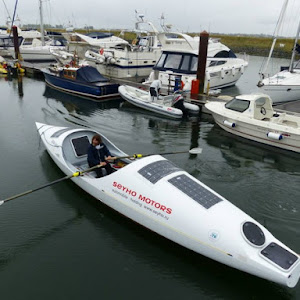
That isn't stopping Russian adventurer Fedor Konyukhov from trying. According to ExWeb, Konyukhov intends to make a solo row across the Pacific, non-stop from Chile to Australia. Fedor believes that it will take him roughly 200 days to complete the crossing, which will cover approximately 8000 nautical miles (14,816 km).
The Russian, who is a polar skier, mountaineer, and sailor, says he'll set out on his Pacific crossing in December. Leaving from Valparaise, Chile, he'll first have to navigate through islands and atolls off the coast of South America, before he makes his way out into the deep ocean. As he approaches Brisbane, Australia, he'll encounter more islands and the massive Great Barrier Reef. In between, Fedor believes he'll have to dodge potentially nasty storms that could potentially bring an end to his voyage at any time.
In order to successfully complete this ocean crossing in 200 days, Konyukhov will need to average 40 nautical miles (74 km) per day. That doesn't sound like a lot, but considering the challenges he'll face out on the water, particular as the grind of rowing begins to take its toll, covering those distance can get extremely difficult. High winds and turbulent seas will work against him, even in the spring of the Southern Hemisphere when things are better than other times of the year. Hopefully he is well prepared for those difficult conditions, as he will be hundreds of miles away from rescue should anything go wrong.
Expect to hear more in a few weeks as Fedor gets closer to his departure.
Showing posts with label Chile. Show all posts
5000 Mile Project: Couple Running The Length Of South America
On July 28, David and Katharine Lowrie set out on a run like no other. The pair have hit the road to run the length of South America. Yes, you read that right. They are planning on running south to north across the entire continent and they're doing so to raise awareness and funds to protect the wildlife that lives in threatened areas there. Their expedition is aptly named the 5000 Mile Project, as that is the distance that they will cover before they are through. (That's roughly 8046 km for most of the world.)
The began their epic adventure last month by setting off from Punta Arenas, Chile, the southernmost settlement in South America. They'll now work their way north through Patagonia, crossing between Chile and Argentina as they go. Eventually they'll cross into Bolivia before continuing on to Brazil, where they'll face one of the biggest challenges to the expedition – a crossing of the Amazon Rainforest. If successful there, they'll emerge into Venezuela and finish the journey with a run to the Caribbean coast.
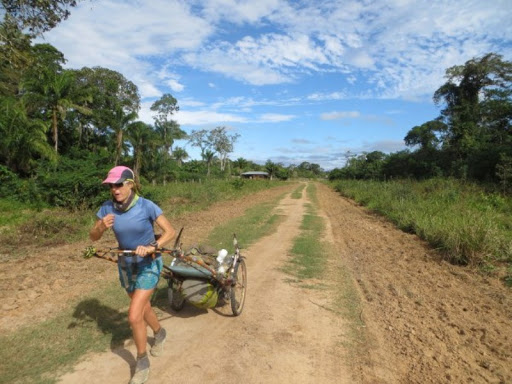
The Lowrie's hope to wrap up their journey approximately a year after they started. That seems rather ambitious considering the difficult miles that lie ahead. The couple aren't just out on the road running unencumbered. They're pulling specially designed carts behind them that carry all of their gear and supplies as well. David and Katharine are hoping to cover roughly the length of a marathon each day (26.2 miles/42.1 km), which is a challenge but highly feasible while on roads. But once they hit the Amazon, things will be completely different and much more difficult in general.
The husband and wife team have undertaken the 5000 Mile Project to raise funds for Asociacion Armonia, BirdLife International and Conservacion Patagonica. The hope is to collect enough money to help fund the purchase of threatened habitats in South America to protect the wildlife that lives there. As part of the project, they are also recording the various animals they see along their run including the many bird species that inhabit the continent.
Their efforts don't end there however. They've also launched the BigToe Classroom which contains lesson plans and projects for teachers to use with their students to get them engaged with conservation projects as well. There is even a way to contact David and Katharine and set up a video conference call with them directly from the road.
You can learn more about the 5000 Mile Project in an interview that the couple did with Explorers Web earlier in the week. You can also follow along with David and Katharine's blog or on Twitter and Facebook.
The began their epic adventure last month by setting off from Punta Arenas, Chile, the southernmost settlement in South America. They'll now work their way north through Patagonia, crossing between Chile and Argentina as they go. Eventually they'll cross into Bolivia before continuing on to Brazil, where they'll face one of the biggest challenges to the expedition – a crossing of the Amazon Rainforest. If successful there, they'll emerge into Venezuela and finish the journey with a run to the Caribbean coast.
The Lowrie's hope to wrap up their journey approximately a year after they started. That seems rather ambitious considering the difficult miles that lie ahead. The couple aren't just out on the road running unencumbered. They're pulling specially designed carts behind them that carry all of their gear and supplies as well. David and Katharine are hoping to cover roughly the length of a marathon each day (26.2 miles/42.1 km), which is a challenge but highly feasible while on roads. But once they hit the Amazon, things will be completely different and much more difficult in general.
The husband and wife team have undertaken the 5000 Mile Project to raise funds for Asociacion Armonia, BirdLife International and Conservacion Patagonica. The hope is to collect enough money to help fund the purchase of threatened habitats in South America to protect the wildlife that lives there. As part of the project, they are also recording the various animals they see along their run including the many bird species that inhabit the continent.
Their efforts don't end there however. They've also launched the BigToe Classroom which contains lesson plans and projects for teachers to use with their students to get them engaged with conservation projects as well. There is even a way to contact David and Katharine and set up a video conference call with them directly from the road.
You can learn more about the 5000 Mile Project in an interview that the couple did with Explorers Web earlier in the week. You can also follow along with David and Katharine's blog or on Twitter and Facebook.
Video: Experience Imagination In South America
To truly get a sense of South America, filmmakers Clemens Krüger, Vincent Urban & Stefan Templer traveled its length in a classic Land Rover, wandering through Argentina, Chile, Bolivia, Paraguay and Brazil. Along the way they captured some striking images from road and compiled them in the amazing video you'll find below. Those images are sometimes haunting, sometimes enchanting and always compelling. I hope you enjoy it as much as I did. Really beautiful footage.
The Patagonian Expedition Race On Hiatus Until 2015
A few weeks back I posted news that the Patagonian Expedition Race was in serious jeopardy and that if a sponsor didn't step up soon, the 2014 edition of the race was likely to not happen. Race manager Stjepan Pavicic felt that the event was not getting the support from the local community that it needed to stay solvent, despite the fact that his race brought a great deal of attention and money into the economy there. Yesterday Stjepan took to the PER Facebook page to announce that the race is indeed cancelled for 2014, while also giving us hope that it will return in 2015.
Stjepan's statement is quoted in full below. Here's what he had to say:
Dear racers, followers and friends of the PATAGONIAN EXPEDITION RACE,
A few weeks ago, we made a difficult decision that is very difficult for me to communicate, but I must. Finally though, after 10 years of consecutive editions, in February 2014 there will be no Patagonian Expedition Race. But this is not the end; this is just a brief pause.
In this time, exploring the wildest side of Patagonia, nature has taught us many hundreds of life lessons and also taught us to keep moving, even through complicated geographical scenarios and very hostile weather conditions. But she also taught us to understand when it’s necessary to pause in the midst of the storm. Today it’s time for that pause. It’s time to rehydrate ouselves and to feed our spirit. To review our roadmap and adjust our course to make directly for Patagonian Expedition Race 2015! So, we’ll be back with more energy and new challenges. We’ll maintain the authentic format and stay true to the wild expedition race spirit of the Patagonian Expedition Race, The Last Wild Race.
I want to thank all those who have shared our passion and helped build the Patagonian Expedition Race: athletes, photographers, videographers, journalists, volunteers and professionals from various fields, companies and institutions. Together we have made a large multinational and multidisciplinary team with personalities from from over 30 countries. The wilderness has been our inspiration.
Soon we will open registration for the 2015 edition. I invite you to dream that you will be part of the next Patagonia Patagonian Expedition Race, The Last Wild Race!
Stjepan Pavicic
So there you have it, straight from the race manager's mouth. There will be no Patagonian Expedition Race for 2014 but they hope to come back stronger than ever in 2015. It will be said to see a void on the schedule for early next year, but at least their is optimism that this great race will continue on after a brief hiatus. It is one of the best races in the world and it is held in one of the best settings on the planet. Hopefully it will be back before we know it.
Thanks to my friend Bill Snyder for sharing this news with me.
Video: Rios Libres Episode 4 - The Movement
Today we have the fourth – and final – episode of the Rios Libres web series, which over the past few weeks has introduced us to the threats that the rivers in Chilean Patagonia currently face. Corrupt officials in that country sold the water rights to those rivers to multi-national companies based in Europe. Those companies now intend to build hydro-electric generating dams along those rivers, which will have a lasting, and possibly irreversible, impact on the environment.
In this episode we get a chance to see exactly what is at stake here. Patagonia is one of the most dramatic and breathtaking landscapes on the planet and its future is now in jeopardy. We are at the crossroads as to where this issue will go next, but we can all sign an online petition asking Chile's president to reconsider construction of the dams. If those projects move forward, we could lose one of the last truly great wildernesses in existence.
Episode 4- The Movement from Rios Libres on Vimeo.
In this episode we get a chance to see exactly what is at stake here. Patagonia is one of the most dramatic and breathtaking landscapes on the planet and its future is now in jeopardy. We are at the crossroads as to where this issue will go next, but we can all sign an online petition asking Chile's president to reconsider construction of the dams. If those projects move forward, we could lose one of the last truly great wildernesses in existence.
Video: Rios Libres Episode 3 - The Alternatives
Episode three of the four part Rio Libres web series has been released, continuing the exploration of the issues that the wild rivers of Chilean Patagonia face now that multinational corporations are threatening to build dams throughout the region. In this episode we explore some alternatives to the hydroelectric plants that will irrevocably change the landscape in the south in order to power the mining operations in the north – a region where solar power is more viable than just about any other place on the planet.
This has been an excellent series so far, but it's painful to think about what they are potentially doing to Patagonia.
Episode 3- The Alternatives from Rios Libres on Vimeo.
This has been an excellent series so far, but it's painful to think about what they are potentially doing to Patagonia.
Video: Rios Libres Episode 2 - The History
Last week I introduced you to a new series of videos focused on the plight of the rivers in Chile's wild Patagonia region. This week we have the second video in the Rios Libres: Environmental Dispatches series, which will eventually be four parts in length. This time out we get a bit of a history lesson of the challenges that the rivers in Patagonia face as multi-national companies race to place dams on the river there in order to create hydroelectric power. But the impact of those dams could have a dramatic and irreversible effect on one of the last great wild spaces on our planet. We've seen it happen elsewhere and it would be a shame to see it happen in Patagonia as well.
Episode 2- The History from Rios Libres on Vimeo.
Video: Saving Patagonia's Wild Rivers
A new web video series has just launched entitled "Rios Libres: Environmental Dispatches." The four-part series explores the threats to Chile's rivers and the unique challenges that the people of that country are facing in order to save their wild spaces, including Patagonia, one of the most spectacular wildernesses on the planet.
The issue is that large conglomerates are planning to place five dams along two major rivers in Patagonia. Those dams will have a massive effect on the rivers and the ecosystems that surround them. In the video below, which is Episode 1 of this new series, we meet some of the people that live in Patagonia and get their thoughts on what the Baker and Pascua rivers mean to them.
Episode 1- The People from Rios Libres on Vimeo.
The issue is that large conglomerates are planning to place five dams along two major rivers in Patagonia. Those dams will have a massive effect on the rivers and the ecosystems that surround them. In the video below, which is Episode 1 of this new series, we meet some of the people that live in Patagonia and get their thoughts on what the Baker and Pascua rivers mean to them.
Future In Doubt For Patagonian Expedition Race
The Patagonian Expedition Race has been a fixture on the adventure racing calendar for ten years. Over that period, the race has earned itself a reputation for being one of the toughest around while also earning rave reviews from athletes for the stunning courses that were created year in and year out. Now, it seems the future of the race is in serious jeopardy and the adventure racing community runs the risk of losing yet another classic expedition length event.
The news broke earlier today in a local Chilean newspaper (translation required). Race managers Stjepan Pavicic is suspending the race for 2014 due to lack of local support from the authorities in the Patagonia region. As you can imagine, putting on a race of this caliber on an annual basis, particularly in a remote setting, can be very difficult. From the sound of things, it seems Pavicic doesn't feel like his race is getting the support it needs to thrive. This is particularly disheartening considering the amount of exposure it brings to the region and the revenue it generates for the local economy.
Pavicic has said that he will wait until June 10 to make a final announcement on the fate of the race. The hope is that perhaps one or two of the sponsors will step up to lend a hand, or perhaps a new sponsor might be interested in joining the team. Barring some kind of miracle however, it now appears that there will be no Patagonian Expedition Race next year. He does say he'll reassess the situation in 2015 to see if it is viable to bring back the event at that time.
So?? Any outdoor-oriented companies out there looking for a little exposure want to step in and save this great race? I'm sure the race directors would love to hear from you.
The news broke earlier today in a local Chilean newspaper (translation required). Race managers Stjepan Pavicic is suspending the race for 2014 due to lack of local support from the authorities in the Patagonia region. As you can imagine, putting on a race of this caliber on an annual basis, particularly in a remote setting, can be very difficult. From the sound of things, it seems Pavicic doesn't feel like his race is getting the support it needs to thrive. This is particularly disheartening considering the amount of exposure it brings to the region and the revenue it generates for the local economy.
Pavicic has said that he will wait until June 10 to make a final announcement on the fate of the race. The hope is that perhaps one or two of the sponsors will step up to lend a hand, or perhaps a new sponsor might be interested in joining the team. Barring some kind of miracle however, it now appears that there will be no Patagonian Expedition Race next year. He does say he'll reassess the situation in 2015 to see if it is viable to bring back the event at that time.
So?? Any outdoor-oriented companies out there looking for a little exposure want to step in and save this great race? I'm sure the race directors would love to hear from you.
Video: Kayaking Chile's Rio Baker River In Patagonia
Our friends at EpicTV have just released the first video in a 12-part series that will follow some great paddlers as they take on epic white water in a variety of locations around the globe. In the first episode below, the team kayaks the Rio Baker River, located deep inside Chilean Patagonia. Just how deep you ask? Apparently it takes two days just to drive into the river to begin the paddle itself. As always with Patagonia, the landscapes are breathtaking as well. This should be a great series for sure.
Ultrarunner Billy Barnette To Race In Patagonian Ultramarathon
Way back in February I told you about a new trail running event that is scheduled to take place in the Patagonian region of Chile this September. The 2nd annual Patagonian International Marathon is set to take place on September 28 inside Torres del Paine National Park and will offer competitions ranging in length from a mere 10k, all the way up to a full-blown 63k ultramarathon. Now, organizers of the event have announced that a well-known endurance athlete has joined the race and will be competing alongside other top endurance athletes.
Ultra-runner Billy Barnette, who is featured in the best selling book Born to Run, has come onboard the Patagonian International Marathon to serve as an international ambassador who will not only promote the event, but also its efforts to support conservation in Chile's breathtaking wilderness. While there, he'll be competing in the all-new 63k ultramarathon (39.1 mile).
If you'd like to take part in the Patagonian Internatonal Marathon, registration for the event is now open. Prices are very reasonable for an event like this one and you simply can't beat the scenery you'll be running through. But the competition isn't just about a race in one of the world's most beautiful places, as it is also meant to bring awareness of the challenges in the arena of conservation that Patagonia faces as well.
For more information about the race visit PatagonianInternationalMarathon.com.
Ultra-runner Billy Barnette, who is featured in the best selling book Born to Run, has come onboard the Patagonian International Marathon to serve as an international ambassador who will not only promote the event, but also its efforts to support conservation in Chile's breathtaking wilderness. While there, he'll be competing in the all-new 63k ultramarathon (39.1 mile).
If you'd like to take part in the Patagonian Internatonal Marathon, registration for the event is now open. Prices are very reasonable for an event like this one and you simply can't beat the scenery you'll be running through. But the competition isn't just about a race in one of the world's most beautiful places, as it is also meant to bring awareness of the challenges in the arena of conservation that Patagonia faces as well.
For more information about the race visit PatagonianInternationalMarathon.com.
Video: The Beauty Of Torres Del Paine
Patagonia is amongst the most beautiful and rugged environments on our planet and Chile's Torres Del Paine is the the best example of those landscapes. If you've never been there, you'll certainly want to go after watching the video below. It is four and a half minutes of eye candy that will leave you longing for wild spaces. Enjoy.
Torres Del Paine - Magallanes. Chile. from Imaginario Colectivo on Vimeo.
Italian Climber Shares Account Of First Ascent Of Torre Egger West Face
On March 2, Italian climbers Matteo della Bordella and Luca Schiera completed one of the most sought after climbing routes in the entire world when the put up the first ascent of the West Face of Torre Egger in Patagonia. The jagged rock face, which stretches 2685 meters (8809 ft) into the air, required 30 pitches, 25 of which were complete new, to complete. The two climbers had to overcome a 1000 meters (3280 ft) vertical rock race on their way to the top, which was a culmination of more than three years of work to get there.
Earlier today I received a note from the climbers PR team at addidas outdoors sharing some photos and details from the expedition. What follows is an account from della Bordella of all of the hard work that went into completing this tough ascent, with the new route earning the moniker of "Notti Magiche" or Magic Nights.
Three years ago, at a round table in Lecco, the West face of Torre Egger was presented to me and Matteo Bernasconi “Berna” as possibly the last big wall of Patagonia still unclimbed. Climbing legends Mario Conti and Carlo Aldè* showed us the a few photos of the Egger West face and gave a little description of what we could find. This little information was enough to convince me and Berna to take on the challenge of opening the first route on this immaculate wall. With no experience of Patagonia I had no idea of what to expect, nevertheless I was super psyched for starting this new adventure.This is a pretty strong candidate for climb of the year and we're only a few months in. The West Face has been one of the Holy Grails of rock climbing for some time and it is fantastic that someone was finally able to complete it. Congrats to Matteo, Luca and the entire team for a job well done.
During the winter 2010-2011 and 2011-2012 we tried our best to succeed on this wall, facing many extreme situations such as my fall on a belay which left both of us hanging on a single cam or the huge fall of ice and debris from the summit mushrooms that forced us to take some objective risks. We learned a lot about Patagonia, its mountains and its unpredictable weather and we also learned a lot about opening a new route on a big wall in such a remote place like this. We arrived at a high point just 30 meters below the Col de Lux which divides Punta Herron from Torre Egger and then decided to retreat due to the previously mentioned fall on the belay.
Just 30m from the submit little was missing to complete our route but still we had to go back in 2013 to properly finish the job. We thought of opening our team to a third person, in order to be lighter and safer on the wall. The first name who came to our minds was Luca Schiera (aged 22); a talented youngster from Lecco on his first extra-European experience.
After 35 days of staying in Chalten with mostly bad weather, Berna had to go back to Italy due to job commitments while Luca and I decide to give it a last try. Wednesday 20th of February we head to Circo los Altares and then to Filo Rosso where we pitch our tent and settle a small base camp. We wait for seven days through changeable weather for the right conditions to climb on the wall. Then finally on Thursday 28th February we start our final push.
The first day on the wall we partly re-climbed and partly jug on the old fixed ropes left from the previous year. We get to a point two pitches down from the highest point reached the previous year, where we spent a night bivying hanging on our harnesses. A truly magic night for Luca and me.
The following day, Friday 1st March, we opened four new pitches up to Col Giongo-Di Donà or Col Lux, following a different line from the one attempted last year. At 4pm we arrived at Col Lux where we melted some snow and prepared the bivy and finally took a little rest.
Saturday 2nd March was the summit day. We thought of opening an independent line to the top but in the end followed the Huber-Snarf route. At 11.20am, after a 1,000m long route, made up of thirty pitched (25 new independent ones and the last five shared with the Huber-Snarf route) we stood on the summit of Torre Egger. It is the moment I’ve desired and dreamt of for three long years. But we were aware that a long and complicate descent was expecting us. Sunday 3rd March we finally completed the descent and at 3.30pm we were back to our tent in Filo Rosso, bringing down all the fixed ropes we used.
We called the route “Notti Magiche” (magic nights) a name which ironically remembers the uncomfortable bivys but at the same time recall the magic Patagonian nights. The 2012 attempt which stopped 30 meters below the Col Lux, is truly an independent line, waiting to be finished and will remain with the original name of “Die Another Day”.
I want to remember that this route is the result of a big team effort and thus a team success. A team that goes beyond Berna, Luca and I and involves the whole Ragni group. Without the support and the trust of Ragni di Lecco and our sponsors, adidas outdoor, none of this would have been possible.
Video: Return Of The Valparaiso Downhill Mountain Bike Race
Urban bike races don't get any more crazy than the Valparaiso Downhill, which is held annually in Valparaiso, Chile. As the name implies, the entire course runs downhill, but that doesn't convey just how wild things can get. Riders will have to navigate down narrow flights of stairs, over ramps, along fences and so much more. The race demands nerves of steel and plenty of testicular fortitude to say the least.
This year, the winning run was completed by Marcelo Gutierrez and the entire ride was captured by a Contour action camera. You can check it out below, just remember to breathe as you watch it all unfold.
Team Adidas-Terrex Prunesco Wins 2013 Patagonian Expedition Race
I haven't written much about the 2013 edition of the Patagonian Expedition Race in large part because it has been difficult to get much information about what was happening. For a decade this has been the first big adventure race of the year and it is notoriously challenging with unpredictable weather always playing a role. This year was no different and we even had familiar faces at the top of the leaderboard.
For the fourth year in a row, Team Adidas-Terrex Prunesco has claimed victory in Chile. The team, which is made up of Mark Humphreys, Nick Gracie, Sally Ozanne and Chris Near, crossed the finish line yesterday after nine days of non-stop racing. They beat out ten other teams, most of which are still out on the course. It appears that Team Eastwind will claim second place today.
It seemed that the only way to follow the race this year was on Facebook and Twitter. The website for the event has typically provided live tracking, an up-to-date leaderboard and regular news posting on what was happening out on the course. Those things were absent this time out, which made it a lot more challenging to figure out what was going on. Hopefully next year's version of the race will bring those tools back for us fans to follow.
Congrats to the champs once again. It seems that over the past few years they've made Patagonia their home turf. Well done!
For the fourth year in a row, Team Adidas-Terrex Prunesco has claimed victory in Chile. The team, which is made up of Mark Humphreys, Nick Gracie, Sally Ozanne and Chris Near, crossed the finish line yesterday after nine days of non-stop racing. They beat out ten other teams, most of which are still out on the course. It appears that Team Eastwind will claim second place today.
It seemed that the only way to follow the race this year was on Facebook and Twitter. The website for the event has typically provided live tracking, an up-to-date leaderboard and regular news posting on what was happening out on the course. Those things were absent this time out, which made it a lot more challenging to figure out what was going on. Hopefully next year's version of the race will bring those tools back for us fans to follow.
Congrats to the champs once again. It seems that over the past few years they've made Patagonia their home turf. Well done!
Run A Marathon In And For Patagonia This September
Outdoor athletes looking for a new challenge this year may want to consider the Patagonian International Marathon, which takes place in Chile's Torres del Paine National Park on September 28. The race, which returns for its second year, promises runners a unique challenge in one of the most beautiful places on Earth while striving to also protect that amazing wilderness.
The 2012 edition of the marathon drew more than 400 racers from 17 different countries and this year's edition looks to do the same. Organizers of the event, who also put together the outstanding Patagonian Expedition Race, offer four different lengths for runners to run. Those lengths include 63k (39.1 miles), 42k (26.2 miles), 21k (13.1 miles) and 10k (6.2 miles).
And oh what a course this is sure to be. Torres del Paine features spectacular mountain vistas, pristine rivers and streams, crystal clear lakes and beautiful glaciers. Each of the routes shares parts of the same trail, which runs through the heart of the national park, giving runners an opportunity to experience this unique place in the best way possible – on foot!
The race isn't just about running through one of the most breathtaking places on the planet however as it also is used to raise awareness of the importance of protecting this magical place. The marathon is run in conjunction with NIGSA, an organization dedicated ensuring the sustainable development of Patagonia, while spearheading conservation efforts to keep the region as pure and untouched as possible.
Registration for the event is now open with early-bird discounts running through the end of the month. This is an opportunity to run a marathon (or longer!) in a place that many consider to be the last great wilderness on Earth. And while you're there, race organizers are also offering some great add-ons to help you enjoy the place even more. For example, you can go kayaking on the Strait of Magellan, tracking Vicuna in a conservation park or trekking in the Karukinka and Darwin Mountain Ranges. These options allow you to add even more adventure to your trip.
Sound like fun? Better get training now!
The 2012 edition of the marathon drew more than 400 racers from 17 different countries and this year's edition looks to do the same. Organizers of the event, who also put together the outstanding Patagonian Expedition Race, offer four different lengths for runners to run. Those lengths include 63k (39.1 miles), 42k (26.2 miles), 21k (13.1 miles) and 10k (6.2 miles).
And oh what a course this is sure to be. Torres del Paine features spectacular mountain vistas, pristine rivers and streams, crystal clear lakes and beautiful glaciers. Each of the routes shares parts of the same trail, which runs through the heart of the national park, giving runners an opportunity to experience this unique place in the best way possible – on foot!
The race isn't just about running through one of the most breathtaking places on the planet however as it also is used to raise awareness of the importance of protecting this magical place. The marathon is run in conjunction with NIGSA, an organization dedicated ensuring the sustainable development of Patagonia, while spearheading conservation efforts to keep the region as pure and untouched as possible.
Registration for the event is now open with early-bird discounts running through the end of the month. This is an opportunity to run a marathon (or longer!) in a place that many consider to be the last great wilderness on Earth. And while you're there, race organizers are also offering some great add-ons to help you enjoy the place even more. For example, you can go kayaking on the Strait of Magellan, tracking Vicuna in a conservation park or trekking in the Karukinka and Darwin Mountain Ranges. These options allow you to add even more adventure to your trip.
Sound like fun? Better get training now!
Antarctica 2012: Richard Parks Back In Punta, Season Officially Done!
There isn't a whole lot to report on the Antarctic season which has now officially wrapped up for another year. Last week I reported that that Richard Parks had pulled the plug on his expedition when it became abundantly clear that he wasn't going to be able to reach the South Pole before the last flight departed for the season. As you can imagine, this was a difficult decision for Richard, who struggled hard, trained for months and planned for this expedition for years. Something that he discusses in his latest dispatch, which gives us some insights into the mind of an explorer once his expedition is done.
On Friday, Richard was retrieved from the ice and flew directly to Union Glacier, which is the arrival and departure point for most private visitors to the continent. Parks was only there for a short time however and he was quickly hustled onto a plane for a flight back to Punta Arenas, Chile, arriving there a few hours later. That meant that the solo-skier went from total isolation for 39 days to being back in the hustle and bustle of modern life in a matter of just ten hours or so. As you can imagine, this was a bit of shock to his system, as he adjusted from going without most modern conveniences and a steady supply of food for more than four weeks, only to be dropped back into the fray without much time to adjust.
Richard spent most of the weekend sleeping and adjusting to being back in civilization. He has a lot of gear sorting to get done before he heads home, but reading the dispatch it didn't seem that he was much in the mood for accomplishing that task. He appears to be in a post-expedition funk that comes when your adventure ends but you're not quite ready to give it up just yet. He is ready to go home to friends and family, but is also missing the challenges of living and moving through Antarctica.
As I said, this personal and moving post to his blog offers good insight into what goes through an explorers mind when his expedition unexpectedly comes to an end. Some of the feelings he is experienced are exasperated by the fact that he didn't accomplish everything he set out to do, despite his best efforts. Those are the kinds of feelings that tend to spur us on even harder in future endeavors.
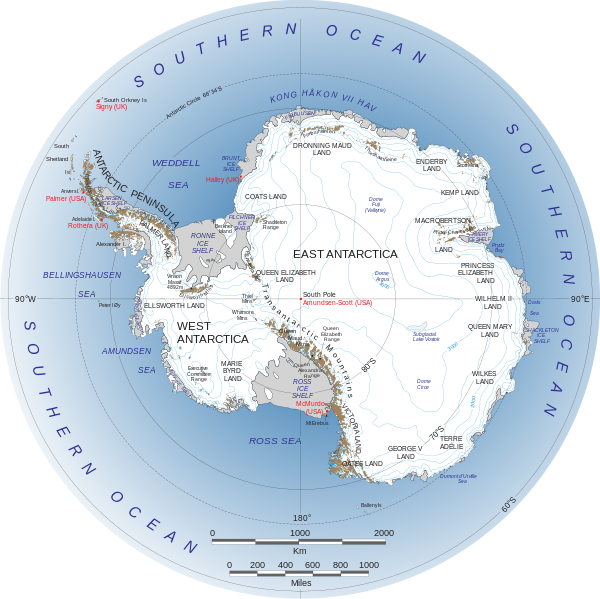
I also wanted to follow up on the story I posted last week about the aircraft that went down in the Antarctic with three crew members on board. The Twin Otter airplane operated by Kenn Borek Air disappeared while making a routine flight from the South Pole to Terra Nova Bay, and due to bad weather search and rescue teams were unable to launch their efforts.
Over the weekend, the weather cleared and SAR teams from New Zealand were finally able to locate the aircraft. It had crashed near the summit of Mt. Elizabeth and we're told that the impact was not survivable. The three crew members perished in the accident. The plane was spotted from the air, but due to continued high winds, no one has actually been able to reach the crash site as of yet.
My condolences to the friends and family of those who were aboard.
On Friday, Richard was retrieved from the ice and flew directly to Union Glacier, which is the arrival and departure point for most private visitors to the continent. Parks was only there for a short time however and he was quickly hustled onto a plane for a flight back to Punta Arenas, Chile, arriving there a few hours later. That meant that the solo-skier went from total isolation for 39 days to being back in the hustle and bustle of modern life in a matter of just ten hours or so. As you can imagine, this was a bit of shock to his system, as he adjusted from going without most modern conveniences and a steady supply of food for more than four weeks, only to be dropped back into the fray without much time to adjust.
Richard spent most of the weekend sleeping and adjusting to being back in civilization. He has a lot of gear sorting to get done before he heads home, but reading the dispatch it didn't seem that he was much in the mood for accomplishing that task. He appears to be in a post-expedition funk that comes when your adventure ends but you're not quite ready to give it up just yet. He is ready to go home to friends and family, but is also missing the challenges of living and moving through Antarctica.
As I said, this personal and moving post to his blog offers good insight into what goes through an explorers mind when his expedition unexpectedly comes to an end. Some of the feelings he is experienced are exasperated by the fact that he didn't accomplish everything he set out to do, despite his best efforts. Those are the kinds of feelings that tend to spur us on even harder in future endeavors.
I also wanted to follow up on the story I posted last week about the aircraft that went down in the Antarctic with three crew members on board. The Twin Otter airplane operated by Kenn Borek Air disappeared while making a routine flight from the South Pole to Terra Nova Bay, and due to bad weather search and rescue teams were unable to launch their efforts.
Over the weekend, the weather cleared and SAR teams from New Zealand were finally able to locate the aircraft. It had crashed near the summit of Mt. Elizabeth and we're told that the impact was not survivable. The three crew members perished in the accident. The plane was spotted from the air, but due to continued high winds, no one has actually been able to reach the crash site as of yet.
My condolences to the friends and family of those who were aboard.
Chile ( República de Chile ). A voyage to Chile, South America - Santiago de Chile, Concepción, Valparaíso, San Bernardo, Los Ángeles, Punta Arenas...
Spindly Chile stretches 4300km – over half the continent – from the driest desert in the world (near San Pedro de Atacama) to massive glacial fields. Filling up the in-between are volcanoes, geysers, beaches, lakes, rivers, steppe and countless islands. Slenderness gives Chile the intimacy of a backyard (albeit one fenced between the Andes and the Pacific). What’s on offer? Everything. With easy infrastructure, spectacular sights and hospitable hosts, the hardest part is choosing an itinerary. Consider the sweeping desert solitude, craggy summits and the lush forests of the fjords. Rapa Nui (Easter Island) and the isolated Isla Robinson Crusoe offer extracontinental exploits.
But don’t forget that Chile is as much about character as it is setting. Its far-flung location fires the imagination and has been known to make poets out of barmen, dreamers out of presidents and friends out of strangers. A few wrong turns and detours and you too will be part of this tightly woven family who barbecues on Sunday. Don’t forget to bring an extra bottle of red to the long, lazy dinners that await.
Travel Alert: The town of Chaitén, in the Los Lagos region of southern Chile, is under threat from the ongoing volcanic activity of the nearby Chaitén volcano. Any travellers visiting the Los Lagos region should exercise caution and monitor news reports. Check Safe Travel for current government warnings, or the BBC for news on the situation.Show in Lonely PlanetMore about Chile
Subscribe to:
Comments (Atom)


Follow Us
Were this world an endless plain, and by sailing eastward we could for ever reach new distances