Showing posts with label Everest. Show all posts

Everest News: Commentary On New Regulations And Sherpas Speak Out On Spring Brawl

August isn't typically the time of year that get much news on Everest. After all, the spring climbing season is well behind us and the much quieter fall season hasn't begun yet. But today we have a couple of Everest-centric stories worth noting and considering the rather large shadow the mountain casts over the mountaineering world, they are both worth sharing.

First up, Alan Arnette has weighed in with his thoughts on the new regulations that Nepal will be instituting next year. Those regulations include a permanent government presence in Base Camp, a ban on the use of helicopters in the region and a requirement that all attempts at setting a record on the mountain be declared ahead of time. Alan notes that while it is good to see Nepal making any kind of effort to bring a bit of order to Everest, he has his doubts as to whether or not these rules will actually accomplish anything or will even be enforced at all.

One of the more troubling aspect about the news that more regulations are coming to the world's tallest mountain is that aside from a BBC article on the changes, there has been little other information on the topic. The Nepali government hasn't even issued a press release or sent out any written confirmation of the rules changes. Worse yet, Alan says that none of the new regulations do anything to address the biggest challenge - overcrowding.

I have to say that I agree with Alan's assessment of the situation and had my own reservations about the new rules when they were announced. Nepal isn't all that well known for following through with their government oversight to begin with and adding yet more bureaucracy  probably isn't the answer. The fact that these new rules don't help in controlling the crowds leads me to believe that officials there are simply burying their heads in the sand so as to not disrupt the the cash cow that Everest has become for them. More people on the mountain means more permits sold, which of course leads to more cash in the country's coffers.

Meanwhile, Outside magazine has an interview with a Sherpa who was on Everest this past spring and was a witness to the incidents that led to a brawl between other Sherpas and European climbers Ueli Steck, Simone Moro and Jonathan Griffith. The conflict began up near Camp 3 at 23,000 feet (7010 meters) when the well-known trio attempted to cross the ropes that were being fixed at the time. Reportedly they dislodged a piece of ice that struck a Sherpa working below. This of course angered the other members of the rope-fixing team who had warned the three westerners to stay off the ropes. The lead Sherpa pulled the team off the job and ordered them to go down to Camp 2. When Simone, Ueli and Jonathan arrived back at that point a few hours later, all hell broke loose.

Tashi Sherpa, who works for International Mountain Guides and was the subject of this interview, paints a similar story from what we've heard in the past but with a few key differences. For instance, he claims that the crowd that approached Simone and Ueli in Camp 2 was nowhere near 100 people as many reports have indicated. He also says that Simone in particular was confrontational and abusive with the Sherpas involved. His actions, according to Tashi, directly led to increased tension between the parties involved.

The interview is a good one and comes across as being honest and forthright. The Sherpa, spoke to a reporter in Kathmandu and talked openly about a growing resentment amongst Sherpas towards western climbers. This is a result of them doing most of the work on Everest and getting little credit for the role they play. As the Nepali climbers have gotten more educated and self assured, they are now starting to ask why the stories about their climbs aren't included with news of westerners summiting the mountain. After all, without the Sherpas, very few people would actually be able to climb Everest.

I found the interview to be very interesting and credible. it is good to get the story from the perspective of the Sherpas involved – a story that has mostly gone untold until now. The person in Outside's interview, says that no foreign journalists or bloggers who were there in BC bothered to talk with the Sherpas involved to get their side of the story. Not even the Nepalese government liaisons approached them. This interview gets at least part of their story out to the public.

If you're a fan of all-things Everest, you'll certainly want to read both of these stories.

Mission 14: Climbing The World's Highest Peaks In Just Two Years

Climbing an 8000-meter peaks is always a significant challenge. It requires skill, dedication and a considerable amount of luck as well. There are 14 mountains on our planet that reach above that lofty height and to date only 31 people have managed to summit them all. Most of those who have climbed these difficult mountains have taken several years to accomplish that feat. Now, once climber hopes to do all of them in just two years time.

47-year old Nick Cienski has announced Mission 14, which he has dubbed "the World's Toughest Expedition." Beginning in 2014 he will launch his attempt to climb all of those big peaks in just 24-months, including Everest, K2 and the always tricky Annapurna. He will begin his quest next winter, although which mountain he'll start with remains to be seen. Nick will  climb using supplemental oxygen and he hopes to set several records along the way, including a new speed record on Everest, which currently stands at 8 hours, 10 minutes and was set by Permba Dorje Sherpa in 2004.

The expedition will be of a truly epic scale. The budge is in excess of $5.6 million and 3780 porters will be used to carry gear, establish camps and fix ropes so that Nick can climb these mountains. No one has ever topped out on more than five 8000-meter peaks in a year. He'll have to do that twice!

Cienski is launching this undertaking not just for setting records however. His goal is to raise awareness of human trafficking in places like Nicaragua and take steps to stamp out that awful activity. He hopes to raise funds for nonprofits that combat the illegal slavery trade.

So, what do you think? Can he do it? It seems like an extremely ambitious expedition, particularly when you have to rely on the always-fickle weather that we find in the Himalaya and Karakoram. One bad storm could put an end to Nick's plans. Considering how temperamental conditions have been on a number of the 8000-meter peaks in the past few years, I'd say he has quite a struggle on his hands.

Stay tuned for more on Mission 14 in the months ahead. If things go according to plan, we should be hearing Nick's name a lot over the next two years. 

New Regulations Coming To Everest Next Spring

This past spring was a tumultuous one on Everest where we once again saw concerns with overcrowding and several deaths. Add into that a crazy scene involving three high-profile European climbers getting into a fight with a mob of Sherpas and you can understand why the Nepalese government would want to take steps to reign things in. That is exactly what they did last week with the announcement of new measures to improve safety, security and the environment on the world's tallest mountain.

The biggest adjustment for climbers will be a permanent presence in Base Camp by government officials. A team of government selected staffers will be assigned to BC to provide oversight of regulations and to help coordinate any rescue operations that may need to be conducted. They'll also help facilitate communications to and from the mountain, although their primary duty will be ensure that everyone is following the rules and conducting themselves in a proper manner. Each of the expeditions is already assigned a liaison officer, but most of them never leave Kathmandu. This new "Integrated Service Center," as it is being called, will essentially be the eyes and ears of the Nepali government on Everest.

That isn't the only change however as there are several other shifts in policy as well. For instance, helicopter flights to other peaks in the Khumbu region will be prohibited unless they are used for conducting a rescue. This will prevent some climbers from using that mode of transportation to hop from one mountain to another while undergoing their acclimatization process. The helicopters can make the snow on the upper slopes of Everest unstable, bringing about avalanches. By limiting the amount of helicopter traffic, the hope is that the mountain will become safer all around.

The government has also announced that all attempts to set a record on Everest must be announced prior to starting a climb. The hope is that this new rule will cut down on some of the arbitrary or outlandish "records" that people come to Everest to set. That kind of behavior has contributed to the Everest climbing season being seen as a bit of a three-ring circus at times and Nepal would like to see some dignity restored to a mountain that they view as sacred.

Finally, there will be further enforcement on the regulations regarding the removal of trash from Everest. As we all know, over the years trash has accumulated in certain areas of the mountain and it is having an adverse effect on the environment there. Teams are required to take all of their waste materials with them when the season ends, but that is not always as strictly enforced as it should be. The government has warned that there will be increased crackdowns in this area to help clean up Everest.

All in all, these are some good steps towards bringing further oversight to Everest. Whether or not they'll make things safer remains to be seen. The Nepalese government has been criticized for not taking a more active role and this seems to be an attempt to squelch some of that criticism. They'll now have to follow through with the enforcement, which has often been the part that they would stumble on. I guess we'll find out more next spring.

Video: A Timelapse Journey To Everest Base Camp

Not planning on visiting Everest Base Camp soon? Better yet, want to relive a previous journey to EBC? Then check out this wonderful timelapse video of the trek from Lukla to Base Camp that will give a great sense of what it is like to make that hike. I think this is a perfect way to end the week.

The Himalayan - Mt.Everest Base Camp trek HD Time Lapse from Amit Haware on Vimeo.

Himex Boss Russell Brice Weighs In On Climber-Sherpa Conflict On Everest

The Everest climbing season may be long over at this point, but one story continues to get plenty of attention weeks later. The conflict that took place between European climbers Ueli Steck, Simone Moro and Jonathan Griffith and the Sherpa team fixing ropes high on the mountain both shocked and saddened the mountaineering world. A loss of tempers is one thing but threatening the lives of the three western climbers is a completely different situation altogether and while it has been two months since the high profile incident took place, the repercussions of the event are likely to be felt for months and years to come.

One of the more respected figures on Everest is Russell Brice who has been coming to the mountain for decades both as a climber and expedition leader. His company, Himalayan Experience, is one of the larger and more well organized groups on the mountain each year and Brice is most certainly a leader in the Everest community. It was him who helped broker a deal between the three climbers and the Sherpas that helped bring a semblance of peace to the mountain following the conflict this spring and two of his best Sherpas were part of the group that had the initial run-in with Ueli, Simone and Jonathan. Brice has mostly kept quiet about the situation, preferring to let it play out within the "Everest family" if you will. But now, he has shared his thoughts on the entire affair in an interview with the BMC.

In the interview, the no-nonsense Brice doesn't really do much to dispute the story that Simone and Ueli have shared with the media. He does take umbrage with the fact that they spoke to the media at all however as part of the "peace accord" that was made in Base Camp. One of the conditions that came out of those talks was that the European climbers wouldn't talk to openly with the press. Russell feels that that portion of the agreement was ignored by Ueli in particular. He goes on to say that the Swiss climber wanted to press charges against those who has assaulted him, which would have involved getting the police and government officials wrapped up in the conflict. That didn't happen, but Brice says that the ringleaders of this assault would most certainly be dealt with in other ways within the Sherpa community.

The article offers some excellent insights into Sherpa culture, the Everest climbing community, life in the Khumbu, the economics of guided expeditions and much more. It is a good read all around and I highly recommend you take a look. Lots of interesting stuff for those who can't get enough news about Everest.

Big thanks to my friends over at EpicTV for sharing this story yesterday. Its has some very important message that I think many will find interesting.

Movie Review: 40 Days At Base Camp

Way back in October of 2011 I told you about a new documentary that was in the works entitled 40 Days At Base Camp. As the name implies, the film chronicles a full season on Everest, examining what life is like in BC on the tallest mountain on the planet. The film was shot during the 2011 climbing season and has been available on DVD for some time. Is also now available in digital format on the iTunes store for a very reasonable $7.99 for standard definition and $9.99 in high-def. It can also be rented for $3.99 and $4.99 in those same resolutions.

I watched the 54-minute documentary last night and thought that was quite good. Director Dianne Whelan has managed to pack a lot of content into a compact space, telling the story of climbers looking to summit the mountain while also managing to touch on such subjects as climbing culture, climate change and overcrowding on the mountain. Those topics are handled deftly and honestly without getting heavy handed. It's clear that the filmmaker knows and understands her subject matter and presents it well to an audience that may know nothing about climbing Everest or may be intimately knowledgeable on the subject.

That said, there were a few times where I felt the narration got a little overly dramatic. It didn't happen often and it wasn't consistently so, but it did happen from time to time. Perhaps this was a personal feeling, coming from someone who has been to BC and knows the Everest climbing routine fairly well.  The mainstream crowd probably wouldn't even notice and the added dramatic effect may help hammer home a point. For the most part, the narration was spot on however and told the tale of a single climbing season quite well.


As with most films of this type, much of the joy in watching it can be found in the gorgeous shots of Everest in the Himalaya. Whelan managed to catch some beautiful imagery from Nepal and as a result, this documentary is a bit like mountain-porn for those of us who can't get enough of that sort of thing. There were even some early moments that showed the trek into BC where I recognized where they were at on the trail and I got a little wistful missing that hike.

If you're the kind of person who can't get enough of Everest, then you'll certainly want to catch 40 Days At Base Camp. It does an excellent job of giving us a glimpse into what life is like in BC during a typical climbing season. While it doesn't break a lot of new ground, it is one of the better documentaries on climbing Everest to come out in a long time. If you're new to the Everest climbing scene, then this film is a nice intro to life on the mountain. You'll learn a lot about what it takes to summit the world's tallest peak and you'll come away with a better understanding of the issues that it faces in the 21st century. Be warned though, the film will leave you wanting more and a quick glance at the calendar tells me we're a long way off from the next climbing season.

Rent or buy on iTunes now. Watch the trailer below.


40 Days At Base Camp- Trailer from Andrew Coppin on Vimeo.

Video: A Beautiful Timelapse of Everest

We have seen some amazing timelapse videos over the past months, but this one just might take the cake. It was shot on Everest and features some incredible shots of the peak, including images of the climbers going up and down its slopes. It is simply an amazing look at a mountain that never seems to fail to captivate us all. I hope you enjoy.

Everest -A time lapse short film from Elia Saikaly on Vimeo.

Everest In The News

The 2013 Himalayan climbing season may be over but Everest continues to make headlines. After another very busy season that included a probable record number of summits and nine fatalities, members of the mainstream press are once again scrutinizing the climbing scene on the Big Hill with over crowding being one of the top issues. Over the weekend I came across two different articles that examine the growing crowds on Everest and come up with yet more suggestions on how control them.

The first story comes our way courtesy of the Toronto Star which examines the issue of overcrowding closely and explains the situation in a way that is about as fair and accurate as I've seen from a mainstream outlet. But the story goes on to say that much of the blame for the large crowds on Everest is being placed –both fairly and unfairly – on the Sherpas. The local Nepali guides are called on the carpet for now being more proactive in turning down climbers who shouldn't be on the mountain or for taking clients on simply because they can afford to pay. The article notes that Nepal made more than $3 million in climbing permits alone this year and that doesn't take into account the amount of money that visitors pump into the local economy in other ways.

The story does acknowledge that without the efforts of the Sherpas, almost no one would be able to climb Everest. Their hard work paves the way for everyone to follow and yet they are often underpaid, get few benefits and are forced to do the most dangerous work on the mountain. While those of us who regularly follow the news that comes out of the mountaineering community already know this, I do think it is important for the casual reader of these articles to understand the importance that these men and women play in helping so many western climbers get to the summit.

The second article comes from the always excellent BBC and takes a look at the efforts by Nepal to "decentralize" climbing there by encouraging mountaineers to attempt other peaks rather than just Everest. So far, those efforts haven't gone as well as Nepal's government would like, as the article states that a third of the mountains that are open to climbing in the country never see visitors at all. There are 330 peaks designated as being open, which is just a fraction of the 1310 total mountains that have been identified as being appropriate for climbing within Nepal.

A big reason why many of these mountains remain untouched is that there is no infrastructure for supporting a team of climbers in certain parts of the country. Without that infrastructure an expedition to one of these peaks is a difficult and costly affair. The government has supported such efforts in the Khumbu region near Everest and around Annapurna, but the infrastructure for climbing in the western part of the country is all but non-existant.

The implication of this story is that overcrowding on Everest could be alleviated if more people set their sights on other mountains in the Himalaya. I think that is a false assumption however as the vast majority of those other peaks mean nothing to anyone who is outside the dedicated mountaineering community. Most of the people who come to Nepal to climb want to take on Everest because it is the tallest mountain on the planet and it is a name that everyone recognizes. Baggins a sub-8000 meter peak that no one has ever heard of doesn't look quite as good on the climbing resume.

Personally, I think that if Nepal wants to ease crowding they need to cut back on the number of permits issued. Of course, that means fewer dollars in their coffers, so they aren't likely to do that. However, if they added the stipulation that anyone climbing Everest must first climb another Himalayan peak to prove their skills, it not only could help lower the crowds but also get some mountaineers to attempt peaks in other parts of the country too. That might actually help offset some of the loss of revenue they could potentially see by limiting permits on Everest itself.

I don't get the sense that lessening the crowds on the world's tallest mountain is much of a priority. We continue to set new records of the number of climbers that visit Everest each year and the government of Nepal doesn't seem all that interested in changing that. If they really wanted to change things they could easily do so. For now though, I expect things to continue to get worse before they get better.

Everest 2013: Alan Arnette Recaps The Season That Was

It was another exciting, dramatic and wild season on the world's tallest peak. We saw some amazing feats performed on the mountain, including the possibility of a record number of summits. As always, there were some tragic deaths too, with the mountaineering community saying goodbye to some notable figures. There were epic efforts put out on both the North and South Sides and there were strange and incredible stories abounding throughout the season, some of which remain fresh in our minds, while others seem like distant memories.

With that in mind, Alan Arnette has written an excellent Season Recap which is a must read for those who have followed along this year. As usual, he does a great job of hitting the highs and lows of the season that just passed, offering up valuable insight and important nuggets of information that might otherwise slip past without much mention.

Some of the many things that get a mention include the record setting accomplishments of climbers such as David Liano, Kenton Cool and Dave Hahn. A new age record set by Yuichiro Miura and an outstanding year for female climbers in general. Of course, he also talks about the now infamous fight between Simone Moro, Ueli Steck and Jonathan Griffin and the angry mob of Sherpas that not only left the climbers bruised and battered but also gave mountaineering a black eye.

To say it was an active year would be an understatement, but in a lot of ways it was also a typical year too. Plenty of activity centered around the Big Hill and enough news to keep even the most ardent Everest junkies happy.

I was a little sad to see the season end as it always comes too swiftly and abruptly. The fall season in the Himalaya is a good distraction, but it just isn't the same. I guess we can all start counting the days until the 2014 season begins. Hopefully it'll be here before we know it.

Video: BASE Jumper Leaps From Everest

Everest is the gift that keeps on giving this year. Just when I think I'm about to put an end to the stories from the Himalaya, something new gets on my radar and I just have to share it. In this case, it is the video below which features Russian BASE jumper Valery Rozov, who jumped from an altitude of 23,687 feet (7220 m) on the North Side, claiming a record for the highest altitude BASE jump ever. He then proceeds to glide for a bit, hitting speeds in excess of 125 mph (201 km/h) while enjoying the ride in his wingsuit, before eventually opening his parachute and gliding safely to the ground. Wild stuff. I now expect someone to find an even higher place to leap off of soon. The BASE jumping Altitude Wars have only just begun.

The Story Behind Kenton Cool's Amazing Himalayan Triple-Header

If you followed the Himalayan climbing season this spring you're probably already aware of Kenton Cool's amazing expedition. Just last week, the British climber who already had ten successful Everest summits to his name, put together one of the most impressive string of climbs that anyone could ever hope to accomplish. In a single push, Cool managed to knock off Nuptse (7861 m/25,791 ft), Everest (8848 m/29,029 ft) and Lhotse (8516 m/27,940 ft), something that had never been accomplished in a single season before.

Since completing this ambitious expedition we've heard snippets of Kenton's tale but post climb exhaustion, a busy travel schedule and difficult communications from Nepal haven't allowed us to fully grasp the details. At least until now.

Alan Arnette has interviewed Kenton for Outside Online and the story is just as riveting as you would imagine. Alan gets all the details starting from how the idea to climb all three mountains came about, what events allowed for Cool to make the attempt this season and what it was like to bag a trio of Himalayan peaks in succession. As you can imagine, it was no easy task and there were a number of obstacles along the way, both physical and mental.

The article is a good read with lots of insights into climbing big mountains – Nuptse, Everest and Lhotse in particular. You'll come away with an even greater respect for Kenton's accomplishment, which is one of the most daring in recent memory as far as I'm concerned.

Just How Deadly Are The 8000 Meter Peaks?

Each year, about this time, there is a lot of talk in the media about how dangerous it is to climb Everest and to a lesser extend the other 8000 meter peaks. Typically we're coming of another spring climbing season in the Himalaya and the non-climbing public is shocked to hear that 8 or 10 people have died on Everest. It makes good headlines for the mainstream media that is looking to drum up traffic, even if the stories ignore the fact that hundreds of people successfully summit.

With that in mind, yesterday The Economist published an infographic that compares each of the 14 8000-meter peaks in terms of the number of successful summits vs the number of deaths. You can find that graphic below and I think it speaks quite clearly for itself.

Some of the numbers are surprising and some are sobering, particularly when you look at K2 and Annapurna.


Everest: 60 Years On The Mountain

Remember at the start of the day when I said there was a lot of Everest related news for the day? Well, I wasn't kidding, but I think this is the last story I'll post about the Big Hill for the day and possibly for awhile. After all, the climbing season is wrapped up, everyone is heading home and the Khumbu is once again becoming a very quiet place.

But I'd be remiss if I didn't at least write a brief post commemorating this important date. It was 60 years ago today that Edmund Hillary and Tenzing Norgay became the first men to successfully summit the mountain. They were part of a large British expedition that arrived in the spring of 1953 that was intent on conquering the mountain for Queen and Country.

The team arrived in Base Camp on the South Side of the mountain in March of that year. They came with more than 400 people, including 362 porters and 20 Sherpa mountain guides. They reportedly had over 10,000 pounds of baggage that included their high altitude climbing gear, food and other supplies that they would need for a prolonged stay on the mountain.

Hillary and Norgay were not the first team selected by expedition leader John Hunt, who named Tom Bourdillon and Charles Evans as the squad that would attempt the summit first. They climbed as high as the South Summit, which put them just 300 feet (91.5 meters) below the actual summit. But Evan's oxygen mask suffered a malfunction and the men were forced to turn back. That gave Hillary and Norgay the chance they had been waiting for.

Poor weather delayed their climb, keeping them at the South Col for a few days. But when the skies cleared they moved up, working together as a team. The last hurdle that they needed to overcome was a 40-foot (12 meter) rock wall that fell just below the summit. Hillary free climbed it and lowered a rope to Norgay. That wall would later become known as the Hillary Step.

With that final obstacle out of the way, the two men ascended to the top of Everest together. Neither of them would ever say who reached the top first. It was a group effort all the way and they shared in the glory of becoming the first men to summit the mountain. Hillary and Norgay would remain friends until the Sherpa passed away in 1986, sharing a bond that would forever link them in mountaineering history.

Upon returning from the summit, the triumphant climbers were met by George Lowe, who was moving up to lend assistance as needed. When Hillary saw his friend he greeted him by saying: "Well, George, we knocked the bastard off." Those words would live in Everest lore alongside George Mallory's famous "Because it's there" quote.

Hillary would go on to lead a life of high adventure. He continued climbing in the Himalaya of course and he also visited the South Pole as part of the Commonwealth Trans-Antarctic Expedition in 1958. He even led an expedition by jet boat up the Ganges River in 1977, going in search of its source.

Back home in New Zealand, he was a national hero, having been knighted by the Queen for his efforts. He even adorning the $5 bill there, an honor reserved for very few. But he also felt a strong kinship to the people of Nepal and he spent a lot of time in that country over the years. His generous charity work has left a lasting legacy with the people of that country, helping to build hospitals and schools with the help of his Himalayan Trust.

Sir Edmund Hillary passed away on January 11, 2008.

Norgay also continued climbing after finding success on Everest. He became the first Director of Field Training at the Himalayan Mountaineering Institute and continued to lead expeditions throughout the region. He was the Sirdar, or lead guide, of the first tourist expedition to Bhutan when that country first began opening to the public in 1975. He too remains a legendary mountain figure in his home country, where the airfield in Lukla, the starting point of the trek to Everest, has been renamed Tenzing-Hillary Airport in honor of the two men.

If you're an Everest fan, take a little time today to reflect on the achievements of Hillary and Norgay. The two men that showed the rest of us the way and did so with class and honor.

Everest 2013: A Ladder At The Hillary Step?

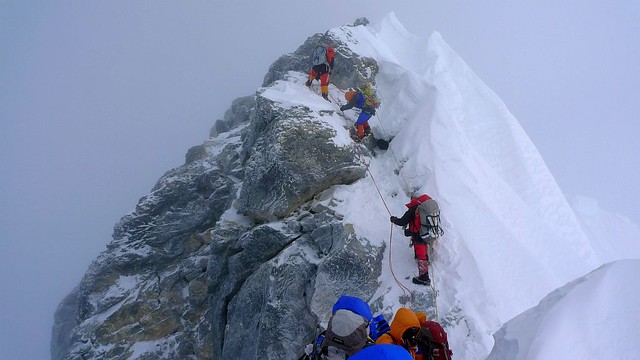
There has been a lot of buzz the past few days about the possibility of installing a ladder on Everest at the Hillary Step. This past weekend, Dawa Steven Sherpa, who is part of the Expedition Operators Association in Nepal, let slip that there have been some discussions about adding the ladder as a way to alleviate bottlenecks and traffic jams on the mountain. One of the places that gets the most crowded is the Hillary Step, which is a 40-foot vertical rock face that requires some technical skill, not to mention time, to negotiate. Because of the fact that only one person can be going up or down the ropes at any given time, it can lead to serious delays in getting to the summit. So Dawa, along with some other prominent members of the Sherpa community, has proposed adding the ladder, which would only be used by those descending the mountain. This has of course drawn the ire of some purists who feel it'll detract from the challenge of the climb.

For those who aren't familiar with the landmarks of Everest on the South Side, the Hillary Step falls at about 8763 meters (28,750 ft) and is the last major obstacle to overcome before reaching the summit. It is described as being relatively easy for anyone who has rock climbed before, although the altitude, weather and sheer exhaustion can all make it more challenging than it should be. The proposed ladder would make it much easier to descend and could greatly reduce traffic jams at such a high altitude. One of the biggest complaints about Everest in the past few years has been all of the crowds on the mountain, some of whom are put in jeopardy because they must stand in line while they wait their turn to go up. Sometimes they can end up waiting for hours, which isn't particularly safe in poor conditions.

As many of you probably know, there is a ladder in place on the North Side of Everest that is used on the Second Step there. That rock climb is much longer and more difficult than the Hillary Step however and it is doubtful that most people would be able to reach the summit without it.
 For a good explanation of the logistics of all of this, I'd recommend reading Alan Arnette's thoughts on the addition of a ladder to the mountain. He is decidedly against the plan saying that anyone who comes to Everest ought to have the fundamental skills necessary for completing the climb. Alan also notes that just how the ladder would be installed on the Hillary Step remains a bit of a mystery, although I'd have to think that the Sherpas have some kind of plan in mind.

Personally, I don't have a problem with adding the ladder if it means the mountain will be safer for the climbers. After all, they are already used on other parts of the mountain, including in the Khumbu Icefall, albeit in a different manner. We all know overcrowding is an issue on Everest and while this is a way to help break-up one of the bottlenecks, it isn't going to solve the issue of overcrowding itself.

By all accounts, 2013 looks to have been another record year for the number of summits on the mountain, and it doesn't seem like that trend will change anytime soon. In my opinion, the only way to lessen the crowding is to issue fewer permits to climb. But of course, that isn't going to happen as all of these commercial expeditions mean big business and lots of cash for Nepal.

It should also be noted that traffic jams didn't seem like they were much of a concern this year. We certainly didn't have images of long lines like the ones we've seen in years past. Part of what made it work so well this time out was how the final weather window stayed open for an extended amount of time. With the forecast looking promising, some teams remained patient and waited until he rush was over before proceeding up. We can't count on that being the case every year however, so anything that can help lessen the long lines will be much appreciated by all involved.

Obviously interest in climbing Everest is only increasing. Traffic jams have become part of the culture on the mountain. Until something tragic happens, they are likely to remain there.

Microsoft Teams With David Breashears To Bring Everest Home

Even though the Himalaya climbing season is all but over, I have lots of Everest-centric news to share today, starting with a new project that features legendary documentary filmmaker and explorer David Breashears and tech-giant Microsoft joining forces. Today, they have launched Everest: Rivers of Ice, an interactive website that lets armchair mountaineers explore the world's tallest peak without ever leaving home.

The project combines some of the high-resolution imagery that Breashears took as part of his Glacierworks project with the touch-technology behind Windows 8 and Internet Explorer 10, to create an experience unlike any other. Visitors to the site will be able to take a virtual trek up the Khumbu Valley, visiting many well known places along the way like Lukla, Namche Bazaar and Gorak Shep, before arriving in Everest Base Camp itself. Beautiful panoramic shots capture the region nicely, as does a spectacular video fly-by of Everest itself.

The Everest: Rivers of Ice website is created with HTML5, which means it should work on any browser that supports that standard. But to get the true effect in all its glory, you'll definitely want to check it out on Win 8 and with IE 10. Not only will it give you a sense of the scale of the mountain itself, it'll also show you what it is like to trek through the Himalaya just to get there.

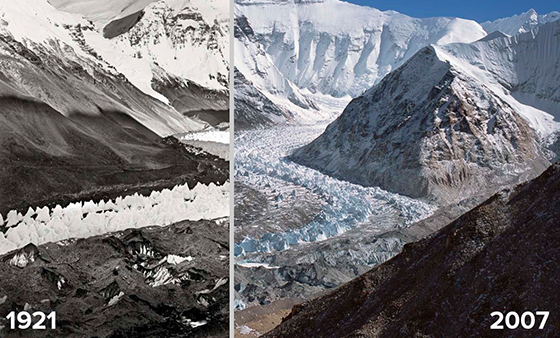
I've written about Glacierworks before and feel that it is an important project for raising awareness of the impact of global climate change on the glaciers in the Himalaya. Breashears has taken photos of the Khumbu Valley from today and compared them to images taken the same spot in the past and the differences are alarming. The glaciers are in full retreat, taking a vital source of water for the people of the Himalaya with them. This is becoming a serious issue and projects like this one are helping us to understand the implications. Be sure to check out Everest: Rivers of Ice for more about the changes in the region and to take in the beauty of the mountains yourself.


Everest 2013: The Lonely Mountain

Since I last posted an update on the Everest climbing season, nearly everyone has departed the mountain. Most of the Sherpa teams have now descended, carrying gear, supplies and garbage back to Base Camp, where it will be packed, secured and carried back to Kathmandu. Everest is quickly becoming a deserted place once again and even the trekking groups have stopped for now as the impending summer monsoons loom literally and figuratively on the horizon.

That all said, there is at least one expedition still climbing the mountain. 81-year old Nepali climber Min Bahadur Sherchan is still holding out hope of reaching the summit sometime this week. Alan Arnette reports that Sherchan is determined to reclaim his record as the oldest to summit Everest after Japanese climber Yuichiro Miura took the title last week at the age of 80. After struggling with a stomach bug a few weeks back, Sherchan is said to be feeling good, climbing strong and ready to top out. Alan says that he has five Sherpas climbing with him, providing plenty of support. The final deciding factor in whether or not he reaches the summit will probably be the weather. The forecasts this time of year are subject to change very quickly and with the Monsoon approaching, the mountaintop may be put out of reach at any day. We'll just have to wait to see if Sherchan can bring the record back home to Nepal.

Either way, getting back off the mountain could be a real challenge for anyone still there. Over the weekend, a major section of the Khumbu Icefall collapsed, taking the route that is used to cross it down. That is not uncommon this time of year as warming temperatures make the area very unstable. In fact, the Ice Doctors would normally be wrapping up their efforts for the season and closing the route anyway. Since there is still a team attempting the summit, it is unclear at this time of they are rebuilding the route or simply closing it off. It is possible that after Sherchan's team completes their climb, they will be shuttled off the mountain via helicopter. Time is certainly of the essence in any case however.

Finally, Chad Kellogg has posted a long and detailed account of his summit bid last week. You may recall that he was hoping to attempt a speed record and it sounds like things were actually going well until high winds forced him to abandon the attempt just 1800 feet (548 meters) below the summit. When the winds picked up, the temperatures dropped, and since Chad was climbing without bottled oxygen, that greatly increased his chances of contracting frostbite. He was above the Balcony when he made his decision to turn back, dejectedly returning to Camp 4.

According to his report, Chad said that he was moving well and feeling great. In fact, when he turned back, he still had seven hours to go to complete those last 1800 feet, which can be agonizingly difficult and slow. Despite the disappointment of being denied the summit again, Chad says that he learned a lot from the climb and feels good about his efforts. He is happy to be heading home, healthy and with all of his limbs intact.

I'll continue to monitor activity on Everest over the next few days to see if there are any more summits or news to share. For the most part, the mountain is all but closed for spring, but it seems we'll get at least one or two more updates over the next few days.

Everest 2013: Mopping Up

The end of the spring climbing season is now in sight on Everest and just a few stragglers remain behind with the hopes of a late summit. There are already reports of the weather starting to change and as June grows closer, the annual Monsoon will arrive, shutting off the summit for good. In the meantime, the Sherpa teams that have been so instrumental in ensuring that the climbers get safely up and down the mountain are continuing to do their work. While most of the commercial teams are either already gone or will be by this weekend, the Sherpas remain to clean up the trash, collect the gear and tidy up Base Camp as best they can. It is a thankless job for the most part, but one that they do well and without much recognition.

One climber who still hopes to summit next week is Min Bahadur Sherchan. The 81-year old still has dreams of topping out, despite the fact that he has dealt with a stomach bug for much of the past few weeks. He is feeling better and says that he is strong now, so he hopes to wrest the title for being the oldest person to climb Everest away from Japanese mountaineer Yuichiro Miura, who set the new mark just a few days ago at the ripe-young age of 80. (Ed Note: When I'm 80 I'll be happy to climb out of my rocking chair!) I'll try to keep an eye on Sherchan's progress to see if he can summit next week, although it is tough to say how much longer the Ice Doctors will keep the Icefall open this spring.

Dave Hahn, head guide of the RMI team, successfully nabbed his 15th career summit yesterday and he reports that the shift in weather has already started on the upper slopes. Dave said that while conditions were good, if a bit cold on the summit yesterday, he can tell that things are already starting to warm up. That is another signal of the impending Monsoon, which will close things down at least until fall. Dave said that some of the anchors on the ropes were starting to come free from the snow and ice in which they are fixed, which can lead to dangerous conditions. Fortunately, as far as I can tell from yesterdays reports, it didn't have any effect on the climbers. But Sherchan should be careful going up next week.

The Himex Team finally posted their latest update saying that Summit Day yesterday was pretty uneventful. The climbers had good weather all the way to the top and they all topped out, enjoyed the view then descended all the way back to Camp 2 for a rest. It was a long, tiring day of course, but it sounds like everyone came through it in good health and spirits. They'll descend the rest of the way today and get ready to depart for home.
The Adventure Consultants posted some nice shots of a few members of their team from the summit. If you want to catch a glimpse of the joy and relief that people feel when they top out, you can view the gallery here. Meanwhile, IMG says that their entire team of climbers have left, but they still have 37 Sherpas working at various points on the mountain. They won't begin to celebrate until everyone is safely down.

Still no word on Chad Kellogg and his Everest journey. You may recall that Chat was attempting a speed run on the mountain and he set out on Wednesday from Base Camp for a straight shot at the summit. Hopefully he got up and down safely and will update us all soon as to the results of his expedition.

That's about all there is to report at this time. Kathmandu is getting crowded again as all of the climbers return to the city and prepare to head home. The Khumbu region will still have some trekkers, but it will soon empty out as well. The Monsoon brings plenty of rain to the region, making it an uncomfortable place to be during the summer months. This all but closes the book on another climbing season in Nepal, although I imagine there will still be a few lingering stories to share over the next few days.

Video: A Life Well Lived With Jim Whittaker

Fifty years ago Jim Whittaker became the first American to summit Everest, helping to lead the way on that legendary 1963 expedition. Today, he still has things he can teach us about how to live life and approach each day. In the video below, Jim continues to share his wisdom.

Thanks to The Goat for sharing this. Excellent stuff from an absolute legend.

A Life Well Lived | Jim Whittaker & 50 Years of Everest from eric becker on Vimeo.

Everest 2013: Last Teams Wrap Up Summit Bids

It was another busy day on Everest as the final teams pushed to the summit. These last few squads had shown remarkable patience and perseverance as they waited for their chance to come. Fortunately, the weather stayed cooperative and the high winds that were in some forecasts held off. As a result, there were approximately another 50 summits that took place earlier today in what could be the final push for the 2013 season.

Amongst those topping out was Dave Hahn's RMI team. For Dave this was his 15th successful summit of Everest, the most ever by a non-Sherpa. He was joined at the top by Seth Waterfall and their three Sherpa's Tshering, Kaji & Gyaljen. They reported cold conditions at the summit, but an other wise beautiful day to be on top of the world. It was quiet enough for the team to spend 30 minutes enjoying their accomplishment before heading back down. 

Alan Arnette is reporting that 80-year old Japanese climber Miura Yiuchiro has summited, setting a new age record in the process. Yiuchiro is now the oldest person to ever climb Mt. Everest, although his rival from Nepal, Min Bahadur Sherchan, is still planning to launch his summit bid. Sherchan has been suffering from a stomach bug but hopes to climb to the top next week, provided the weather allows it.

Alan is also reporting that the Himex team put 22 climbers on top although there has been no official word on their website just yet. Last year, Himex boss Russell Brice elected to pull the entire team from the mountain because he felt the conditions weren't safe, but this year seems like it has been a very successful campaign. Patience and timing has certainly paid off once again.

There is no word yet on Chad Kellogg's progress in his attempted speed record on Everest. Checking out his GPS locations given by his SPOT device it appears that he may have made it to the summit, but just how quickly he did so remains to be seen. The tracking show on his page may not be accurate either, so we'll have to wait until we hear from Chad to see how things went.

Back in Base Camp, the teams that have already completed their climbs earlier in the week are busy celebrating their success and packing to head home. Some have already departed for Kathmandu by helicopter while others will make the trek back to Lukla to catch a flight. At this point, BC on the South Side is quickly becoming a quiet place. The Sherpas will be there for a few more days as they collect gear, but already the winds of change are blowing and the curtain will soon drop on the spring climbing season in the Himalaya.

On the North Side of the mountain a similar scene is playing out. Most of the teams are either back in BC or already departed. Of course, on the Tibetan side the climbers can drive in and out of Base Camp, so most will be picked up by trucks in the next day or two.

That's all for now. With the major summit pushes all but over at this point, I'll try to keep tabs on some of the still evolving stories from the end of the season.

Everest 2013: Final Summit Push Begins, Weather Taking A Turn

It has been an incredibly productive week on Everest, which has seen its fair share of summits the past few days. Alan Arnette estimates that there have been a total of 500 successful summits to date with perhaps another 50 coming today. But there is now a sense of urgency on the mountain, as the weather forecast indicates a change is coming. Higher winds, colder temperatures and possibly snow are now possibilities as the current weather window closes at last. The next day or two will wrap up the season, as the jet stream will soon begin to shift and the seasonal Monsoon will arrive with the coming of June, effectively shutting down the mountain until fall.

RMI's team leader Dave Hahn phoned in an update on the team's progress to say that they are on the move up to Camp 4 today with the hopes of reaching the summit tomorrow. The change in weather is starting to make the proposition of a summit bid a dicey one, although if there is a chance of topping out, Dave and his crew will take it. If he is successful on this bid, he will claim his 15th summit of Everest, which is the most by any non-Sherpa. That's a pretty impressive statistic to say the  least.

Also heading up today is the Himex Team, who were in C3 yesterday and should proceed to C4 on schedule. They're hoping to top out tomorrow as well and from the sound of their latest report, everyone is in good spirits and health, but looking forward to completing their expedition.

There hasn't been an update posted by Chad Kellogg in a few days, but today was the day he was set to launch his speed climb on Everest, departing from BC at 3:00 PM local time. As of this writing, that was a few hours ago and judging from his SPOT satellite tracker, Chad is already moving up the slope at a good pace. He has set his highs on beating Marc Batard's speed record, which was set back in October of 1990. To do that, he'll have to go from BC to summit and back again in 22 hours and 29 minutes. Hopefully the crowds will stay out of his way and the weather won't impact the attempt. Even if Chad isn't able to get the speed record, I'd still like for him to get the summit. The past few years have not been easy ones for him on Everest. Good luck Chad!

The Altitude Junkies have topped out on the North Side of the mountain, putting ten climbers on top this morning at 8:00 AM local time. Amongst them was Edita Nichols who already called into her home team after returning to Camp 3. She called the climb the hardest thing she's ever done in her life and she's looking forward to heading home soon. The team is scheduled to be back in Kathmandu by Saturday.

Back on the South Side, Melissa Arnot also topped out earlier today with her friend and guide Tshering Dorje Sherpa. She is now descending back to Camp 2 for a much needed rest before coming down to BC tomorrow. For Melissa, this is her 5th summit of Everest, giving her the most by any non-Sherpa female climber. Considering how accomplished she is at a young age, I suspect she'll add to that total in the future.

ExWeb is reporting that South Korean climber Kim Chang-Ho topped out yesterday as well, become the first person from his country to summit without supplemental oxygen. Everest was the final 8000-meter peak on his list and he has now completed all 14 of those monster mountains. Better yet, he has done so in record time. It took Kim just 7 years, 10 months and six days to get them all, which is a month better than the previous record held by Jerzy Kukuczka.

Sadly, ExWeb is also reporting sad news as well. The indicate that two more deaths have occurred on Everest with Seo Sung-Ho of South Korea and Mohammed Hossain of Bangladesh both passing away on the mountain. Both men died after successfully reaching the summit and in the case of Seo, that feat was accomplished with bottled oxygen. Condolences once again to the friends and family of these two fallen men.

The end of the season is now rapidly approaching and it won't be long until it is completely done. In fact, if I were to venture a guess, I'd say that after tomorrow, there won't be much more to report. Once this final summit push is wrapped up, it'll be clear sailing for the teams to head home. While it has certainly been an eventful season thus far, lets hope these next few days go quickly and safely for all involved.