If it looks like fun the second edition of the race will take place later this year from September 29-October 5. So head over to the official race website and get registered, then hop on your bike and get to training.
Showing posts with label Greece. Show all posts
Video: Hellas TransMountains MTB Race
The Hellas TransMountains mountain bike race looks like quite the competition. The event, which is put on by Wildtrack and is held in Peloponnese, Greece, features a course that is 530km (330 miles0 in length and includes over 14,000 meters (45,931 ft) of elevation gain. To add to the challenge, the entire race must be completed in 110 hours and riders must be self-supported throughout. Sounds like quite the challenge, no? The video below serves as good introduction to the event and gives you an indication of what it is all about.
If it looks like fun the second edition of the race will take place later this year from September 29-October 5. So head over to the official race website and get registered, then hop on your bike and get to training.
Hellas TransMountains | Edition #1 from Explore MediaLab on Vimeo.
If it looks like fun the second edition of the race will take place later this year from September 29-October 5. So head over to the official race website and get registered, then hop on your bike and get to training.


German Banksters Are Forcing Greece To Sell Off Some Islands-- But Just Small Ones For Now

Oxia got snapped up for a song-- but Scorpios may still be for sale
Over the weekend, the cause of Austerity, banksterism and German hegemony over Europe were dealt a (probably very temporary) setback, when Nicolas Sarkozy received a stinging slap across the face from the French electorate. Only 25.5% of the electorate voted for him to have a second term. It looks like the European version of Mitt Romney won't be getting another chance to drive France further into the clutches of International Aryan Bankers Conspiracy. Too late for poor Greece. We joked about Wolfgang Schäuble forcing them to sell off islands to pay the interest on German loans and fees last February. Well, guess what... some greasy Qatari "royal" bought Oxia at a bargain basement rate and plutocrats from all over the world are descending on Greece to see what's for sale. Thus far, Greece is holding onto big ones like Crete, Lesbos, Mykonos, Rhodes and Korfu but the little ones... ever think of building a vacation home on your own Aegean Isle? Greece aims to raise 50 billion euros through privatisations and real estate sales by 2015. Last year, it set up the Hellenic Republic Asset Development Fund to dispose of 70,000 properties including monasteries, tax offices and tracts of beachfront land. And the islands are starting to go like hotcakes.
[M]ajor activity is currently being observed in the sale and development of Greece’s private islands. According to experts operating in this singular market, a number of owners, especially those who inherited the island properties, are trying to sell them off due to recently introduced high taxation.
As a result, asking prices have dropped considerably, while in cases of serious offers, it is estimated that the owners are willing to make some substantial concessions. This is the case in the alleged sale of Oxia, an island owned by the Greek-Australian Stamoulis family, to members of Qatar’s royal family.
The island, which has a surface area of approximately 1,236 acres, was initially advertised at 6.9 million euros. The property’s final price, however, is said not to have exceeded 5 million euros. The island is located in the Ionian Sea, near Ithaca.
While a major portion of Oxia is protected as a part of the Natura 2000 ecological network, part of the island may be developed, according to sources.
The sale of Patroklos island, off the tip of Attica and 3 kilometers from Sounio, might be nearing. According to a well-informed source, the property’s owners, the Giatrakos family, are currently working in tandem with a Canadian investor and collaborating with local authorities in a bid to clarify which part of the island may be commercially developed. Given Patroklos’s major development potential and its proximity to the capital, it is estimated that the price will exceed the 100-million-euro mark.
Nevertheless, previous attempts to sell the island have come up against obstacles due to the lack of a clear urban-planning and land-use scheme, as well as a series of archaeological issues. The Giatrakos family is making all possible efforts to put the aforementioned matters to rest in order to finalize the island’s transfer.
A well-known private island, Scorpios, has also been up for sale for the last few years. The island, which currently belongs to Athina Onassis, is situated opposite the village of Nydri, Lefkada, in the Ionian Sea.
The Onassis heir is citing financial reasons for putting Scorpios on the market. According to Kathimerini sources, however, the sale has run into difficulties given that Aristotle Onassis’s will forbids the sale of the island, unless its maintenance is unfeasible, which is what the magnate’s granddaughter claims. Given this legal complication, the owner is actively pursuing the option of a 99-year lease to an investor.
Athens ( Αθήνα ). A voyage to Athens, Greece, Europe.

 The Greek capital is undergoing a radical period of urban renewal that did not stop with the 2004 Olympics. The magnificent Acropolis, crowned by the iconic Parthenon temple, rises above the city, watching the sprawling modern metropolis evolve. Athens is now a conspicuously wealthier, more sophisticated cosmopolitan city. The shift is evident in a gradual gentrification and the new art and leisure precincts around town, and in the lifestyles of the hedonistic, trend-conscious Athenians. Stylish new restaurants, shops and revamped hotels continue to open.
 Perhaps the most significant change is in the historic centre, virtually unrecognisable since cars were banished, with most significant ancient sites linked in what has become Europe’s longest and arguably most stunning pedestrian promenade. This huge archaeological park has reconciled past and present, with the city’s cultural and social life once again taking place around the ancient monuments and surrounding neighbourhoods. Athens remains a city of contradictions, as frustrating as it is seductive. It is the oldest city in Europe, yet still in a state of transition.
Greece ( Ελλάδα ). A voyage to ancient Greece, Europe - Athens, Mykonos, Thessaloniki, Crete, Delphi...
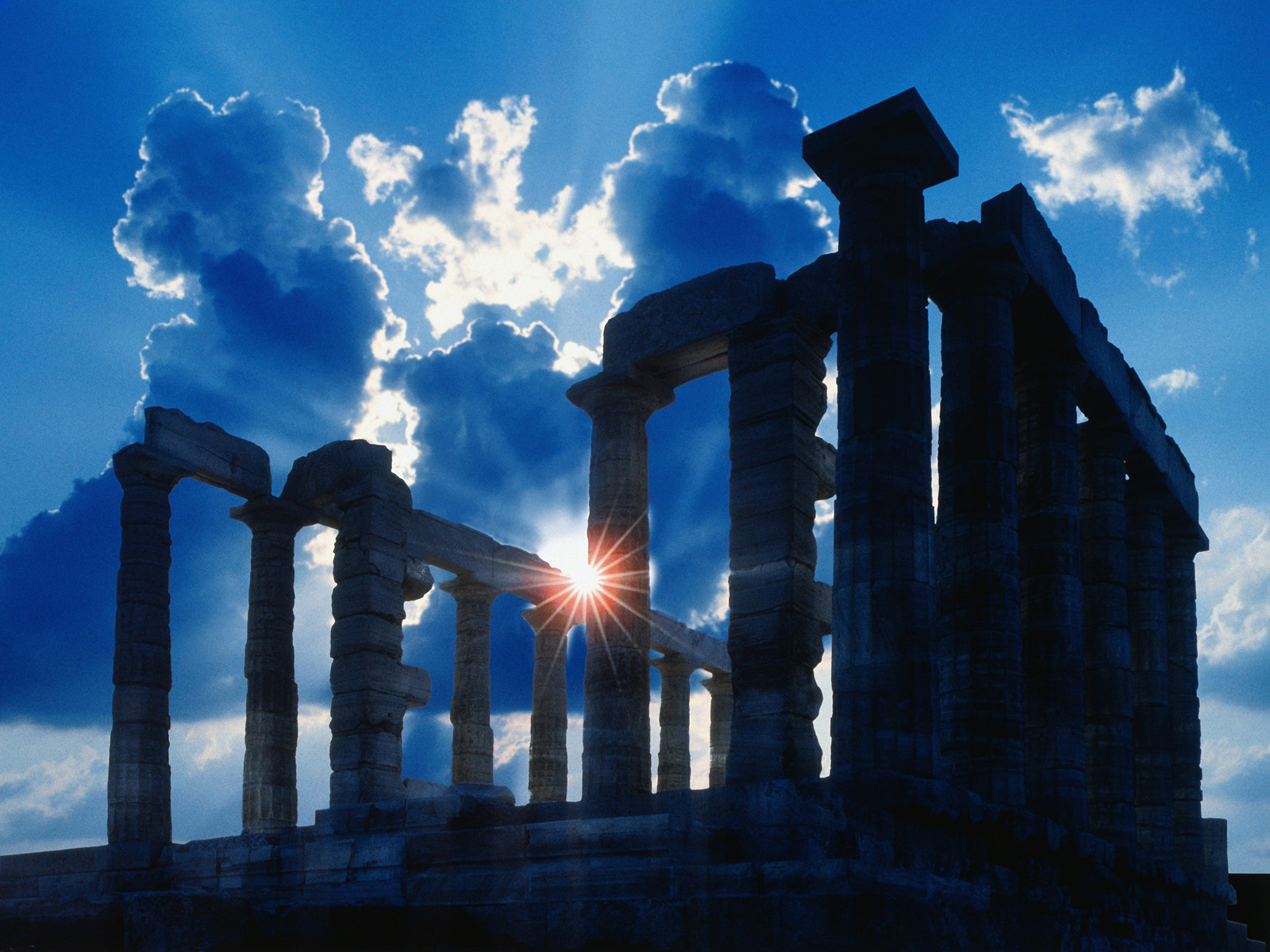
 Greece offers a myriad of experiences, landscapes and activities. It is the pulsing nightclubs of Mykonos and the ancient beauty of Delos; the grandeur of Delphi and the earthiness of Ioannina; the rugged hillsides of Crete and the lush wildflowers of spring. It is the blinding light of the Mykonos sun, the melancholy throb of Thessaloniki's rembetika (blues songs), the tang of home-made tzatziki, the gossip in the kafeneia (coffee shops).It is the Parthenon - solitary and pristine - lording it over the hazy sprawl of Athens.
 Greece is a country with a hallowed past and an at-times turbulent present. Appreciation of the achievements of its classical past has tended to overshadow its development as a free nation since the War of Independence from the Ottomans in 1821. Many foreign Hellenists imbued with a romantic ideal of the Greece of Pericles and the Parthenon are blithely ignorant that Greece today is a vibrant modern European country. It is equally a land where the languages of recent migrant communities from the Balkans, Africa and Asia - not to mention the English and German of EU migrants and retirees contribute to Greece's status as one of Europe's more recent multicultural societies.As recently as 1983, when it acceded to the EU,
 Greece was essentially a conservative, agrarian society famous for olive oil, coups, beaches and islands.Its transformation since its induction - alone, at the time, among the southeastern European nations - to the Brussels-led club of prosperous nations has been no less than dramatic. It could once take up to two years to obtain a landline for a home - now Greeks boast more mobile phones than fixed-line phones. Internet hotspots pop up like mushrooms, while car ownership, once the privilege of the affluent few, is now a consumer commodity enjoyed by the majority. While sleeping on beaches was once de rigueur for travellers in the carefree '70s, tourism is now most definitely pitched to the middle to upper-end markets and sleeping rough is now oh-so out.
Meteora, the Holy Rocks in Greece

Somewhere between Pindos and Hasiya, where the plain of Thessaly landscape lost the first roll of the magnificent mountains in central Greece, is the Meteora. Huge dark rocks, which rise in the suburbs of
Thessaly land remind tenacious grip in fatal ancient giants. The view is impressive with its majesty. This unusual phenomenon is not mentioned in legends or myths of antiquity in, no Greek or foreign author of antiquity, whose writings to speak for him. The centuries zealously guard the confidentiality of its occurrence.

It is one of the most picturesque sights of Greece. The Meteora is a complex of 24 monasteries and hermitages, built in smooth rocks that once served as a shield for monks seeking refuge from the Byzantine army raids. Construction of the Meteora monasteries in the complex that included one or two churches, monastic cells, library, refectory, water tanks, continued even during the Turkish expansion. Built in the incredible difficulties the Meteora monasteries severely damaged during the Second World War and the ensuing civil war, but were restored in the 1960's. Thus, to date, of all the great heritage of Meteora lived four largest monasteries: Great Meteoron (1350 g), St. Varlaam or All Saints (1530 g), St. Stephen (1312 g), St. Trinity (1458 g. Earlier, the monasteries and Skete Meteora, most of which are now uninhabited, were fragile narrow staircases, fortified by nearly cliff, and up to 1920's were also used winches, which now applies only to lift cargo. In fact it is reasonable to question travelers: «How often changing the rope to winch», - the monks calmly replied: «When God will please».


New 7 Wonders of the World
The biggest global vote ever to have taken place. Millions of people have already voted for their favorite "wonder." Numerous milestones have already been reached on a journey across the Internet, television and the world's media. This journey will reach its pinnacle on July 7, 2007 - 07.07.07, when the world will discover which monuments have been named as the New 7 Wonders of the World.
 The Taj Mahal (1630 A.D.) Agra, India
This immense mausoleum was built on the orders of Shah Jahan, the fifth Muslim Mogul emperor, to honor the memory of his beloved late wife. Built out of white marble and standing in formally laid-out walled gardens, the Taj Mahal is regarded as the most perfect jewel of Muslim art in India. The emperor was consequently jailed and, it is said, could then only see the Taj Mahal out of his small cell window.
 Alhambra (12th century) Granada, Spain
Mohammed I, the first king of the Nasriden – a Moorish dynasty in Granada - converted a 9th-century castle into his private royal residence, and it is this which we now know as the Alhambra. The structure, which covers an area of 13 hectares, is renowned for its stunning frescoes and interior detail. The building is one of the finest examples of Moorish architecture in the world and is among Europe’s most-visited tourist attractions.
 Angkor (12th century) Cambodia
Angkor is the most important monument of the south-east Asian Khmer Empire and the world’s largest sacred temple. Built during the reign of King Suryavaman, at the beginning of the 12th century, Angkor is noted for its intricate ornamentation and striking beauty. With its water moats, concentric walls and magnificent temple mountain in the center, Angkor Wat symbolizes the Hindu cosmos, with its oceans at the periphery and the Meru mountain at the center of its universe.
 Christ Redeemer (1931) Rio de Janeiro, Brazil
This statue of Jesus stands some 38 meters tall, atop the Corcovado mountain overlooking Rio de Janeiro. Designed by Brazilian Heitor da Silva Costa and created by French sculptor Paul Landowski, it is one of the world’s best-known monuments. The statue took five years to construct and was inaugurated on October 12, 1931. It has become a symbol of the city and of the warmth of the Brazilian people, who receive visitors with open arms.
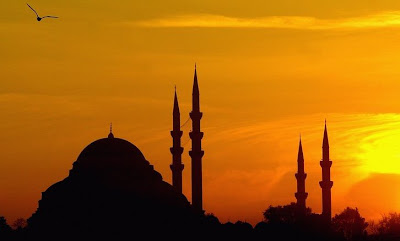 The Hagia Sophia (532 - 537 A.D.) Istanbul, Turkey
The Hagia Sophia was erected during the reign of Emperor Justinian (532 - 537 A.D.), when the Byzantine Empire was at the height of its power and influence. The massive dome, which is the prominent architectural feature, has since often been used as a model for the design of Islamic mosques. Indeed, after the fall of Byzantium, the Hagia Sophia was converted into an Ottoman mosque. Today, the monument is a museum serving both Christians and Muslims.
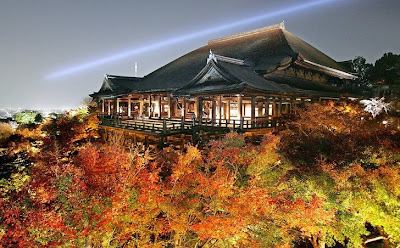 Kiyomizu Temple (749 - 1855) Kyoto, Japan
Laid out in 794 A.D., the palaces and temples of Kyoto were the residences of Japan's emperors and shoguns for more than 1,000 years. The Japanese Emperor is enthroned at the Imperial Palace of Gosho. Among other significant works are the Higashi Nonganji and Nishi Hoganji temple complexes, the Kinkakuji Temple with its 'Golden Pavilion' and the Kiyomizu Temple, the temple of “clear waters.” The Kyoto sites have been destroyed and rebuilt many times throughout history and are today among Asia's greatest cultural heritage sites.
 The Kremlin and Red Square (1156 - 1850) Moscow, Russia
Built as a residence for Ivan I, the Kremlin was the official residence of the Czars until the 1917 Russian Revolution. Today, it still houses the President’s office. In front of the Kremlin is Red Square – an impressive and exuberant plaza which, for many people, is associated with the infamous May Day demonstrations. Rising from the square is St Basil's Cathedral, built in the 1550s to commemorate Ivan the Terrible's capture of the Mongol stronghold of Kazan.
 Machu Picchu (1460-1470), Peru
In the 15th century, the Incan Emperor Pachacútec built a city in the clouds on the mountain known as Machu Picchu ("old mountain"). This extraordinary settlement lies halfway up the Andes Plateau, deep in the Amazon jungle and above the Urubamba River. It was probably abandoned by the Incas because of a smallpox outbreak and, after the Spanish defeated the Incan Empire, the city remained 'lost' for over three centuries. It was rediscovered by Hiram Bingham in 1911.
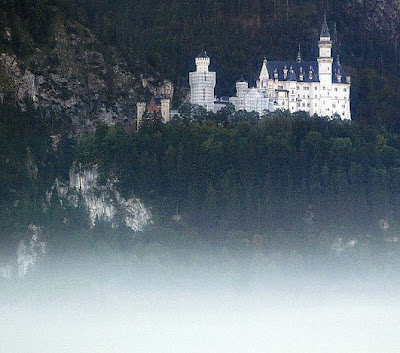 Neuschwanstein Castle (1869 -1884) Schwangau, Germany
Neuschwanstein Castle was built in a time when castles and fortresses were no longer strategically necessary. Instead, it was born of pure fantasy – a beautiful, romantic composition of towers and walls in the perfect setting of mountains and lakes. The combination of various architectural styles and intrinsic craftwork has inspired generations of adults and children alike.
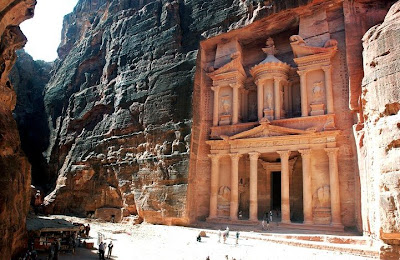 Petra (9 B.C. - 40 A.D.), Jordan
On the edge of the Arabian Desert, Petra was the glittering capital of the Nabataean empire of King Aretas IV (9 B.C. to 40 A.D.). Masters of water technology, the Nabataeans provided their city with great tunnel constructions and water chambers. A theater, modelled on Greek-Roman prototypes, had space for an audience of 4,000. Today, the Palace Tombs of Petra, with the 42-meter-high Hellenistic temple facade on the El-Deir Monastery, are impressive examples of Middle Eastern culture.
 The Pyramid at Chichén Itzá (before 800 A.D.) Yucatan Peninsula, Mexico
Chichén Itzá, the most famous Mayan temple city, served as the political and economic center of the Mayan civilization. Its various structures - the pyramid of Kukulkan, the Temple of Chac Mool, the Hall of the Thousand Pillars, and the Playing Field of the Prisoners – can still be seen today and are demonstrative of an extraordinary commitment to architectural space and composition. The pyramid itself was the last, and arguably the greatest, of all Mayan temples.
 Statues of Easter Island (10th - 16th Century) Easter Island, Chile
Discovered on Easter Sunday, 1722 by Dutch explorer Jakob Roggeveen, this collection of 25 meter-high stone sculptures still puzzles historians and archaeologists as to its origins. It is believed that a society of Polynesian origin settled here in the 4th century and established a unique tradition of monumental sculpture. Between the 10th and 16th centuries, they erected the enormous stone figures, known as the Moai, which have long fascinated the entire world and endowed this island with a mythical atmosphere.
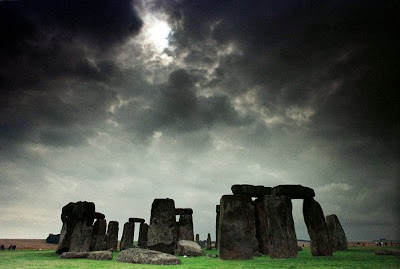 Stonehenge (3000 B.C. - 1600 B.C.) Amesbury, United Kingdom
Construction of Stonehenge took place between ca. 3000 and 1600 B.C. With each stone weighing around 50 tons, it is regarded as a truly amazing feat of engineering. Although it is not clear who built the monument, nor for what purpose, it has been speculated that it was either a temple dedicated to the worship of ancient earth deities, an astronomical observatory or a sacred burial site.
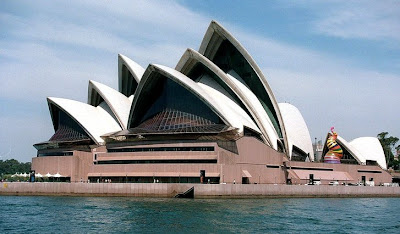 Sydney Opera House (1954 - 73) Sydney, Australia
When the Sydney Opera House was finished in 1973, this landmark building - in the true sense of the expression, - put the whole continent of Australia on the world map. This building does not imitate or reflect what we generally imagine an opera house might look like, indeed, it is a completely abstract interpretation. The ability to create abstract art only developed after the invention of photography in the late 19th century, when painters first began to experiment with an abstract, cubist interpretation of reality.
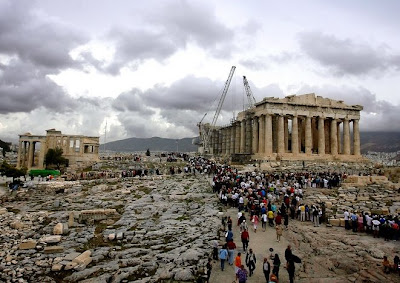 The Acropolis of Athens (450 - 330 B.C.) Athens, Greece
Built atop what is known as the “Sacred Rock” of Athens, the Acropolis was to radiate power and protection for its citizens. The temples of the Acropolis have become the some of most famous architectural landmarks of ancient and modern history. Today, the Parthenon in particular is an international symbol of Greek civilization. A graphic illustration of the temple also appears in the UNESCO logo, representing culture and education.
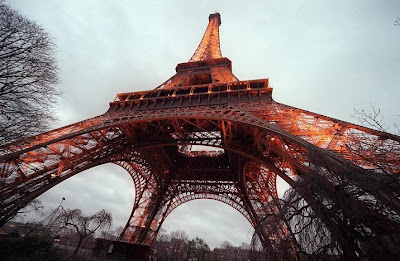 The Eiffel Tower (1887 - 89) Paris, France
The creation of Gustave Eiffel, this magnificent steel tower has come to serve as a symbol of Paris, as well as of France itself. The structure is not only a landmark that is recognized all over the world, but is perhaps the most popular architectural achievement in the Western world. It was the tallest man-made structure in the world until the Empire State Building was constructed. The tower is visited by six million people every year.
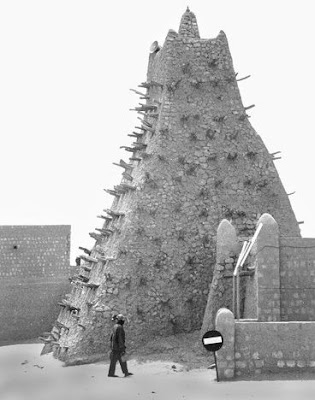 Timbuktu (12th century) Mali
In the 12th century, Timbuktu was at the crossroads of the four most important caravan paths supplying the Arab world, which then spanned from the Middle East all the way to Spain. The accumulation of wealth made it one of the wealthiest places on earth at the time. This allowed one of the first universities in the history of humankind to be established– the celebrated Islamic university called the Koranic Sankore, where 20,000 students studied law, medicine, rhetoric, etc. Today, it remains with us as a powerful myth and, in this way, resembles another Ancient Wonder, the Hanging Gardens of Babylon.
 The Great Wall of China (220 B.C and 1368 - 1644 A.D.) China
The Great Wall of China was built to link existing fortifications into a united defense system and better keep invading Mongol tribes out of China. It is the largest man-made monument ever to have been built and it is disputed that it is the only one visible from space. Many thousands of people must have given their lives to build this colossal construction.
 The Pyramids of Giza (2600 - 2500 B.C), Egypt
The Pyramids of Giza, the oldest and only Ancient Wonder still standing, are testimony to perfection in art and design, never subsequently achieved. They were built by planners and engineers purely to serve their earthy rulers - who were also their gods. Philosophy did not exist at this time, and creation was not subject to any questioning. The pyramids are the purest of constructions, built for eternity.
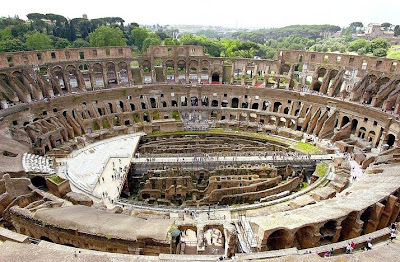 The Roman Colosseum (70 - 82 A.D.) Rome, Italy
This great amphitheater in the centre of Rome was built to give favors to successful legionnaires and to celebrate the glory of the Roman Empire. Its design concept still stands to this very day, and virtually every modern sports stadium some 2,000 years later still bears the irresistible imprint of the Colosseum's original design. Today, through films and history books, we are even more aware of the cruel fights and games that took place in this arena, all for the joy of the spectators.
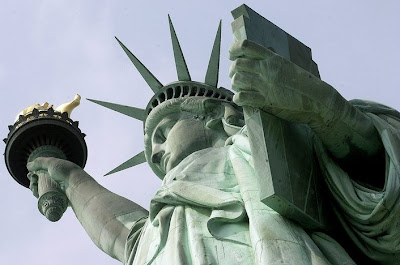 The Statue of Liberty (1886) New York City, U.S.A.
The Statue of Liberty was a gift of the French government to the United States to honor the ideals of freedom and independence. It was a very early gesture of national generosity. This huge statue became a symbol of hope and freedom for many hundreds of millions of people who immigrated to the United States during the 20th century to find a new life of peace and prosperity.
 The Taj Mahal (1630 A.D.) Agra, India
This immense mausoleum was built on the orders of Shah Jahan, the fifth Muslim Mogul emperor, to honor the memory of his beloved late wife. Built out of white marble and standing in formally laid-out walled gardens, the Taj Mahal is regarded as the most perfect jewel of Muslim art in India. The emperor was consequently jailed and, it is said, could then only see the Taj Mahal out of his small cell window.
 Alhambra (12th century) Granada, Spain
 Mohammed I, the first king of the Nasriden – a Moorish dynasty in Granada - converted a 9th-century castle into his private royal residence, and it is this which we now know as the Alhambra. The structure, which covers an area of 13 hectares, is renowned for its stunning frescoes and interior detail. The building is one of the finest examples of Moorish architecture in the world and is among Europe’s most-visited tourist attractions.
 Angkor (12th century) Cambodia
Angkor is the most important monument of the south-east Asian Khmer Empire and the world’s largest sacred temple. Built during the reign of King Suryavaman, at the beginning of the 12th century, Angkor is noted for its intricate ornamentation and striking beauty. With its water moats, concentric walls and magnificent temple mountain in the center, Angkor Wat symbolizes the Hindu cosmos, with its oceans at the periphery and the Meru mountain at the center of its universe.
 Christ Redeemer (1931) Rio de Janeiro, Brazil
 This statue of Jesus stands some 38 meters tall, atop the Corcovado mountain overlooking Rio de Janeiro. Designed by Brazilian Heitor da Silva Costa and created by French sculptor Paul Landowski, it is one of the world’s best-known monuments. The statue took five years to construct and was inaugurated on October 12, 1931. It has become a symbol of the city and of the warmth of the Brazilian people, who receive visitors with open arms.
 The Hagia Sophia (532 - 537 A.D.) Istanbul, Turkey
The Hagia Sophia was erected during the reign of Emperor Justinian (532 - 537 A.D.), when the Byzantine Empire was at the height of its power and influence. The massive dome, which is the prominent architectural feature, has since often been used as a model for the design of Islamic mosques. Indeed, after the fall of Byzantium, the Hagia Sophia was converted into an Ottoman mosque. Today, the monument is a museum serving both Christians and Muslims.
 Kiyomizu Temple (749 - 1855) Kyoto, Japan
 Laid out in 794 A.D., the palaces and temples of Kyoto were the residences of Japan's emperors and shoguns for more than 1,000 years. The Japanese Emperor is enthroned at the Imperial Palace of Gosho. Among other significant works are the Higashi Nonganji and Nishi Hoganji temple complexes, the Kinkakuji Temple with its 'Golden Pavilion' and the Kiyomizu Temple, the temple of “clear waters.” The Kyoto sites have been destroyed and rebuilt many times throughout history and are today among Asia's greatest cultural heritage sites.
 The Kremlin and Red Square (1156 - 1850) Moscow, Russia
Built as a residence for Ivan I, the Kremlin was the official residence of the Czars until the 1917 Russian Revolution. Today, it still houses the President’s office. In front of the Kremlin is Red Square – an impressive and exuberant plaza which, for many people, is associated with the infamous May Day demonstrations. Rising from the square is St Basil's Cathedral, built in the 1550s to commemorate Ivan the Terrible's capture of the Mongol stronghold of Kazan.
 Machu Picchu (1460-1470), Peru
In the 15th century, the Incan Emperor Pachacútec built a city in the clouds on the mountain known as Machu Picchu ("old mountain"). This extraordinary settlement lies halfway up the Andes Plateau, deep in the Amazon jungle and above the Urubamba River. It was probably abandoned by the Incas because of a smallpox outbreak and, after the Spanish defeated the Incan Empire, the city remained 'lost' for over three centuries. It was rediscovered by Hiram Bingham in 1911.
 Neuschwanstein Castle (1869 -1884) Schwangau, Germany
 Neuschwanstein Castle was built in a time when castles and fortresses were no longer strategically necessary. Instead, it was born of pure fantasy – a beautiful, romantic composition of towers and walls in the perfect setting of mountains and lakes. The combination of various architectural styles and intrinsic craftwork has inspired generations of adults and children alike.
 Petra (9 B.C. - 40 A.D.), Jordan
On the edge of the Arabian Desert, Petra was the glittering capital of the Nabataean empire of King Aretas IV (9 B.C. to 40 A.D.). Masters of water technology, the Nabataeans provided their city with great tunnel constructions and water chambers. A theater, modelled on Greek-Roman prototypes, had space for an audience of 4,000. Today, the Palace Tombs of Petra, with the 42-meter-high Hellenistic temple facade on the El-Deir Monastery, are impressive examples of Middle Eastern culture.
 The Pyramid at Chichén Itzá (before 800 A.D.) Yucatan Peninsula, Mexico
Chichén Itzá, the most famous Mayan temple city, served as the political and economic center of the Mayan civilization. Its various structures - the pyramid of Kukulkan, the Temple of Chac Mool, the Hall of the Thousand Pillars, and the Playing Field of the Prisoners – can still be seen today and are demonstrative of an extraordinary commitment to architectural space and composition. The pyramid itself was the last, and arguably the greatest, of all Mayan temples.
 Statues of Easter Island (10th - 16th Century) Easter Island, Chile
 Discovered on Easter Sunday, 1722 by Dutch explorer Jakob Roggeveen, this collection of 25 meter-high stone sculptures still puzzles historians and archaeologists as to its origins. It is believed that a society of Polynesian origin settled here in the 4th century and established a unique tradition of monumental sculpture. Between the 10th and 16th centuries, they erected the enormous stone figures, known as the Moai, which have long fascinated the entire world and endowed this island with a mythical atmosphere.
 Stonehenge (3000 B.C. - 1600 B.C.) Amesbury, United Kingdom
Construction of Stonehenge took place between ca. 3000 and 1600 B.C. With each stone weighing around 50 tons, it is regarded as a truly amazing feat of engineering. Although it is not clear who built the monument, nor for what purpose, it has been speculated that it was either a temple dedicated to the worship of ancient earth deities, an astronomical observatory or a sacred burial site.
 Sydney Opera House (1954 - 73) Sydney, Australia
When the Sydney Opera House was finished in 1973, this landmark building - in the true sense of the expression, - put the whole continent of Australia on the world map. This building does not imitate or reflect what we generally imagine an opera house might look like, indeed, it is a completely abstract interpretation. The ability to create abstract art only developed after the invention of photography in the late 19th century, when painters first began to experiment with an abstract, cubist interpretation of reality.
 The Acropolis of Athens (450 - 330 B.C.) Athens, Greece
Built atop what is known as the “Sacred Rock” of Athens, the Acropolis was to radiate power and protection for its citizens. The temples of the Acropolis have become the some of most famous architectural landmarks of ancient and modern history. Today, the Parthenon in particular is an international symbol of Greek civilization. A graphic illustration of the temple also appears in the UNESCO logo, representing culture and education.
 The Eiffel Tower (1887 - 89) Paris, France
The creation of Gustave Eiffel, this magnificent steel tower has come to serve as a symbol of Paris, as well as of France itself. The structure is not only a landmark that is recognized all over the world, but is perhaps the most popular architectural achievement in the Western world. It was the tallest man-made structure in the world until the Empire State Building was constructed. The tower is visited by six million people every year.
 Timbuktu (12th century) Mali
In the 12th century, Timbuktu was at the crossroads of the four most important caravan paths supplying the Arab world, which then spanned from the Middle East all the way to Spain. The accumulation of wealth made it one of the wealthiest places on earth at the time. This allowed one of the first universities in the history of humankind to be established– the celebrated Islamic university called the Koranic Sankore, where 20,000 students studied law, medicine, rhetoric, etc. Today, it remains with us as a powerful myth and, in this way, resembles another Ancient Wonder, the Hanging Gardens of Babylon.
 The Great Wall of China (220 B.C and 1368 - 1644 A.D.) China
The Great Wall of China was built to link existing fortifications into a united defense system and better keep invading Mongol tribes out of China. It is the largest man-made monument ever to have been built and it is disputed that it is the only one visible from space. Many thousands of people must have given their lives to build this colossal construction.
 The Pyramids of Giza (2600 - 2500 B.C), Egypt
The Pyramids of Giza, the oldest and only Ancient Wonder still standing, are testimony to perfection in art and design, never subsequently achieved. They were built by planners and engineers purely to serve their earthy rulers - who were also their gods. Philosophy did not exist at this time, and creation was not subject to any questioning. The pyramids are the purest of constructions, built for eternity.
 The Roman Colosseum (70 - 82 A.D.) Rome, Italy
This great amphitheater in the centre of Rome was built to give favors to successful legionnaires and to celebrate the glory of the Roman Empire. Its design concept still stands to this very day, and virtually every modern sports stadium some 2,000 years later still bears the irresistible imprint of the Colosseum's original design. Today, through films and history books, we are even more aware of the cruel fights and games that took place in this arena, all for the joy of the spectators.
 The Statue of Liberty (1886) New York City, U.S.A.
 The Statue of Liberty was a gift of the French government to the United States to honor the ideals of freedom and independence. It was a very early gesture of national generosity. This huge statue became a symbol of hope and freedom for many hundreds of millions of people who immigrated to the United States during the 20th century to find a new life of peace and prosperity.
Subscribe to:
Comments (Atom)


Follow Us
Were this world an endless plain, and by sailing eastward we could for ever reach new distances