Showing posts with label Place. Show all posts

Leshan Giant Buddha


Construction was started in 713, led by a Chinese monk named Haitong. He hoped that the Buddha would calm the turbulent waters that plagued the shipping vessels traveling down the river. When funding for the project was threatened, he is said to have gouged out his own eyes to show his piety and sincerity. After his death, however, the construction was stuck due to insufficient funding. About 70 years later, a jiedushi decided to sponsor the project and the construction was completed by Haitong's disciples in 803.

Apparently the massive construction resulted in so much stone being removed from the cliff face and deposited into the river below that the currents were indeed altered by the statue, making the waters safe for passing ships.

Halong Bay in Vietnam


Ha Long Bay (Vietnamese: Vịnh Hạ Long, listen, literally: "descending dragon bay") is a UNESCO World Heritage Site, and a popular travel destination, located in Quang Ninh province, Vietnam. Administratively, the bay belongs to Hạ Long City, Cẩm Phả town, and part of Van Don district. The bay features thousands of limestone karsts and isles in various sizes and shapes. Ha Long Bay is a center of a larger zone which includes Bái Tử Long bay to the northeast, and Cát Bà islands to the southwest. These larger zones share similar geological, geographical, geomorphological, climate, and cultural characters.

Ha Long Bay has an area of around 1,553 km2, including 1,960–2,000 islets, most of which are limestone. The core of the bay has an area of 334 km2 with a high density of 775 islets. The limestone in this bay has gone through 500 million years of formation in different conditions and environments. The evolution of the karst in this bay has taken 20 million years under the impact of the tropical wet climate. The geo-diversity of the environment in the area has created biodiversity, including a tropical evergreen biosystem, oceanic and sea shore biosystem. Ha Long Bay is home to 14 endemic floral species and 60 endemic faunal species.
source: www.wikipedia.com

Heaven in Dubai


While Dubai is known for its extravagant offerings of luxury hotels, clubs and restaurants, the foodies of the city will be in awe at the price of a cupcake at Bloomsbury’s new location at The Dubai Mall. The boutique opened in opulence with the unveiling of “The Most Expensive ‘Edible’ Cupcake’ also known as the Golden Phoenix and priced at $1,010. The brand spent around $28,000 in preparation for the cupcake at the gala event.

The Golden Phoenix Cupcake is available exclusively at Bloomsbury at The Dubai Mall. While the entire ingredients remain largely undisclosed, rumor has it that the cupcake contains Doves organic flour and Rachel’s organic butter from UK, Premium Amedei Porcelena cocoa from Italy, vanilla beans from Gold Ugandan, organic strawberries and 23-carat edible gold sheet – a veritable intoxication of yummy ingredients!

The Deepest Pool In The World


Nemo 33 is a recreational diving center in Brussels, Belgium that is home to
the world's deepest swimming pool. The pool itself consists of a submerged
structure with flat platforms at various depth levels. The pool has two large
flat-bottomed areas at depth levels of 5m (16 ft) and 10m (32 ft), and a large
circular pit descending to a depth of 33m (108 ft).

Mount Everest Before Die

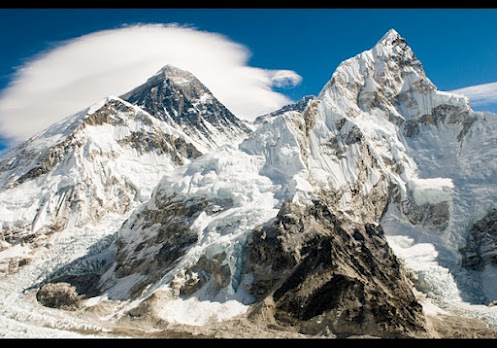
Earth's highest mountain with a peak at 8,848 metres (29,029 ft) above sea level. It is located in the Mahalangur section of the Himalayas. The international border between China and Nepal runs across the precise summit point.

Visit To Galápagos Islands

Visit To Galápagos Islands - An archipelago of volcanic islands distributed around the equator in the Pacific Ocean, 972 km (525 nmi) west of continental Ecuador, of which they are a part.
The Galápagos Islands and its surrounding waters form an Ecuadorian province, a national park, and a biological marine reserve. The principal language on the islands is Spanish. The islands have a population of slightly over 25,000.
The islands are geologically young and famed for their vast number of endemic species, which were studied by Charles Darwin during the voyage of the Beagle. His observations and collections contributed to the inception of Darwin's theory of evolution by natural selection.

The first crude navigation chart of the islands was made by the buccaneer Ambrose Cowley in 1684.[dubious – discuss] He named the individual islands after some of his fellow pirates or after the British noblemen who helped the privateer's cause. More recently, the Ecuadorian government gave most of the islands Spanish names. While the Spanish names are official, many users (especially ecological researchers) continue to use the older English names, principally because those were the names used when Charles Darwin visited.

Michigan Porcupine Mountains Waterfall

Porcupine Mountains Waterfall, MichiganThe Presque Isle River within this area traverses a series of low falls and cascades, before dividing into two swifter and narrower channels that cut deeply into the underlying bedrock.

The Aldabra Atoll

The Aldabra AtollThe Aldabra Atoll is the second largest atoll in the world behind the Kiritimati atoll. It stretches 21.1 miles long and 9 miles wide. The Aldabra atoll is 26.2 feet above sea level and has a land area of 96.5 miles. The lagoon stretches 139.1 miles across; much of the lagoon will be exposed during low tide. The Aldabra Atoll includes a ring of four larger islands: Grand Terre, Malabar, Polymnie, and Picard, and a few smaller islands. The islands have no inhabitants apart from a small staff of rangers. The atoll accounts for the largest population of giant tortoises. Additional wildlife includes: hammerhead sharks, barracuda, green turtles, hawksbill turtles, mantarays, and various birds.