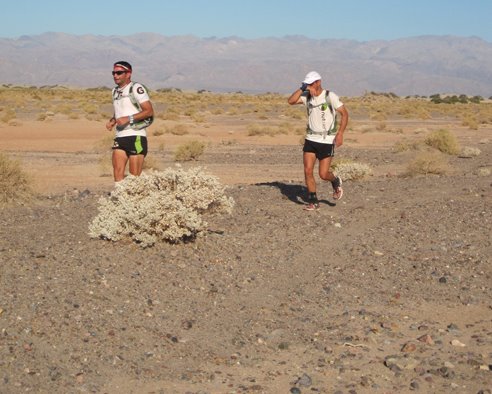
There was good news from the Gobi Desert this weekend as ultrarunner Ray Zahab has successfully completed Expedition Gobi, his 2300 km (1430 mile) crossing of the desert on foot. It took him 34 days to complete the journey, averaging nearly 68 km (42 miles) per day during that time.
As with any expedition of this nature, the run included a number of major challenges. For instance, when he first set out, Ray was running with Kevin Lin, a fellow ultrarunner from Taiwan. Kevin was hampered by injuries however and eventually had to abandon his attempt at crossing the Gobi. That forced Ray to carry on by himself, which required a great deal of mental toughness. Covering all of those miles on a daily basis is tough enough, but to do it mostly by yourself is even more difficult.
The terrain in the Gobi certainly lived up to its billing, particularly near the end. Ray ran through all kinds of varying conditions along the way, but his final days were often spent running up and down massive sand dunes. Those conditions made it tough going in those last few days, but with a little help from some local military officials, Ray and his support team were able to find a faster and more efficient route to get them through the final leg.
The team is now en route back to Ulaanbataar, a journey that will take three days to complete in a 4x4 vehicle. That alone should tell you how remote the Gobi is and how difficult the conditions there are. Despite all of those miles and challenging environments, our intrepid runner managed to complete the expedition without a single blister, which is an impressive accomplishment on its own.
Ray can now add the Gobi to his growing list of deserts that he has run across. Previously the Canadian adventurer has also run across the Sahara and Atacama Deserts, as well traveled to the South Pole and across Death Valley on foot. Not bad for a guy who use to smoke a pack of cigarettes per day.
Congrats Ray! Well done once again!
Showing posts with label Ray Zahab. Show all posts
Expedition Gobi Update: Toughest Leg Yet To Come
Ray Zahab has been in the Gobi Desert for a month now as he continues his attempt to run through that massive and demanding environment. When he's done, he hopes to have covered 2300 km (1430 miles) in approximately 35 total days, averaging roughly 70 km (43.5 miles) per day. Along the way, he has been interacting with the locals that inhabit the Gobi and learning about the effects of desertification on their lives and homeland. As is typical with one of Ray's expedition's, he is also sharing those insights and experiences with classrooms around the globe.
Yesterday was a rest day for Ray and his support team as they prepare for their final leg of this journey. With just 320 km (198 miles) left to run, the toughest challenges may still lay ahead. The route will now take our intrepid ultrarunner into one of the most desolate and difficult regions of the Gobi yet. A region that is seldom visited and largely unexplored. So much so, that Ray says that the team will share their video with the Mongolian government to help them understand the environment he'll be running through much better.
As he enters the stretch run, Ray is planning on reach the finish line this coming weekend. It won't be easy however as this next segment is incredibly dry, warm and utterly devoid of places to resupply. They are leaving the last settlements behind as they move into this "No Man's Land." Over the next few days, they'll have to rely on themselves and the supplies they've brought along to see them through to the end.
Stay tuned for updates and check out the video below to see what Ray has been dealing with on his run so far. The Gobi looks incredible but I'm not sure I'd want to run for 35 days across it.
Expedition Gobi - Khongoryn Els (Singing Sands) from GOi2P on Vimeo.
Yesterday was a rest day for Ray and his support team as they prepare for their final leg of this journey. With just 320 km (198 miles) left to run, the toughest challenges may still lay ahead. The route will now take our intrepid ultrarunner into one of the most desolate and difficult regions of the Gobi yet. A region that is seldom visited and largely unexplored. So much so, that Ray says that the team will share their video with the Mongolian government to help them understand the environment he'll be running through much better.
As he enters the stretch run, Ray is planning on reach the finish line this coming weekend. It won't be easy however as this next segment is incredibly dry, warm and utterly devoid of places to resupply. They are leaving the last settlements behind as they move into this "No Man's Land." Over the next few days, they'll have to rely on themselves and the supplies they've brought along to see them through to the end.
Stay tuned for updates and check out the video below to see what Ray has been dealing with on his run so far. The Gobi looks incredible but I'm not sure I'd want to run for 35 days across it.
Expedition Gobi Update: 20 Days In And Challenges Ahead
No one ever said running across a desert would be easy, but ultrarunner Ray Zahab seems to have a way of making it look that way. In the past, he has run across the Sahara and the Atacama Deserts, as well as skied to the South Pole in record time. Now he's taking on the Gobi and three weeks in he's having an amazing experience, although some of the toughest days are still ahead.
When he set out back on June 23, Ray estimated that it would take approximately 35 days to complete the run, covering about 70 km (43.5 miles) per day. He's done a good job of hitting those distances so far despite some difficult conditions at times, while also finding time to connect with the locals who call the Gobi home. He was suppose to be running alongside fellow-ultrarunner Kevin Lin, but Kevin has been nagged with injuries almost from the start, so Ray has been doing most of the miles by himself, something that probably makes all of his interactions with the Mongolians all the more special.
What is a typical day running the Gobi like for Ray? Check out the video below to get an idea. Don't let the green, lush looking environment fool you however, as this is still a dry desert that can be very demanding. In the next few days, Ray will move into some very large sand dunes, which will add a new challenge to his efforts. Hitting those 70 km goals on a daily basis could become a much more difficult prospect.
Stay tuned for more updates as Ray continues this journey on foot through the Gobi. He still has a couple of more weeks to go until he's done, so plenty of running yet to be completed.
Expedition Gobi - No Language Barrier from GOi2P on Vimeo.
When he set out back on June 23, Ray estimated that it would take approximately 35 days to complete the run, covering about 70 km (43.5 miles) per day. He's done a good job of hitting those distances so far despite some difficult conditions at times, while also finding time to connect with the locals who call the Gobi home. He was suppose to be running alongside fellow-ultrarunner Kevin Lin, but Kevin has been nagged with injuries almost from the start, so Ray has been doing most of the miles by himself, something that probably makes all of his interactions with the Mongolians all the more special.
What is a typical day running the Gobi like for Ray? Check out the video below to get an idea. Don't let the green, lush looking environment fool you however, as this is still a dry desert that can be very demanding. In the next few days, Ray will move into some very large sand dunes, which will add a new challenge to his efforts. Hitting those 70 km goals on a daily basis could become a much more difficult prospect.
Stay tuned for more updates as Ray continues this journey on foot through the Gobi. He still has a couple of more weeks to go until he's done, so plenty of running yet to be completed.
Expedition Gobi: Ray And Kevin Are Off And Running
Yesterday, ultrarunners Ray Zahab and Kevin Lin began their 2300 km (1430 mile) trek across the Gobi Desert. The two men, who once ran the length of the Sahara together, hope to spend the next 35 days running an average of 65 km (40 miles) per day. Along the way they'll face remote and difficult terrain, extremely dry conditions and a host of other physical and mental challenges.
One of the biggest obstacles to their success is simply the logistics of being resupplied. Because the Gobi is so remote and lacking in infrastructure, Ray and Kevin's support team will have very few opportunities to provide them with fresh water along the way. They expect to receive just one supply drop each day, which isn't much considering the locations they are traveling through.
On their first day out, the two endurance athletes were able to cover 61 km (38 miles). That's not too bad for what these guys call a "warm-up." The video below gives you an idea what the start of their journey was like and we can look forward to similar videos moving forward as they continue the run.
You can follow Ray and Kevin's adventure at Gobi2013.com or on Facebook and Twitter. I'll be thinking of these guys tonight on my run, which will be a mere five miles.
Expedition Gobi - Day 1 61 Km from GOi2P on Vimeo.
One of the biggest obstacles to their success is simply the logistics of being resupplied. Because the Gobi is so remote and lacking in infrastructure, Ray and Kevin's support team will have very few opportunities to provide them with fresh water along the way. They expect to receive just one supply drop each day, which isn't much considering the locations they are traveling through.
On their first day out, the two endurance athletes were able to cover 61 km (38 miles). That's not too bad for what these guys call a "warm-up." The video below gives you an idea what the start of their journey was like and we can look forward to similar videos moving forward as they continue the run.
You can follow Ray and Kevin's adventure at Gobi2013.com or on Facebook and Twitter. I'll be thinking of these guys tonight on my run, which will be a mere five miles.
Ultrarunners Set To Run Across The Gobi Desert
Ultrarunners Ray Zahab and Kevin Lin, who once teamed up to run across the Sahara together, are collaborating once again on another desert crossing. This time the two men will take on the remote and foreboding Gobi in an attempt to cover 2300 km (1430 miles) in just 35 days.
Ray and Kevin plan to run between 70-80 km (43-50 miles) per day on this epic journey through the Gobi. They will have a support team with them helping to provide the water they'll need to keep moving, but due to the remote and rugged nature of the region, they'll only be able to receive one or two resupplies each day. That means they'll need to carry plenty of water with that at all times as it will be uncertain as to when they'll be able to get more.
While crossing the Gobi, the team will also interact with the Mongolian people who still make their home in that wild place. They hope to learn from about the effects of desertification from these tough and resilient people, who are seeing its effects first hand. Ray, Kevin and the rest of the squad will share those experiences, as well as insights into life in the desert, with youth groups back home via satellite broadcasts. The hope is to educate and inspire those young people following along with a healthy dose of adventure.
The plan is for the run to actually begin on Sunday, June 23. Ray is leaving from Canada for Mongolia today and he'll connect with Kevin, who will be coming from Taiwan, later in the week. They'll spend the time leading up to start of the expedition by organizing gear, resting their bodies from the travel and acclimatizing somewhat to the climate. After that, it'll be full steam ahead for 35 days. You'll be able to follow their progress on the Expedition Gobi website, as well as Facebook and Twitter.
Good luck Kevin and Ray!
World Expedition Gobi Trailer from GOi2P on Vimeo.
Ray and Kevin plan to run between 70-80 km (43-50 miles) per day on this epic journey through the Gobi. They will have a support team with them helping to provide the water they'll need to keep moving, but due to the remote and rugged nature of the region, they'll only be able to receive one or two resupplies each day. That means they'll need to carry plenty of water with that at all times as it will be uncertain as to when they'll be able to get more.
While crossing the Gobi, the team will also interact with the Mongolian people who still make their home in that wild place. They hope to learn from about the effects of desertification from these tough and resilient people, who are seeing its effects first hand. Ray, Kevin and the rest of the squad will share those experiences, as well as insights into life in the desert, with youth groups back home via satellite broadcasts. The hope is to educate and inspire those young people following along with a healthy dose of adventure.
The plan is for the run to actually begin on Sunday, June 23. Ray is leaving from Canada for Mongolia today and he'll connect with Kevin, who will be coming from Taiwan, later in the week. They'll spend the time leading up to start of the expedition by organizing gear, resting their bodies from the travel and acclimatizing somewhat to the climate. After that, it'll be full steam ahead for 35 days. You'll be able to follow their progress on the Expedition Gobi website, as well as Facebook and Twitter.
Good luck Kevin and Ray!
Video: Expedition Gobi Teaser Trailer
In June, ultrarunners Ray Zahab and Ferg Hawke will travel to the Gobi Desert where they will attempt to run more than 2300 km (1430 miles) through one of the most demanding environments on the planet. They plan to cover roughly 70 km (43.5 miles) per day while a support team tries to keep them supplied with plenty of food and water to keep them going, something that will be a logistical challenge to say the least.
In preparation for the start of the run, which is still a month off, the team released the teaser video below. It serves the dual purpose of both inspiring us to pursue our own adventures while also giving us a glimpse of the challenges the runners will face along the way. This will certainly be a challenging endeavor for Ray and Ferg and fascinating for the rest of us to follow.
World Expedition Gobi Trailer from GOi2P on Vimeo.
In preparation for the start of the run, which is still a month off, the team released the teaser video below. It serves the dual purpose of both inspiring us to pursue our own adventures while also giving us a glimpse of the challenges the runners will face along the way. This will certainly be a challenging endeavor for Ray and Ferg and fascinating for the rest of us to follow.
Expedition Gobi: Running 2000km Across The Gobi Desert
Covering nearly 1.3 million sq. kilometers (500,000 sq. miles) in central Asia, the Gobi is one of the largest deserts on the planet. Its arid climate and trademark rock formations make it a difficult and demanding place, even for the hardiest of explorers. Naturally those challenges give the desert an allure that is hard for many adventurers to resist and in June of this year, two men will set out to attempt to run across the Gobi at its widest point.
The newly announced Expedition Gobi will send endurance athletes Ray Zahab and Ferg Hawk on a 2000 km (1242 mile) journey through the heart of the desert. The two men are busy preparing for their run which will see them covering approximately 70 km (43.5 miles) per day in one of the harshest environments on the planet. The expedition will be supported although the Gobi presents some logistical challenges that will likely only allow for one or two resupply points each day. That means other than getting fresh water from time to time, Ray and Ferg will mostly need to be completely self-sufficient while out on the trail.
Both Ray and Ferg are part of the impossible2Possible team which means they will weave an educational element into this great adventure. In this case, as they run across the Gobi, they'll interact with the people who have learned to make the desert their home. The Mongolian people have lived in the Gobi for centuries and have adapted well to the harsh living conditions there. They'll teach the two runners about desertification and in turn, those lessons will be shared with students in classrooms around the globe. As global climate change continues to have an impact on our planet, desertification becomes a bigger issue and something that we should all be familiar with.
No firm start date for Expedition Gobi has been announced yet, but more details on the run will be released soon. With just two months to go until the start of June, this is already shaping up to be another great adventure to follow this summer.
The newly announced Expedition Gobi will send endurance athletes Ray Zahab and Ferg Hawk on a 2000 km (1242 mile) journey through the heart of the desert. The two men are busy preparing for their run which will see them covering approximately 70 km (43.5 miles) per day in one of the harshest environments on the planet. The expedition will be supported although the Gobi presents some logistical challenges that will likely only allow for one or two resupply points each day. That means other than getting fresh water from time to time, Ray and Ferg will mostly need to be completely self-sufficient while out on the trail.
Both Ray and Ferg are part of the impossible2Possible team which means they will weave an educational element into this great adventure. In this case, as they run across the Gobi, they'll interact with the people who have learned to make the desert their home. The Mongolian people have lived in the Gobi for centuries and have adapted well to the harsh living conditions there. They'll teach the two runners about desertification and in turn, those lessons will be shared with students in classrooms around the globe. As global climate change continues to have an impact on our planet, desertification becomes a bigger issue and something that we should all be familiar with.
No firm start date for Expedition Gobi has been announced yet, but more details on the run will be released soon. With just two months to go until the start of June, this is already shaping up to be another great adventure to follow this summer.
Op-Ed: The Power For Adventure To Educate
If you've been reading my blog for any length of time, you've probably seen some of my posts on the impossible2Possible organization and the ways they use adventure to educate and empower students around the globe. I've always admired the way the i2P team comes up with some interesting challenges and destinations, then creates curriculum for teachers to use in their classrooms to help students to understand and relate to the the place and the issues that people living there face.
The following is an op-ed piece written by Dr. George Agnes, the Associate Dean of Sciences at Simon Fraser University. Dr. Agnus worked on helping to develop lesson plans for i2P's latest expedition to Botswana and is in a unique position to assess the impact of using adventure-based learning to raise engagement in students. The good doctor shares his thoughts on that very subject below.
Adventure experiences sow seeds for students to solve global issues
These students were participating in an impossible2Possible (i2P) youth expedition. A U.S.-based nonprofit organization co-founded by Canadian Ray Zahab, i2P’s mission is to encourage youth to reach beyond their perceived limits, and to use adventure as a medium to educate, inspire and empower the global community to make positive change.
With insightful contributions from others at SFU, I produced an inquiry-based curriculum for this expedition and travelled to Botswana to facilitate and support learning on the ground. The curriculum was also used in more than 125 schools worldwide and reached nearly 10,000 students, including hundreds in the Lower Mainland. In these classrooms, students’ grade 6 to 12 conducted experiments exploring the value of water and its effect on human life, and interacted directly with the i2P participants via satellite video. This transported the expedition experience directly into the classroom and enabled students to engage in a manner that informed the next steps in their curriculum-based experiments.
In the case of an i2P youth expedition, learning takes place in remote, harsh landscapes where global geo-political and environmental issues – such as water access, food security and healthcare – are explored. As a result, participants develop accountability and responsibility regarding the focal issue as well as a lifelong commitment to pursue solutions to it and related issues. For example, in the drought-ridden Kalahari, access to clean water can mean the difference between life and death. To emphasize this, students ran a marathon a day in 40 degree Celsius heat, consuming eight liters of clean water a day and cultivating a deep appreciation for easy accessibility to water in the process.
Taking adventure-based learning to the wider public has many challenges. Teachers implementing expedition-based concepts in a classroom for students who have little or no access to the expedition often have their efforts stymied from a lack of context. Through technological advances, an expedition’s curriculum can take on new meaning when students become participants in inquiry-based exercises of their own design, such as scientific experimentation, and are then empowered to discuss their results and obtain feedback in real-time with participants in the field. Such experiential learning is one way to inspire student imagination, innovation and a deeper commitment to investigate in-depth issues from local to global perspectives. In partnering with i2P, our academic curriculum reached thousands of students around the globe, challenging each of them to pursue excellence in both athletics and academics.
In the past, adventure-based learning has been offered at a high cost to university students who can afford expedition and tuition fees, with most college-aged students unable to participate and certainly not elementary or high school students.
Today, middle schools and high schools across the Lower Mainland are running adventure-based education programs. At Prince of Wales High School in Vancouver, the TREK Program teaches students how the natural world impacts their daily lives and how they impact the environment. In Mission and Abbotsford, the Community Recreation Programs at W.J. Mouat and Mission secondary schools introduce students to the role of exercise and nature in combating stress-related illness.
At SFU, “academic leadership” courses are being developed based on the multi-disciplinary curriculums created for i2P. Courses are designed to lay foundations for student-inspired learning and excellence in disciplinary foundational concepts, and provide outstanding introductions to complex global issues that they themselves may be tasked with solving during their careers. Students in these courses will extensively investigate the issues the expedition participants are expected to witness and function as mentors to expedition participants.
Often referred to as “21st century learning,” adventure-based learning represents a new type of student experience. By leveraging technological tools to bring an expedition to life in classrooms, educators and students can engage with individuals and communities far afield and work together to find solutions to pressing global issues – issues that affect all of our lives profoundly. Such opportunities help engage students in shaping their futures by developing a knowledge base and value system that will shape and inform the rest of their lives.
Dr. George Agnes is Associate Dean of Science at Simon Fraser University.
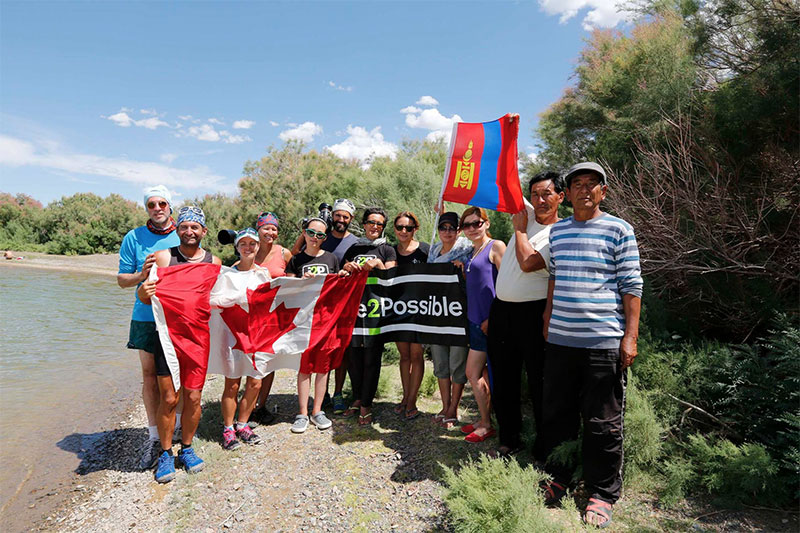
The following is an op-ed piece written by Dr. George Agnes, the Associate Dean of Sciences at Simon Fraser University. Dr. Agnus worked on helping to develop lesson plans for i2P's latest expedition to Botswana and is in a unique position to assess the impact of using adventure-based learning to raise engagement in students. The good doctor shares his thoughts on that very subject below.
Adventure experiences sow seeds for students to solve global issues
As Associate Dean of Science at Simon Fraser University, I’ve conducted thousands of experiments in my day. But nothing prepared me for my participation in the ultimate educational experiment: observing seven youth each run 180 km of Botswana’s Kalahari Desert to better understand the value of water and its effect on human development and biodiversity. This was a rare experiential learning opportunity where students gained first-hand experience of the stark realities of a global issue and how it affects our world.
These students were participating in an impossible2Possible (i2P) youth expedition. A U.S.-based nonprofit organization co-founded by Canadian Ray Zahab, i2P’s mission is to encourage youth to reach beyond their perceived limits, and to use adventure as a medium to educate, inspire and empower the global community to make positive change.
With insightful contributions from others at SFU, I produced an inquiry-based curriculum for this expedition and travelled to Botswana to facilitate and support learning on the ground. The curriculum was also used in more than 125 schools worldwide and reached nearly 10,000 students, including hundreds in the Lower Mainland. In these classrooms, students’ grade 6 to 12 conducted experiments exploring the value of water and its effect on human life, and interacted directly with the i2P participants via satellite video. This transported the expedition experience directly into the classroom and enabled students to engage in a manner that informed the next steps in their curriculum-based experiments.
Adventure-based learning uses physical challenges to help youth develop self-directed goals, trust, communication and problem solving skills. Students and teachers report improved student engagement in and ownership of their learning; teamwork and leadership skills development; increased connection to the natural world; and a basic understanding of global issues and how they affect survival and daily life.
In the case of an i2P youth expedition, learning takes place in remote, harsh landscapes where global geo-political and environmental issues – such as water access, food security and healthcare – are explored. As a result, participants develop accountability and responsibility regarding the focal issue as well as a lifelong commitment to pursue solutions to it and related issues. For example, in the drought-ridden Kalahari, access to clean water can mean the difference between life and death. To emphasize this, students ran a marathon a day in 40 degree Celsius heat, consuming eight liters of clean water a day and cultivating a deep appreciation for easy accessibility to water in the process.
Taking adventure-based learning to the wider public has many challenges. Teachers implementing expedition-based concepts in a classroom for students who have little or no access to the expedition often have their efforts stymied from a lack of context. Through technological advances, an expedition’s curriculum can take on new meaning when students become participants in inquiry-based exercises of their own design, such as scientific experimentation, and are then empowered to discuss their results and obtain feedback in real-time with participants in the field. Such experiential learning is one way to inspire student imagination, innovation and a deeper commitment to investigate in-depth issues from local to global perspectives. In partnering with i2P, our academic curriculum reached thousands of students around the globe, challenging each of them to pursue excellence in both athletics and academics.
In the past, adventure-based learning has been offered at a high cost to university students who can afford expedition and tuition fees, with most college-aged students unable to participate and certainly not elementary or high school students.
Today, middle schools and high schools across the Lower Mainland are running adventure-based education programs. At Prince of Wales High School in Vancouver, the TREK Program teaches students how the natural world impacts their daily lives and how they impact the environment. In Mission and Abbotsford, the Community Recreation Programs at W.J. Mouat and Mission secondary schools introduce students to the role of exercise and nature in combating stress-related illness.
At SFU, “academic leadership” courses are being developed based on the multi-disciplinary curriculums created for i2P. Courses are designed to lay foundations for student-inspired learning and excellence in disciplinary foundational concepts, and provide outstanding introductions to complex global issues that they themselves may be tasked with solving during their careers. Students in these courses will extensively investigate the issues the expedition participants are expected to witness and function as mentors to expedition participants.
Often referred to as “21st century learning,” adventure-based learning represents a new type of student experience. By leveraging technological tools to bring an expedition to life in classrooms, educators and students can engage with individuals and communities far afield and work together to find solutions to pressing global issues – issues that affect all of our lives profoundly. Such opportunities help engage students in shaping their futures by developing a knowledge base and value system that will shape and inform the rest of their lives.
Dr. George Agnes is Associate Dean of Science at Simon Fraser University.
Subscribe to:
Posts (Atom)
Follow Us
Were this world an endless plain, and by sailing eastward we could for ever reach new distances