Showing posts with label Technology. Show all posts

Adventure Tech: New Tools For Would-Be Adventure Filmmakers

With the advent of tiny POV cameras over the past few years, adventure filmmaking has gone from an expensive, time consuming proposition to something that anyone with a laptop and a good camera can do. This week, aspiring filmmakers got a couple of new options to help in this process in the form of a new camera and an improved drone for capturing arial footage like never before.

First up, ION released their new Air Pro 3 WiFi camera, which brings an assortment of upgrades and improvements to the device. The new device has an improved 12 megapixel sensor that increases performance in lowlight conditions while continuing to shoot in full 1080p resolutions at 60 fps. Its ruggedized body is waterproof down to 49 feet (15 meters) and includes built-in image stabilization to help minimize shaking when worn on a helmet or mounted on the handlebars of a bike. It has a battery life of about 2.5 hours, which is a solid amount of time for a camera this small and an array of new mounting options are available to make this camera as versatile as possible. 

Additionally, the Air Pro 3's WiFi functionality makes it easier than ever to share videos online. The system even comes with 8GB of free cloud storage and can be paired with an app on an iOS or Android device for remote operation. 

The camera carries a price tag of $349.99 and begins shipping November 15. Preorders are available online.

Adventure filmmakers who want to add a new dimension to their next project will love the new offering from DJI, makers of the Phantom remote controlled drone systems. They've introduced the Phantom 2 Vision, which is unique in that it comes equipped with a camera right out of the box. Unlike previous models from DJI, the Vision has a built-in 14 megapixel camera that comes mounted on a tilting gimbal that can rotate 60º and has a wide 140º viewing area. A shock-aborbing bracket, built specifically for this camera, helps to reduce shaking and jitters that were an issue when  mountain your own camera on previous Phantom drones. The camera can also be paired with an iOS or Android device, allowing it to become a remote screen for the device, which the pilot can then use on the ground to see exactly what footage is being captured. 

DJI also improved the drone itself, giving it a greater battery life. It can now stay aloft for 25 minutes at a time. The drone also has improved stabilization for easier flight, even for beginners, although it all comes at a hefty cost. The Phantom 2 Vision will set you back $1199 when it goes on sale in a few weeks. The original Phantom, sans camera, is still available for just $479. 

Check out the Vision in action in the video below. Is it wrong that I kind of want one of these things?

Adventure Tech: Garmin Delivers Yet Another GPS Watch To Consumers

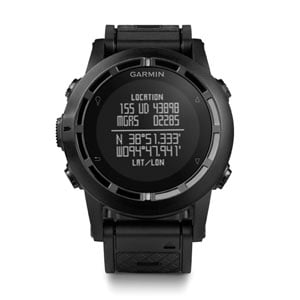
GPS technology company Garmin has released yet another GPS watch for consumers to ponder over. This time it seems less fitness/sports oriented and more aimed at a law enforcement/military crowd, although it brings a host of options that I'm sure many outdoor enthusiasts will find appealing. It also happens to deliver them in quite an attractive package.

The new watch is called the tactix and it retails for $450. It sports a high-sensitivey GPS sensor with automatically calibrating altimeter and a 3-axis compass. It's built in memory allows the device to store up to 1000 waypoints and 10,000 track points, and allows the wearer to quickly and easily retrace their steps back to previous positions. In a nod to its military roots, the U.S. version of the watch is preloaded with tidal data and all versions include Jumpmaster software for airborne personnel. It also features sun/moon data and a calendar for hunting and fishing. A stopwatch, countdown timer, world clock, and alarm functionality are all built in as well of course, and as with most GPS enabled watches, this one will tell you distance traveled, speed, calories burned, etc. The tactix will also pair with Garmin's heart rate monitor and bike pod to measure performance and will even control the company's VIRB and VIRB Elite action cameras.

The tactix is designed to be rugged and survive in the outdoors. Its case is tough and durable, making it water resistant down to 50 meters. It's all black styling is designed to be non-reflective and subtle in nature, while the built in battery can reportedly go 50 hours between charges with GPS enabled and 5 weeks when being used as a standard watch. That performance is actually quite good for a watch of this kind.

The new watch is available now.

Gear Closet: 180 Watt Cup Inverter

A few days ago I reviewed a surprising product from Energizer in the form of the Ultimate headlamp, a light that is bright, durable and very affordable. Today I have an entirely different product. One that isn't specifically meant for the outdoors but is incredibly useful while traveling. Particularly on a road trip during which you need to keep your gadgets and tech toys fully powered. It is the 180 Watt Cup Inverter , a device that any road warrior will want in their arsenal.

Designed to fit in the cup holder of just about any vehicle, this power inverter comes equipped with four USB ports and a standard AC outlet. When plugged into the DC port (cigarette lighter) of a car it can provide enough juice to power up smartphones, GPS devices, cameras – even a laptop – all at the same time. A small, almost completely silent, fan keeps the interior from overheating so that it can continue pumping out the power indefinitely, making this an essential piece of gear on any driving excursion.

As the name implies, this inverter is capable of cranking out 180 watts of continuous power. That's enough to provide each of the USB ports with up to 2.1 amps, which is sufficient juice to charge a tablet including  the notoriously power hungry iPad. All of that energy is shared across all four USB ports however, so if you plug several power-hungry devices in at the same time, they won't quite charge as rapidly as they should. Still, the inverter is efficient enough to keep multiple devices up and running for when you need them.


Energizer has built a very solid and dependable device that looks good for a device that is essentially a portable power strip for mobile devices. The clever shape allows it to slip into nearly any cup holder, which is the perfect place for a device like this one. It put it within easy reach of just about anyone in the vehicle but it also keeps it well out of the way of the driver, keeping it from becoming a distraction.

This is a simple product that works exactly as advertised, which is what you want of course. If you make frequent road trips and need to keep your gadgets charged while you're on the go, this is the perfect device to have in your vehicle. It's MSRP of $44.99 is a great price for something that can charge all your mobile devices and a laptop too. This is the kind of device that will change the way you travel and pay for itself many times over. Buy one, keep it in your car and never be without power again.

Gear Closet: Microsoft Surface Pro Tablet

If there has been one piece of technology that has been released in the past year that offers intriguing possibilities for the expedition and outdoor adventure crowd, it is the Microsoft Surface Pro. It is a tablet with the full power of a laptop wrapped up in a lightweight, but very durable, package that offers more versatility than similar products from competitors. But does the Surface Pro live up to is potential or is it another tablet that is battling for attention in the rather large shadow of the iPad? The answer is probably somewhere in the middle.

Before we get too deep into my thoughts on the Surface Pro it is important to understand the difference between it and the Surface NT, it's smaller, cheaper and less powerful cousin. The NT is powered by a slimmed down version of Windows 8 that is only capable of running Windows apps. It doesn't provide access to the desktop nor will it run the entire library of Windows software, but it is thinner than the Pro model and offers battery life and performance on par with the iPad. In simple terms, the Surface NT is a tablet that aspires to be a laptop, while the Surface Pro is a laptop with tablet tendencies.

Unlike most other tablets, which are powered by mobile processors, the Surface Pro has an Intel Core i5 processor. That's on par with what you would find in an ultrabook computer and comes with enough power to run most Windows software short of high end games. That processor is what helps set the Pro apart from similar products as it is a fast and smooth experience both in the Win 8 app environment and when interacting with the classic Windows desktop. Essentially the Surface Pro is a powerful computer that you can hold in your hands, giving you the ability to blog, edit photos and video, make Skype calls and so much more. Best of all, the Surface Pro features true multitasking, running multiple programs at the same time. So while you're on a video conference call with your family back home you can still be working on that latest dispatch from the field.

The Surface Pro has a few other tricks up its sleeve that help it stand out from the increasingly crowded tablet market. The device has a built-in Wacom digitizer and comes with a touch sensitive stylus that opens up all kinds of opportunities. For instance, Windows 8 has integrated handwriting recognition which means you can scrawl notes on the touch screen and they'll automatically be turned into typed text. The system takes a bit of getting use to, but once you adjust to it, it is an excellent option that can come in handy in a variety of situations. The stylus also works great in drawing apps and other software too.


One of the distinct features of the Surface line is the Touch and Type Covers. These protective screen covers include an integrated keyboard that when opened up turns the tablet into a mini laptop. The Touch version is thin and light with soft keys, while the Type Cover is a bit thicker but has a keyboard that more closely resembles a laptop. If you've seen the numerous commercials for the Surface, you've no doubt seen these covers which click into place in a dedicated port on the bottom of the device. Microsoft includes one with the less expensive NT tablet but for some inexplicable reason it is an added expense for the more costly Surface Pro model. Anyone who buys the Pro model will want one of the keyboards however and I'd recommend spending the extra dough to get the Type model.

The Surface Pro is much closer to a true laptop than any other tablet on the market and as such it has some nice touches that you don't find on competing models. For instance, it has a full sized USB port that allows you to attach external hard drives, printers, or USB memory sticks. A miniSD card reader is great for added storage capacity while front and rear facing cameras open up all kinds of possibilities. Bluetooth 4.0 functionality allows for wireless interaction with all kinds of other devices. Integrated gyroscopes and accelerometers helps orient the screen and smoothly flip from portrait to landscape mode and back again. The distinctive Surface kickstand is a great feature when the device is sitting on a flat surface but is less useful when propped up on your lap.

The 10.6" display is one of the Surface Pro's more impressive features. It is clear and bright, supporting resolutions up to 1920 x 1080. Video looks fantastic on the screen and photos appear vibrant and beautiful. The screen is a definite high point for the device.

The Surface Pro's case is built out of a material called VaporMg which was specially developed by Microsoft for the tablet. The liquid metal is very tough and durable, which does come in handy when in the field. The metal case can take a lot of punishment, particularly for a device so light and small. This provides a great sense of confidence when carrying the device in a backpack into the remote corners of the globe. Short of carrying a Panasonic Toughbook on an expedition, which is a much heavier laptop, I can't think of another device that I'd want to have with me in rugged conditions.

All of these features and integrated technology is great of course, but the real question is how does the Surface Pro perform as a travel or expedition computer. The answer to that question is that it does quite well, provided you can keep it powered up. The battery life on the Pro is about 5.5 hours, which is underwhelming if you compare it to other tablets but about average for an ultrabook laptop. It is far below the new Macbook Air of course, which is getting 12+ hours on a single charge, but doesn't provide the same touchscreen/tablet form factor as the Surface. My biggest complaint about the Surface Pro is the battery life and if there is one upgrade I'd like to see in the next model, it would improved performance in this category. On the other hand, the relatively low capacity batteries are quick to charge and don't require a lot of power. A good solar panel in Base Camp will more than do the trick, so while stand alone battery life isn't great, it is relatively easy to keep the device charged.

The Surface Pro packs a lot of performance into a small package but it is priced closer to a laptop than a standard tablet. The device starts at $799 for 64GB of storage and $899 for 128GB. Add in $119 for a Touch Cover or $129 for a Type Cover and you're shelling out quite a bit of cash for a Surface Pro. On the other hand, if you need an ultra-portable device with plenty of power and features to take on your next expedition, this is a great option. It is durable, dependable and versatile. It is also very powerful, not to mention down right fun to use.

Is it the ultimate expedition computer? No. But it is very close. And with the ability to keep it charged while in the field, you may find that it fits your needs extremely well.


Adventure Tech: Garmin Introduces VIRB Action Camera

The already crowded action camera market, currently dominated by GoPro, just got a bit more crowded. Garmin, the company so well known for making GPS devices, has released two new enteries for aspiring filmmakers to consider in the form of the VIRB and VIRB Elite. Whether or not they'll be able to make a dent with consumers remains to be seen, but they are packing some serious technology under the hood.

The VIRB is capable of capturing video in resolutions up to 1080p HD, which is pretty much standards for any action camera these days. But Garmin's device also features onboard image stabilization and lens distortion correction, which help to make the footage just a bit cleaner and clearer. Battery life is a rated to be a solid three hours and both versions of the VIRB are capable of capturing still images while video is recording. A built-in 1.4-inch display allows the user to watch video already shot or see exactly what they are filming at all times. The VIRB Elite also comes equipped with onboard WiFi and GPS, while both units feature ANT+ connectivity for pairing with other devices.

Garmin knows their market well and built the VIRB to appeal to the outdoor crowd. The camera is rated for IPX-7 waterproofing, which means it can survive under a meter of water for up 30 minutes. That makes it tough enough for most waterborne adventures, although if you want to take it diving you'll need to purchase the optional dive case. A number of mounts will be available for the VIRB as well allowing the user to connect it to their handlebars, helmet, surfboards, kayaks and more. A built-in HDMI port and a microSD card slot rounds out the package. The camera can support up 64GB of microSD storage, which is enough for as much as 7 hours of 1080p footage.

The VIRB and VIRB Elite will be available in September with a price tag of $300 and $400 respectively.


The Best Gear Of Outdoor Retailer (Part 2)

A few days ago I shared my thoughts on the best gear that I saw at this year's Outdoor Retailer Summer Market. But the half-dozen items that I spotlighted at the time were just a tiny fraction of the new outdoor equipment that was on display there. Here are a few more items that caught my eye and may of interest to you when they hit store shelves over the next few months.

Kelty TraiLogic
One of the more impressive set of products that I saw at OR this year was the new TraiLogic system from Kelty. The company has gone back to its roots, creating a collection of gear that is designed to work well with one another in a very efficient manner. The TraiLogic product line includes a tent, sleeping pad, Dry-down sleeping bag and a backpack that converts from a 50-liter bag designed for backpacking to a 35-liter day pack in seconds. It is difficult to sum up all of the innovation that I saw in the TraiLogic designs but just know that Kelty is focused on making a complete backpacking system that is lightweight and affordable. How lightweight and affordable you ask? The entire collection weighs less than 10 pounds and will cost just $800-$900 depending on which configuration you select. Expect to hear much more about this product as it gets closer to launch next spring.

Adventure Medical Kits Fire Cubes
I've been a big fan of Adventure Medical Kits for years and absolutely love the products they've designed for travel, adventure racing and backpacking. At OR, the company was showing off another new innovative product in the form of their All Weather Fire Cubes. Somewhat resembling small marshmallows, the cubes are designed to help you easily start a fire in the backcountry. They are designed to ignite easily with the included fire sparker, even when wet and they are capable of generating a flame that burns as hot as 1300ºF (704ºC) for about 10-12 minutes. In other words, they burn long enough for you to get your tinder going so you can build a fire when ever you need one. Available in the spring, a $12 bag will include 48 cubes, which can actually be broken down into 8 smaller pieces should the need arise.

Brunton Hydrogen Reactor
One of the more ambitious projects that I saw at the show this year was the new Hydrogen Reactor from Brunton. The device uses hydrogen fuel cells to power our USB-chargeable gadgets such as headlamps, smartphones, GPS devices and so on. The fuel cells are good for approximately six charges of a typical smartphone and when depleted they can be refilled at a local gear store or swapped out for a fresh cell as needed. There will even be a $250 device available to charge you own fuel cells if you find yourself going through them quickly. The point of the reactor is to provide clean, renewable power to our devices from a lightweight and rugged source. The device works great, but Brunton is still building an infrastructure with retailers to support it. You have to commend them for their efforts at the very least.

Mountain Hardwear Optic 2.5 Tent
I'm a big fan of Mountain Hardwear gear so admittedly they can sway me pretty easily with their new products. That said, it is hard to not like the new Optic 2.5 tent that is designed for two people and features a door on both one side and one end. When both are opened you get a nice panoramic view of the landscapes around you that will make you wonder why someone didn't incorporate this design sooner. With a trail weight of 5 pounds, 13 ounces it is a bit heavier than most of the new two-person tents I saw at the show, but it comes with a pretty sweet price tag to help balance it out. The Optic 2.5 costs just $240, which is a great entry level for anyone who wants to buy a Mountain Hardwear tent.

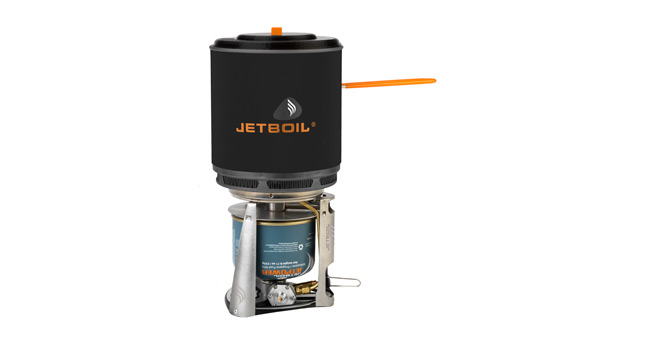
Jetboil Joule Group Cooking System
Jetboil pretty much set the standard for a lightweight cooking system when they released their original
stove a few years back. Since then the competition in this space has gotten stiffer and the company has continued to improve and expand its product line to meet the needs of its customers. The new Joule stove, due in the spring, is large enough to feed 3-5 people and yet still packs down small enough to easily carry with you in your pack. It features a unique design that puts the fuel canister up-side-down which should improve the consistency of performance even as the canister runs low or the temperature begins to drop. The Joule is a cinch to use, heats up extremely quickly and provides ample space for the backwoods gourmet.

Mio Alpha Fitness Watch
If you've ever been to Outdoor Retailer you probably know that some of the more innovative products are often found tucked away in the pavilions that are located across from the main hall. That's where I came across the new Mio Alpha fitness watch which is designed to help athletes train and race better. The watch is capable of monitoring the heart rate of the wearer without the need for a cumbersome and uncomfortable heartrate strap. The watch can then give visual feedback on how much the athlete is pushing him or herself and help them perform better. The watch itself is comfortable and attractive, and can connect to a smartphone via Bluetooth for use with some of the more popular fitness apps out there.

I have a few more products I'll probably spotlight in the next few days. As you can see, there were a lot of items to checkout and excellent improvements and innovation from a number of sources. All of this gear may make your wallet groan a bit, but we're living in a time where things are continually improving and we get to reap the benefits.

Adventure Tech: SPOT Announces Third Generation Satellite Messenger

On the eve of the start of the summer Outdoor Retailer gear convention, SPOT has announced the release of its new third generation Satellite Messenger. The new device, which is available at retail now, features some significant upgrades over previous SPOT devices, allowing outdoor enthusiasts to travel through the backcountry more safely then ever before.

Perhaps the biggest upgrade with the SPOT Gen3 is in the area of battery life. The new model can operate twice as long between charges as compared to previous models, which were already fairly energy efficient. That extra battery life is put to good use in terms of tracking as well, allowing this new device to update its location more regularly. The SPOT Gen3 is capable of sharing its location every 5, 10, 30 or 60 minutes, allowing friends and family to trace your path while out on an outdoor adventure. There is even a new mode that will allow the unit to share precise locations every 2.5 minutes, which my friends who are race directors for adventure races will surely appreciate. There is even a new mode that automatically sends tracking information when the SPOT Gen3 is moving but quits transmitting when it has stopped. This motion sensor will help save battery life while still providing regular updates on the users progress.

Speaking of battery life, the new SPOT device has improved in that department while also adding more ways to keep it powered. It can be operated using standard AAA batteries of course but the device now has the option for using rechargeable power cells or run off a direct connection from a USB power source as well. This lends a nice level of versatility to the Gen3 Messenger and means that there are more ways for us to keep it functioning while out in the field.

As with previous versions of the device, the new model allows users to send an S.O.S. message when they get into trouble or send pre-canned message to let friends and family know that they are okay. This simple, yet effective, messaging system is at the heart of what SPOT was intended for and the company claims that since it's launch a few years back, SPOT Messengers have been responsible for more than 2300 rescues worldwide.

The Gen3 model looks a bit larger than the older versions of the Messenger. It has also received a redesign that includes larger buttons and integrated loops designed to make it easer to use and carry. The unit remains waterproof and ruggedized of course, allowing it to take plenty of abuse while in the field.

I have an appointment to meet with the folks at SPOT while I'm at OR in a few days. I'll post some impressions on their new products, including the new SPOT Global Phone when I get the chance.

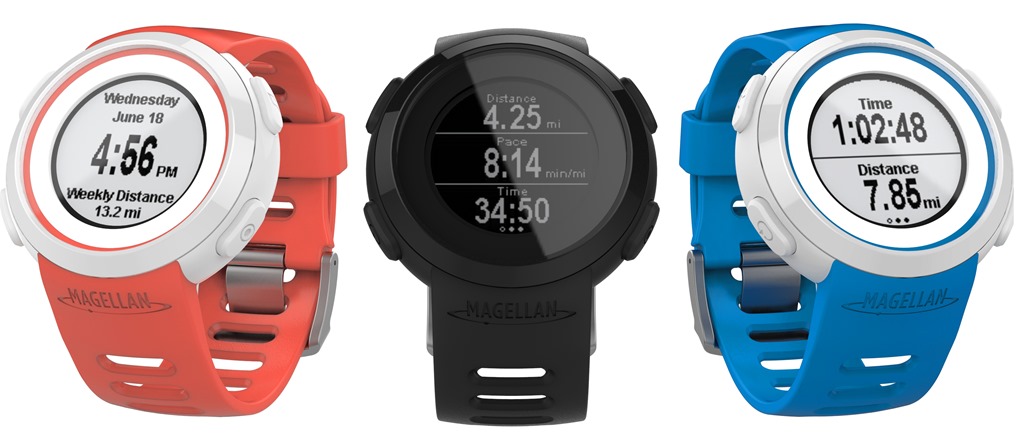
Adventure Tech: Magellan Introduces Smart Running Watch

Over the past couple of years there have been some significant advances in terms of sophisticated watches for use while running, cycling or doing just about any other outdoor exercise. Suunto and Garmin in particular have gone head-to-head in an effort to expand this market. Consciously absent from that competition was Magellan, a company that is known for building excellent GPS navigation devices but hadn't jumped into watches just yet. That all changed yesterday with the announcement of their latest product the Echo. A watch that pairs with your smartphone and gives you full control of fitness apps directly from your wrist.

The Echo uses Bluetooth technology to connect the watch with your iPhone or Android device to unlock all kinds of potential. The link lets your smartphone handle most of the heavy lifting and while streaming data about your pace, heart rate, distance and so on directly to the screen of the watch. You can also control the apps from the Echo, including full control over your music as well. If your favorite fitness app provides notifications they will appear on the watch as well, keeping you full informed at all times about the state of your workout. Your performance can then been analyzed and shared over social media too, if you're into bragging about your killer times to your friends.

Echo uses an open API designed by Wahoo Fitness for use with apps. That means that it should be easy for many of the top running or cycling apps to integrate support for the watch, but before they can be used with one another, those apps will need to be updated. Magellan says it is working closely with some of the top apps for iPhone and Android to get them ready for the launch of the Echo, which is expected to come in the 4th quarter of this year. The new watch will be officially unveiled next week at Outdoor Retailer and I hope to get a better look at it when I'm there.

Magellan is taking an interesting approach with the Echo. While the other companies creating similar products have tried to cram as much technology into the watch as possible, Magellan has instead decided to pair the watch with a smartphone and let that device do all of the heavy lifting. Since mobile phones already have integrated GPS and a host of other technology, there is no need for it to be on the watch itself. That should make this a much more lightweight and energy efficient product. In fact, while Suunto and Garmin's watches feature built-in rechargeable batteries, the Echo uses an easily replaceable watch battery that you can buy in any drug store. Using Bluetooth 4.0 technology, this watch should sip power slowly and last quite a long time on a single battery.

We'll have to wait to see how well Echo performs. If it receives good app support, it should be quite an interesting product. I don't personally run with my smartphone, but this might give me an incentive to change that. Looking forward to learning more at OR.

Adventure Tech: Android Powered GPS By Garmin

Garmin, one of the leaders in consumer GPS technology, has taken the wraps off a new handheld device today that looks to be a promising new entry for outdoor enthusiasts. At least those with some extra cash to spend.

The new Monterra is expected to begin shipping in the third quarter (read: July or August) and will be powered by the Android operating system that is so common on many mobile phones these days. In fact, Garmin's new device resembles a mobile phone in many ways, simply lacking the ability to actually make calls.

The device comes equipped with built-in WiFi, enabling the user to download updates and add apps to the Monterra without ever connecting it to a a computer. It also features an 8-megpixel camera, 6GB of internal memory (expandable through the use of microSD cards) and a 4-inch touch screen that has been optimized to be used in the outdoors without the need for battery-crushing backlighting. As you would expect, the handheld is ruggedized and waterproof (IPX7) and can run off of either the included rechargeable battery pack or AA batteries. It includes Bluetooth 3.0, NFC technology, an FM radio complete with NOAA weather, a UV sensor for keeping track of the intensity of the sun and a barometer/altimeter that measure not only your changes in altitude but possible changes to the weather as well. Preinstalled apps will enhance functionality further and the Google Play Store will obviously be available to get Angry Birds on this bad-boy as well.

There is no word on exactly which version of Android the Monterra is running but I suspect it'll be the most recent release of Android 4.2 (Jelly Bean) that is available when it begins shipping. Battery life remains a questions as well, but that is always the case with a GPS device these days. Prices start at $650 for the base unit with a built-in world map while $700 will get you a version preloaded with U.S. Topo maps as well.

This looks like it'll be a great device and I'm sure it'll be a hit with the geocaching crowd considering how easy it should be to add cache's to the device. The price seems a bit steep but it seems like it packs in a lot of functionality. If it can provide good battery life, this may just be the new GPS handheld to beat.

Gear Closet: Yurbuds Ironman Focus Sport Earphones

I'm not exactly sure how it happened, but slowly over th years I've become a runner. Sure, I ride both my road and mountain bike regularly, but more often than not I'm lacing up a pair of running shoes and hitting the road or trail. Multiple times a week I'm running anywhere from 8 to 10 miles and occasionally even more. Some days the only way I can get through those miles is to don my iPod, put in the headphones and just grind it out. Thankfully I have a solid library of great music and numerous podcasts to keep me entertained for hours on end.

While I generally put a lot of thought into which shoes I put on my feet, what kind of clothes I wear and even the socks that are best for long distance runs, one of the things that I have seldom thought about is the headphones I use while running. Generally I look for something inexpensive, comfortable for extended use and resistant to the sweat that inevitably comes along with a long run in Texas. Recently, after burning through yet another pair of cheap earbuds, I thought I'd try something different, so I splurged a little – not a lot – to try a pair of Yurbuds, which have reportedly been designed by athletes, for athletes.

Because I go through a set of earbuds about every 6 - 12 months, I've often been reluctant to spend much money on a more expensive pair. Fortunately, Yurbuds produces the Focus Ironman series and sells them for just $29.95, which is not a lot more than I was paying for the previous models I was using from a competitor. With that in mind, I set my expectations accordingly and went home to give them a try.

To say that the Yurbuds are a revelation would be a massive understatement. Not only was I immediately blown away by how much louder and clearer they were than the other earbuds I had been using, but they also produce far better sound across the entire spectrum. I was amazed at how much better my iPod sounded and I didn't even have to crank up the volume to hear my music or podcasts over passing traffic.

Despite that much higher volume and clearer sound, the Focus earbuds still keep me safe while out on a run thanks to their ability to pass ambient, outside sound through. This makes it easy to not only hear things around you but also hear voices. I appreciated that they perform so well yet don't dangerously isolate me from the outside world when working out.

On top of providing great audio performance, the Focus earbuds are also quite comfortable. They utilize Yurbud's Twistlock technology that allows you to slide them into your ear and give them a slight twist to hold them in place. Once they are there, they don't move at all and you can pretty much don't have to worry about them for the length of your run. The moldable and padded earloops are soft enough that you can actually forget you have them in, which hasn't always been the case with other models that I've used. While using some lesser models from competitors I sometimes couldn't wait to get them off my ears when I finished my run. The Yurbuds are so good however, that they are the first "sports" earbuds that I've used that I would actually consider wearing when I'm not working out.

I've only been using the Focus earbuds for a couple of weeks now, so it is too early for me to weigh in on their longterm durability. My hope is that they will last much longer than the six months or so that I got out of the previous earphones I used while running. I can say that the certainly feel light years better than the models I've used in the past. They feel like they can hold-up to a lot of punishment and they are certainly well shielded against sweat and rain.

Yurbuds seems to have thought of everything with these headphones and considering how well the $30 pair performs, it makes me wonder just how good their higher end models are. They must be exceptional indeed, because the Focus models offer exceptional performance in a small, lightweight and comfortable package. They even come with an high quality cloth carrying case that comes in handy when you want to toss them into a gym bag or gear case for race day.

If you're like me and enjoy listening to your tunes while running, you owe it to yourself to try a pair of Yurbuds the next time you need to replace your earphones. I think you'll be pleasantly surprised at just how great they really are and how much they can make your workouts an even more pleasant experience.

Gear Closet: Suunto Ambit GPS Watch

I'm the first one to admit that my gear closet is packed full of far more stuff than the average outdoor enthusiast could ever need. Writing this blog has afforded me the opportunity to test a lot of great equipment and use it on my own personal adventures. But one item that I had been hoping to add to my collection for some time was an Ambit GPS watch from Suunto, a high tech piece of kit that is versatile enough to be used in everyday workouts, weekend treks or excursions to far flung destinations across the globe.

Before I say anything about this watch, it is important to point out that this review is based on the original Ambit, which I was able to grab at REI recently when they gave it a 25% discount following the release of the Ambit2. By most accounts, the Ambit2 takes the winning formula of its processor and refines it nicely, providing more functionality in a slightly slimmed down form factor. Since I haven't tested that model yet, I can only share my thoughts on the Ambit, which I must say lives up to its reputation as an excellent multi-functional watch for all of your outdoor adventures.

In its basic form, the Ambit is a sports watch and as such it has all of the functionality you would expect out of such a device. Obviously it tells time (in two locations no less), and includes day, date and alarm functionality, as you would expect. It also has a stopwatch, interval timers, a countdown timer and more. It is rugged enough to be used at altitudes extending beyond the summit of Everest and as much as 100 meters (328 feet). In short, it is everything you would expect out of an outdoor watch and more.

At the heart of the Ambit is a powerful GPS chip that interfaces with the other functions of the watch, providing all kinds of real time data to the wearer. For instance, when running or cycling, the GPS feed information about your current speed, distance, pace – all of which is helpful when training for an event. While hiking, the watch can mark waypoints and help you navigate back to them using its onboard mapping capabilities. These capabilities put a powerful outdoor computer on your wrist that can help you in a variety of ways, particularly if you're an avid outdoor athlete or your adventures take you regularly into the backcountry.

Of course, GPS watches are nothing new and there have been a number of excellent products from other companies for years. What sets the Ambit apart in my book is that its user interface is super easy to understand, making it a breeze to navigate through the dizzying array of options and put them to use. I was impressed with the UI on this watch and commend Suunto for doing such a great job in making it so simple to operate. The operating system that makes this possible is also easily updatable, which means the watch continues to be refined and improved long after its release. In fact, a new firmware update is due before the end of the month, showing Suunto's commitment to continuing to support this watch even though the Ambit2 is out.

One of the major improvements the new Ambit has over its predecessor is that it has more onboard memory to support more functions. But that said, the original Ambit has free space as well and the user can add functionality to the watch themselves by downloading "apps" of a sort from the App Zone at Movescount.com. That website it he only home for Ambit users, allowing them to upload data from their watch to track performance and improvements over time. It's a nice site and easy to use, but it would be nice if the Ambit data was able to be shared on other fitness sites that are used by more people and allow uploads from a variety of devices from different manufacturers.

Performance of the Ambit has been excellent overall, although it can be slow to connect to the GPS satellites at times. I've found it is best for that initial connection if you have an unobstructed view of the sky and don't move at all until after the watch achieves GPS lock. Once it does find the satellites however, the Ambit seems to hold that connection well and begins to quickly track your movements. It can "ping" the GPS satellites on a 1 second or 1 minute basis. The faster rate provides more accurate readings of course, but it also puts a bigger hit on the battery. There are times when both levels of accuracy are nice to have. For instance, when running you want very accurate readings of your distance but when hiking the 1 minute intervals are probably fine since you're moving a much slower rate.

Speaking of the battery, the Ambit features an internal rechargeable cell that can be powered up by connecting the watch to a USB port on your computer or some other charger. When used strictly as a watch, Suunto says it can go up to 30 days between charges, but since I haven't been using it just as watch, i can't confirm or deny that number. I have been using on almost daily runs with GPS on the entire time. My runs are between 5-10 miles in length and the Ambit was able to survive two weeks without need a recharge. I found that to be pretty solid performance all things considering. We know that GPS always strains a battery, but considering  how small the Ambit is and how much functionality it has packed in, it really is impressive that it can last that long.

This is just scratching the surface of what the Ambit is capable of. It also has built-in automatic GPS time checks, temperature and barometric pressure readings, current altitude and change in altitude recordings and a lot more. In fact, I could go on forever about all of the features of this watch, but the most important things to know is that it is tough, rugged and performs incredibly well. It is also very easy to use, which isn't always the case for a device with this many features in such a small form factor. Suunto has delivered a versatile piece of technology that outdoor athletes will love, and whether your "settle" for the original Ambit (now available for as little as $350) or the more powerful and slightly trimmer Ambit2 ($550), you not only get a great piece of gear to accompany you on all your adventures, you're getting a watch that will last for years as well.

For me, the wait for getting my hands on the Ambit was worth with it. It is a great gadget and performs beyond my expectations. After just a few runs I felt completely comfortable using it without thinking twice and as a result, I can't imagine heading out without it on my wrist.

Video: In Search Of Whales

The video below is remarkable for two reasons. First, it shows off the amazing DeepFlight submersible vehicle, which looks like it would be fantastic to cruise around in and secondly it gives us some great underwater video footage of whales. The DeepFlight was armed with an array of GoPro cameras on this outing and as a result, we get some great shots from under the sea. It's a bit long, but stick with it and the payoff is worth it. Enjoy!

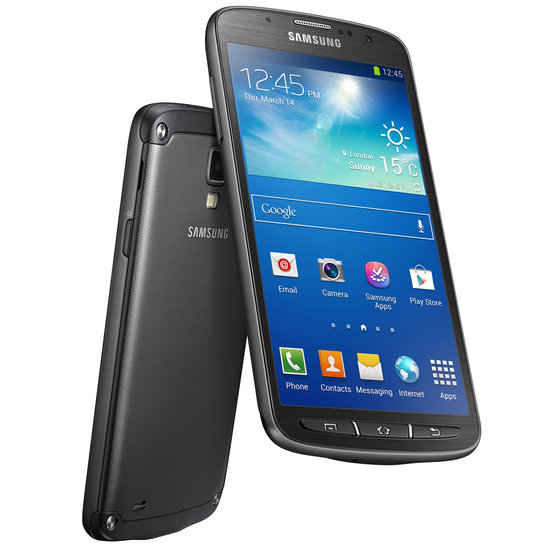
Adventure Tech: Samsung Announces A Ruggedized Galaxy S4

It seems that Caterpillar isn't the only company that sees potential in releasing a smartphone designed for the outdoor crowd. Yesterday, Samsung announced the new Galaxy S4 Active with a host of features designed to appeal to outdoor enthusiasts who tend to be very hard on their gear when out on their adventures.

As the name implies, the new Galaxy S4 is designed with the active user in mind. In addition to the usual host of features found on the standard S4 (1.9 GHz quad-core processor, eye tracking technology, 8-megapixel camera, etc.) this model has been built to withstand a little more punishment. For instance, it is dust proof and water resistant up to one meter for 30 minutes of time. It even comes with a water resistant earphone jack, allowing the user to listen to his or her music in more demanding environments. It has a long last 2600 mAh battery and a touch screen that can be operated even while wearing gloves. That comes in very handy while hitting the slopes with friends or simply heading out on the town in the colder months. A new "Aqua Mode" has been added tot he camera as well which gives you the chance to snap crisp, clear photos even while submerged in water. The S4 Active even has a built-in flashlight option that can help you find you way back to the trailhead at the end of the day.

The S4 Active runs the latest version of the Android operating system (4.2.2 Jellybean) which grants full access to the Google Play store, as well as numerous special apps directly from Samsung themselves. For instance, "S Travel" offers travel assistance and local information while on the road while "S Translator" helps interpret a variety of languages when visiting foreign lands. The phone tips the scales at 151 grams (5.2 ounces), which makes it slightly heavier than the standard Galaxy S4, but hardly something you'll notice while carrying it.

We've obviously seen ruggedized smartphones before but with Samsung throwing their hat into the ring, it is clear that his is a market that will be receiving more attention in the future. That means more options for those of us who absolutely must have our phones with us no matter where we go. Samsung makes the best smartphones on the market (outside of Apple) in my opinion, so having this as an option is a good things.

Pricing has yet to be announced but the standard S4 is about $200 on a new contract. the S4 Active will probably be a bit higher than that.

Paddlemag Website Gets A New Look, Comes To iOS And Android

One of my favorite online resources for news and information on kayaking, Paddlemag, has released its third issue, bringing a host of stellar articles and stunning images to readers. The e-mag always has excellent content available in a beautiful – not to mention free – .pdf file format that brings together all the slickness of a traditional magazine with the convenience and portability of a digital one. This time out, Paddlemag profiles Jason Beachcroft, who is attempting to circumnavigate Australia in a Kayak. Unlike Freya Hoffmeister's circumnav from a few years back however, Jason intends to include Tasmania in his expedition. The mag also takes a look at Ryan Fulton's Stand-Up Paddleboard journey along Australia's Gold Coas to Melbourne, traveling a distance of 2087 km (1296 miles) in the process.

A new issues isn't the only thing that the editors at Paddlemag have brought to the table. They've also launched a revamped website that is clean, easy to navigate and provides plenty of news and information from all aspects of paddling sports. It also provides access to the previous issues of the magazine, which are available to download as well.

Perhaps more exciting is that Paddlemag is now available in the Apple's App Store and Amazon's Kindle Store. The apps are free to download, but the individual issues are AUS $4.50 (US $4.28), which is actually a solid deal for a fully interactive digital magazine of this quality.

If you haven't checked out Paddlemag just yet, drop by the website and download an issue. I think you'll find that it is a fantastic magazine that will change your perceptions of what is being done in the digital arena.

Microsoft Teams With David Breashears To Bring Everest Home

Even though the Himalaya climbing season is all but over, I have lots of Everest-centric news to share today, starting with a new project that features legendary documentary filmmaker and explorer David Breashears and tech-giant Microsoft joining forces. Today, they have launched Everest: Rivers of Ice, an interactive website that lets armchair mountaineers explore the world's tallest peak without ever leaving home.

The project combines some of the high-resolution imagery that Breashears took as part of his Glacierworks project with the touch-technology behind Windows 8 and Internet Explorer 10, to create an experience unlike any other. Visitors to the site will be able to take a virtual trek up the Khumbu Valley, visiting many well known places along the way like Lukla, Namche Bazaar and Gorak Shep, before arriving in Everest Base Camp itself. Beautiful panoramic shots capture the region nicely, as does a spectacular video fly-by of Everest itself.

The Everest: Rivers of Ice website is created with HTML5, which means it should work on any browser that supports that standard. But to get the true effect in all its glory, you'll definitely want to check it out on Win 8 and with IE 10. Not only will it give you a sense of the scale of the mountain itself, it'll also show you what it is like to trek through the Himalaya just to get there.

I've written about Glacierworks before and feel that it is an important project for raising awareness of the impact of global climate change on the glaciers in the Himalaya. Breashears has taken photos of the Khumbu Valley from today and compared them to images taken the same spot in the past and the differences are alarming. The glaciers are in full retreat, taking a vital source of water for the people of the Himalaya with them. This is becoming a serious issue and projects like this one are helping us to understand the implications. Be sure to check out Everest: Rivers of Ice for more about the changes in the region and to take in the beauty of the mountains yourself.


Adventure Tech: Caterpillar Introduces Rugged Smartphone

There is no question that we outdoor enthusiasts can be a bit tough on our gear. Most of the items we use are designed to be rugged enough to withstand the punishment we put out, but some things are just not built to survive in the environments in which we thrive. Take most of our popular smartphones. Sure, they're wonderful for staying in touch while on the go and they offer up far more information than we ever thought possible in a device so small. But they aren't exactly the best companion on an adventure, where they risk getting submerged in water, dropped off a cliff or smashed against a rock.

The new Caterpillar B15 smartphone hopes to alleviate those problems. The device is designed to withstand the kind of abuse that you would expect on a construction job site, which also makes it ideal for heading into the backcountry. The phone has been built to be able to withstand a drop of 5.9 feet (1.8 meters) or stay submerged under 3.2 feet (1 meter) of water for up to 30 minutes. It is dustproof, scratch resistant, and the 4-inch capacitive screen can even be operated with wet fingers. Additionally, it is rated to operate in temperatures ranging from -4ºF/-20ºC to 131ºF/55ºC, making it an ideal companion for extreme environments.

The Cat designers didn't skip on the technology inside the B15 either. It is running Android 4.1 (Jelly Bean) and features a dual core 1 GHz processor. It has a 5MP rear-facing camera and a second front-facing VGA cam for video conferencing. It even has a built-in FM radio for those who don't want to listen to their own tracks or stream from Pandora or Spotify. The battery is rated for an impressive 16.3 hours of talk time or up to 26 days of stand-by. I would have liked to have seen a bit more onboard memory however as it ships with just 4GB, which is pretty anemic in this day and age. You can add MicroSD cards to raise that total to 32GB however.

All of this comes in a relatively svelte package that weighs in at 6 ounces or 170 grams. Not bad for a phone designed to take punishment on this level. Price is just $349.99, which isn't bad either all things considered. If you're in the market for a rugged smartphone, this might be your best choice at the moment.


Video: Mountaineer Dan Hughes Conducts First Video Call From Everest Summit

On Sunday, Dan Hughes climbed to the summit of Everest with the Jagged Globe team where he proceeded to make history by making the first video call from the top of world's highest mountain. Dan used an HTC One, connected to an Inmarsat BGAN data modem to place the call, which was to conduct and interview with the BBC. The video of that interview can be seen below.

It's pretty amazing how far our technology has come. The fact that it is now possible to converse with someone who has just climbed Everest via a video call is simply amazing. Video quality isn't the best, that probably has more to do with the speed of the data connection than anything else. Otherwise, this all works surprisingly well and gives us an interesting glimpse of what it is like at the top on Summit Day. We truly do live in amazing times.

Adventure Tech: Recon Jet Heads-Up Display

Yesterday at Google I/O, Recon Instruments took the wraps of their newest product the Recon Jet. Over the past few years the company has been an innovator in the field of creating heads-up displays (HUD) not unlike Google's own Glass. In the case of Recon Instruments however, their HUD's have integrated into ski goggles giving he user information such as speed, altitude, temperature and so on. The Recon Jet will take the technology that has been seen in those previous products off the slopes however and put them to use in our other outdoor activities.

The Jet is powered by a dual-core processor running the Android operating system and features a tiny LCD screen, an HD camera and built in GPS. It offers support for WiFi, ANT+ and Bluetooth technologies and will have its own extensible development platform that will allow others to create apps designed specifically for the device. Reportedly that will include some form of video streaming and of course integration with social networks such as Facebook and Twitter. Built in sensors such as accelerometers, gyroscopes and altimeters will provide a host of information, while a mic and speakers will allow you to take calls and possibly provide voice commands. The Recon Jet is designed to be mounted on a pair of sunglasses and provide a wealth of information at a glance.

The video below gives us a glimpse of what the Jet could be like when put to use in the real world, although much of what is shown is clearly a mock-up. The gadget is set to ship sometime this year and I would expect that we'll hear much more about this at Outdoor Retailer in a few months.

Personally, I think this looks more like something I'd use over Google Glass, as I could see how it would come in handy while running or cycling. No word yet on pricing.


Adventure Tech: SPOT Global Satellite Phone

Earlier this week SPOT, the makers of the popular SPOT Satellite Messenger, took the wraps off their first new product in a couple of years. The company unveiled the SPOT Global Phone, a new entry into the satellite phone service market. SPOT says that their device provides a clearer and more reliable connect than other options currently available, and it does so in a smaller package.

The Global Phone comes equipped with a battery that reportedly offers 4 hours of talk time and 36 hours of standby. The phone itself weighs just 7.1 ounces (201 grams) and measures 5.3 inches (13.5 cm) in length. It has a memory capacity of 99 internally stored numbers, features an LCD screen with 4 lines with 12 character per line and with an optional data kit it can serve as satellite connection for a laptop as well. It is rated to operate in temperatures ranging from -20ºC/-4ºF to +55ºC/+131ºF.

According to their coverage maps, Global Phone users will get good service throughout North and South America, Europe, Asia and Australia. Northern Africa and the Middle East are also nicely covered, but most of sub-Saharan Africa and India are left out of the coverage zones. Expanded coverage is coming later this year, but there doesn't appear to be any plans to address these dead zones at the moment.

SPOT is offering a number of service plans on both a monthly and annual basis. Those plans start as low as $24.99 per month and include a bucket of pre-paid minutes, voice mails, text messages and more. Frequent users will appreciate the $150/month plans that offer unlimited calls, while those with more meager needs will find plenty of choices as well.

The phone itself is scheduled to go on sale in the next few weeks and will carry a cost of $499.

Adventure Tech: Capture Your Own Timelapse Videos With The Brinno TLC200 Pro

Have you always wanted to create your own amazing timelapse videos like the ones that I share here regularly? Well a company called Brinno is now making it easier then ever to do just that. Their new TLC200 Pro is built from the ground up for timelapse photography and it makes it incredibly easy for you to capture stunning scenes even after dark.

The camera features 1.3 megapixel sensor, which isn't exactly state-of-the-art these days but should be more than adequate to pump out quality videos from the hundreds of photos it will take. The TLC200 Pro also incorporates a 1/3" HDR sensor which helps to capture plenty of light, even after the sun has gone down. Shooting modes include settings for for shooting in daylight, twilight, darkness and by the light of the moon. The device is capable of capturing burst of 3-5 photos per second and the time interval can be set between 1 second up to 24 hours. That means no matter what you're shooting, you should be able to capture it nicely. This model even offers the ability to change out the lenses and Brinno offers a variety of them for use with this tech toy.

The unit runs on 4 AA batteries, which is good for 240,000 frames shot at a 2 second time interval. The entire camera weighs just 4.2 ounces and can fit nicely into a backpack for taking with you on a trip.

Best of all, the TLC200 Pro automatically stitches all of the images it takes together to create a timelapse video for you. There is no need to collect all of the images independently of one another only to try to assemble them in a separate piece of software. This camera is literally plug-and-play. Just point it at the scene you want to capture and let it go.

The video below shows what the camera is capable of. No word yet on pricing.