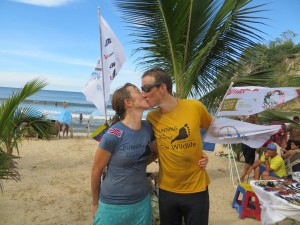
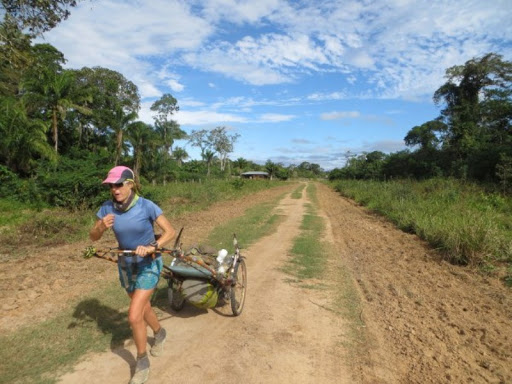
A couple of months back I wrote a story about David and Katharine Lowrie, a husband and wife team who were running the length of South America, south to north. The couple set out in July of last year with the intention of running 5000 miles (8046 km) along their planned route. Yesterday they announced that they had completed the run, reaching the Caribbean Sea in Carupano, Venezuela. The actual distance they ran? An astounding 6504 miles (10,467 km)!
The run, which David and Katharine had dubbed the 5000 Mile Project, began in Punta Arenas, Chile, the southernmost town on the continent. From there, they began traveling north, passing out of Chile and moving into Argentina, Bolivia, Brazil and finally Venezuela. Along the way, they passed over the Andes Mountains and through the Amazon Rainforest, two natural obstacles that are daunting under any circumstances.
As if running 6500 miles across a continent isn't an impressive accomplishment on its own, the couple also managed to launch their Big Toe Classroom along the way as well. This portion of their website is filled with lesson plans and other educational tools for teachers. These free resources are designed for 7-11 year olds and were created to help them learn more about South America and the plants and animals that live there.
All told, it took David and Katherine 14 months, 23 days, 19 hours and 24 minutes to run from the southern tip of the continent to the northern coastline in Venezuela. That's a lot of time on the road and I'm sure they are relived to be done.
Congratulations to the Lowrie's on the completion of an impressive expedition. Well done!
Showing posts with label Venezuela. Show all posts
5000 Mile Project: Couple Running The Length Of South America
On July 28, David and Katharine Lowrie set out on a run like no other. The pair have hit the road to run the length of South America. Yes, you read that right. They are planning on running south to north across the entire continent and they're doing so to raise awareness and funds to protect the wildlife that lives in threatened areas there. Their expedition is aptly named the 5000 Mile Project, as that is the distance that they will cover before they are through. (That's roughly 8046 km for most of the world.)
The began their epic adventure last month by setting off from Punta Arenas, Chile, the southernmost settlement in South America. They'll now work their way north through Patagonia, crossing between Chile and Argentina as they go. Eventually they'll cross into Bolivia before continuing on to Brazil, where they'll face one of the biggest challenges to the expedition – a crossing of the Amazon Rainforest. If successful there, they'll emerge into Venezuela and finish the journey with a run to the Caribbean coast.
The Lowrie's hope to wrap up their journey approximately a year after they started. That seems rather ambitious considering the difficult miles that lie ahead. The couple aren't just out on the road running unencumbered. They're pulling specially designed carts behind them that carry all of their gear and supplies as well. David and Katharine are hoping to cover roughly the length of a marathon each day (26.2 miles/42.1 km), which is a challenge but highly feasible while on roads. But once they hit the Amazon, things will be completely different and much more difficult in general.
The husband and wife team have undertaken the 5000 Mile Project to raise funds for Asociacion Armonia, BirdLife International and Conservacion Patagonica. The hope is to collect enough money to help fund the purchase of threatened habitats in South America to protect the wildlife that lives there. As part of the project, they are also recording the various animals they see along their run including the many bird species that inhabit the continent.
Their efforts don't end there however. They've also launched the BigToe Classroom which contains lesson plans and projects for teachers to use with their students to get them engaged with conservation projects as well. There is even a way to contact David and Katharine and set up a video conference call with them directly from the road.
You can learn more about the 5000 Mile Project in an interview that the couple did with Explorers Web earlier in the week. You can also follow along with David and Katharine's blog or on Twitter and Facebook.
The began their epic adventure last month by setting off from Punta Arenas, Chile, the southernmost settlement in South America. They'll now work their way north through Patagonia, crossing between Chile and Argentina as they go. Eventually they'll cross into Bolivia before continuing on to Brazil, where they'll face one of the biggest challenges to the expedition – a crossing of the Amazon Rainforest. If successful there, they'll emerge into Venezuela and finish the journey with a run to the Caribbean coast.
The Lowrie's hope to wrap up their journey approximately a year after they started. That seems rather ambitious considering the difficult miles that lie ahead. The couple aren't just out on the road running unencumbered. They're pulling specially designed carts behind them that carry all of their gear and supplies as well. David and Katharine are hoping to cover roughly the length of a marathon each day (26.2 miles/42.1 km), which is a challenge but highly feasible while on roads. But once they hit the Amazon, things will be completely different and much more difficult in general.
The husband and wife team have undertaken the 5000 Mile Project to raise funds for Asociacion Armonia, BirdLife International and Conservacion Patagonica. The hope is to collect enough money to help fund the purchase of threatened habitats in South America to protect the wildlife that lives there. As part of the project, they are also recording the various animals they see along their run including the many bird species that inhabit the continent.
Their efforts don't end there however. They've also launched the BigToe Classroom which contains lesson plans and projects for teachers to use with their students to get them engaged with conservation projects as well. There is even a way to contact David and Katharine and set up a video conference call with them directly from the road.
You can learn more about the 5000 Mile Project in an interview that the couple did with Explorers Web earlier in the week. You can also follow along with David and Katharine's blog or on Twitter and Facebook.
Video: Highlining In Venezuela's Lost World
Deep in a remote section of Venezuela is an area known as the Lost World. It is a wild and untamed place that is famous for its table-topped mountains, including Roraima, the inspiration for the fantastic Pixar film Up! Recently a team of climbers visited the Lost World where they filmed themselves highlining over some impressive open spaces. A teaser for what will presumably be a much longer film is below and it is spectacular.
Roraima is on my bucket list of places I'd like to go someday. Seeing this spectacular setting only gets me more interested in visiting the place. Oh, and the highlining is amazing too. Enjoy!
Venezuela Salto Angel Highline Expedition WEBTEASER from HALSUNDBEINBRUCH FILM on Vimeo.
Roraima is on my bucket list of places I'd like to go someday. Seeing this spectacular setting only gets me more interested in visiting the place. Oh, and the highlining is amazing too. Enjoy!
Caracas, Safe... Mexico... Some Parts Are Fine And Some Parts Are Definitely Not

If you've been following this blog, you have probably figured out that I'm kind of an intrepid traveler, in as much as I travel a lot and have been for a long time and I go to some whacky places-- from Tierra del Fuego to Lapland and from Mali to the Himalayas. But what I'm not is swashbuckling or heroic. I'm not making plans to visit Somalia, Yemen, Iraq, Syria, Congo or anyplace I feel is legitimately dangerous. It doesn't keep me from visiting places like Mumbai, Jerusalem, Bangkok, Mexico City, London or New York City-- all places that report dangerous situations from time to time-- but I try to be careful. So I really had to laugh when some friends in the L.A. Philharmonic said they were worried about a trip to Caracas. Grammy winning conductor Gustavo Dudamel just brought the orchestra down there for the series of Mahler's symphonies they just finished performing in L.A. Earlier today, the NY Times applauded the whole endeavor-- and so did Venezuela:
El Sistema, Venezuela’s national music program aimed at young people, put on a major show of orchestra playing and singing for the visiting Los Angeles Philharmonic, its staff and patrons, who are in town for a Mahler symphonic cycle. But the attention of the enthusiastic crowd of young performers, parents and others around the Teresa Carreño Theater was focused on José Antonio Abreu and Gustavo Dudamel.
Mr. Abreu, El Sistema’s stooped but mentally vigorous patriarch, and Mr. Dudamel, the program’s most famous product and the Philharmonic’s music director, were mobbed. When Mr. Dudamel went to greet some young musicians in the cello section, they burst into exciting bobbing. “Gustavo!” people shouted from balconies... [T]he atmosphere was redolent of the sometimes religious-seeming trappings of the culture of El Sistema, whose exponents speak of love and peace and remain involved for decades. El Sistema’s proponents are indefatigable evangelizers for its mission of helping the poor through classical music.
The musicians had been sternly warned before embarking from L.A. how dangerous Caracas is and they were warned not to leave their hotel rooms. Sound screwy? It is-- and it's based on what? Corporate America's hatred for and propaganda against a national leader who sticks up for the working people of his country. I hope no one locked themselves in their hotels rooms. It would be a real waste.
Perhaps more realistic-- at least to some extent-- was this week's travel warning from the U.S. State Department about Mexico. I travel there a lot and have never run into anything I would consider dangerous. In December we spent the better part of a month in Mérida, capital of the Yucatán. Nice and relaxing, except for the mosquitoes that gave me dengue fever. But the warning isn't about dengue fever-- or the Yucatán.
The State Department advised Americans this week to defer “non-essential travel” to vast stretches of Mexico, warning that 14 of the country’s 31 states are so dangerous that visitors should avoid them if at all possible. For four other states, it counseled caution or extreme caution.
The travel warning is at once broader, more detailed and more alarming than the previous one for Mexico, issued in April.
The new warning became public as Mexican troops announced Thursday that they had seized 15 tons of pure methamphetamine outside Guadalajara-- an amount equal to half of all meth seizures worldwide in 2009.
State Department travel warnings are based on internal guidance that embassies and consular offices use to decide where it is safe for U.S. diplomats and federal employees to travel, so they often err on the side of caution.
Still, this one, issued Wednesday evening, is sweeping. To begin with, it warns against all but essential travel across most of the states along the U.S.-Mexican border: Tamaulipas, Nuevo Leon (except the city of Monterrey, where caution is advised), Coahuila, Chihuahua and Sonora.
...Ciudad Juarez, in Chihuahua, merits “special concern,” the warning says, advising that the border city “has one of the highest murder rates in Mexico” and that “three persons associated with the Consulate General were murdered in March 2010” there.
Moving south, also on the no-go list for all but essential travel: Sinaloa (except the Pacific Coast resort of Mazatlan), Durango, Zacatecas, Aguascalientes and San Luis Potosi, where two U.S. Immigration and Customs Enforcement agents were ambushed and one was killed a year ago.
This means a visitor who wants to drive from the United States to Mexico City has no viable route that would be in accord with the U.S. guidelines.
If you do drive, the warning says, remember: “TCOs [Transnational Criminal Organizations] have erected their own unauthorized checkpoints, and killed or abducted motorists who have failed to stop at them. You should cooperate at all checkpoints.”
The State Department also warns against travel in Jalisco along its borders with Michoacan, another no-go, and Zacatecas.
...Mexico is a country of 110 million people, so the odds of running into trouble are low. The number of U.S. citizens reported to the State Department as murdered in Mexico increased from 35 in 2007 to 120 in 2011.
Where to go? Much of the Yucatan Peninsula is free of murder and mayhem. No advisory is in effect for the states of Chiapas, Tabasco, Campeche, Yucatán and Quintana Roo. Good to go, too, are the popular art and food destinations of Oaxaca and Puebla.
Also on the safe side of the ledger: Mexico City.
As is always the case, the Mexican government termed the warning "ridiculous" and "out of proportion." Interior Minister Alejandro Poire told a press conference yesterday that the warnings "overstate or misstate the standards and security situation that exists in our country." As PolitiFact might say, "Mostly true." But it's Caracas and Venezuela that are really getting the bad rap, though the State Department doesn't even have them on the warning list at all. This stupid video could have been done for almost any city in the world. It's made by idiots for idiots, as you can see:
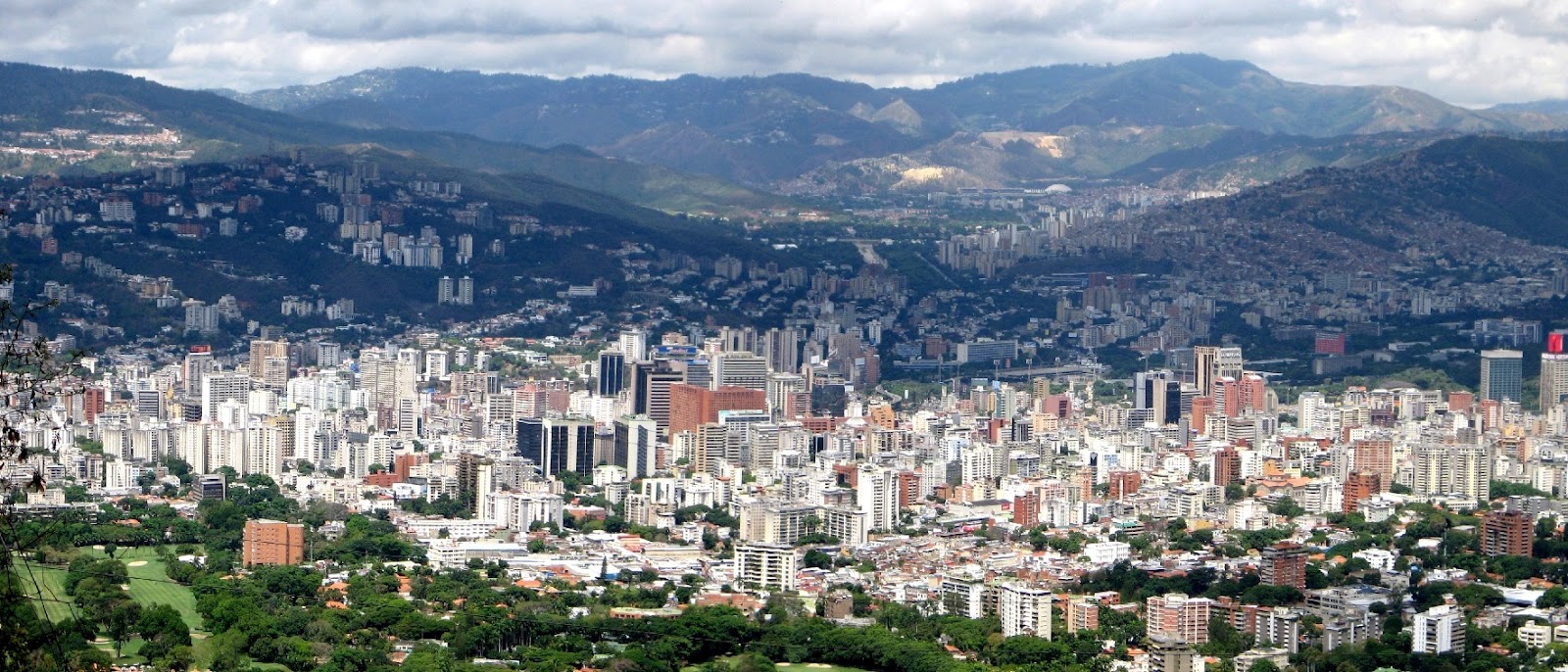
Venezuela. A voyage to Venezuela, South America - Caracas, Maracaibo, Valencia, Barquisimeto, Maracay...
While other South American countries are romanticized for the tango, Machu Picchu or Carnaval, Venezuela’s international reputation swirls around oil, the brash political style of President Hugo Chávez and the occasional international beauty pageant winner. However, there is so much more to Venezuela than these typical headlining issues. As a matter of fact, Venezuela is a country of staggering variety and remains a land that is greatly undervisited by international travelers.
The country claims Andean peaks; the longest stretch of Caribbean coastline to be found in any single nation; tranquil offshore islands set amid turquoise seas; wetlands teeming with caimans, capybaras, piranhas and anacondas; the steamy Amazon; and rolling savanna punctuated by flat-topped mountains called tepuis. The world’s highest waterfall, Angel Falls (Salto Ángel), plummets 979m from the top of a tepui in Parque Nacional Canaima. Those seeking adventure will find hiking, snorkeling, scuba diving, kitesurfing, windsurfing, paragliding and more. Even better, most of these attractions lie within a one-day bus trip or a short flight from each other.
Those interested in culture can revel in the pulsating salsa clubs of the nation’s capital, Caracas, explore various regional festivals, look for arts and crafts in the bucolic towns of the interior, or check out some of the world’s best up-and-coming baseball players hit a few innings in a local stadium. Chávez himself, and his socialist ‘Bolivarian Revolution’ have become a national attraction and have started to draw spectators, aspiring documentarians and volunteers to the country.
Subscribe to:
Posts (Atom)


Follow Us
Were this world an endless plain, and by sailing eastward we could for ever reach new distances