Showing posts with label Francis Morrone. Show all posts

Urban Gadabout: Some highlights of the MAS March-May schedule

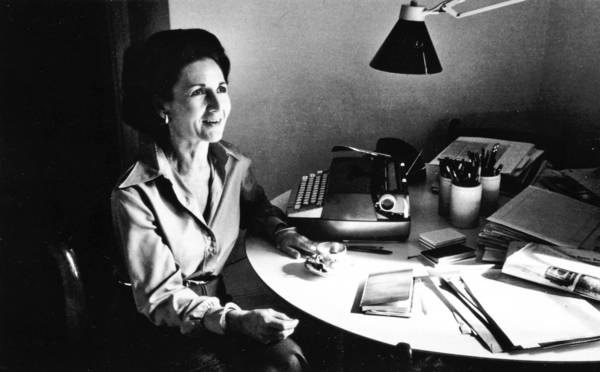
The only image I could find of Ada Louise Huxtable's 1961 book Four Walking Tours of Modern Architecture in New York City, which Matt Postal points out is long out of print, was pathetic and unusable. So here's a really lovely photo of Ms. H.

by Ken

Talk about a happy coincidence! This weekend I have walking tours in three boroughs with three of my very favorite tour leaders, all of whom I've written about here frequently: Clinton Hill (Brooklyn) with Matt Postal on Saturday, and "New York in the Time of George Washington" in Lower Manhattan with Francis Morrone and and "The Transformation of Queens Plaza" with Jack Eichenbaum on Sunday. Matt's and Francis's walks are Municipal Art Society tours and long since sold out, but Jack's Queens Plaza walk is his own and is offered on a strictly walk-up basis. (See the section below on Jack's upcoming tours.)

I can't begin to describe how much I've learned from, not to mention enjoyed the company of, all three -- and I've spent a fair amount of time and space here trying. Matt and Francis are architectural historians but with different enough perspectives and eyes to be richly complementary. Jack's perspective is strikingly different as an "urban geographer," showing us how natural and man-made geography shape the development (and redevelopment) of neighborhoods. In the many walks I've done with Jack in four of NYC's five boroughs he has radically reshaped my way of looking at and taking in the city from large vistas down to small details. One thing Jack is proud of is that even when he's leading his groups through areas frequented by other tour leaders, his groups see things we're unlikely to see with anyone else.

I might note that Joe Svehlak's terrific walks through quintessentially NYC neighborhoods not often visited by tours -- places like Sunset Park (Brooklyn) and Ridgewood (straddling Brooklyn and Queens) -- always take into consideration the kinds of developmental factors Jack highlights. These have been some of my favorite MAS tours, though I'm not sure that the folks at MAS HQ value them as highly as I do. It still kills me that I had to miss Joe's Bushwick walk in order to finish a Sunday Classics piece; everyone I've run into who was on it loved it. I've been waiting hopefully for MAS to reschedule it.

On the new schedule Joe is repeating a tour that really intrigues me: through the remains of "Downtown's Lost Neighborhood" (May 11), the barely heralded Lower West Side. The last time Joe offered it, I got as close as the No. 1 subway entrance in front of the Staten Island Ferry Terminal, with the assembling group in view across Peter Minuit Plaza, but it was pouring and I didn't even have an umbrella, so with great reluctance I shuffled back down the steps to the subway. (I only wish I could do that now. As we've noted, the relatively new South Ferry station was pretty much destroyed in Superstorm Sandy. The last I heard, the New York City Transit people planning the rebuild were still trying to determine what if anything could be salvaged.) And wouldn't you know, I don't think I'm going to be able to make it this time. I just hope it hasn't sold out by the time I know.

REGISTERING EARLY IS BECOMING MORE ADVISABLE

And the fact is that, now that everyone seems to have settled into the MAS system of preregistering for all tours (mostly online, but you can do it by phone when the offices are open), they do seem to be selling out more regularly, some of them pretty quickly. For example, it's already too late, and has been for a while, to register for Francis Morrone's annual tribute to and re-creation of MAS's very "First Tour," led by architecture critic Henry Hope Reed in Madison Square and Gramercy Park on April 8, 1956, when the idea was an astounding novelty. (Recommendation: Since you know when this tour is scheduled, watch for the announcement of the April 2014 tours and pounce. I can tell you that after doing this walk you'll never look at a flagpole the same way.)

I know that people who prefer short- to long-term planning, or are visiting from out of town, aren't entirely crazy about the pre-registration system, but it's also true that some tours may still be available as late as the-day-of. As far as I know, there's no cutoff for online registration as long as there's still space in a tour, which is clearly indicated. If you have nothing to do on a weekend, it's always worth checking the website to see if there's a tour you can slip into. Quite often the tours that don't attract waves of registrants are not only unusual but unusually interesting.

As I mentioned Wednesday, the recently posted listings cover March, April, and May (again, it's easy to remember: you go to mas.org and click on "Tours"), and the first thing that popped out for me is the pair of tours Matt Postal is doing, "Remembering Ada Louise Huxtable in Midtown" (March 2 and 16), based on the NYT's legendary architecture critic's 1961 book Four Walking Tours of Modern Architecture in New York City.

Matt is naturally scheduled for a slew of other tours, which you can check out for yourself. Among those I've done recently enough that I don't need to do them again just yet is a pungent introduction to "Brooklyn's Gowanus Canal" (April 13). I'd love to do Matt's "East River Panoramas" (April 27), but I know I'll be out of commission for that. I hope, though, to be able to do his "New to New York: Downtown Brooklyn" (May 18), even though I've done walks in the area with Francis Morrone and Joe Svehlak -- they all have their own perspectives and emphases.

Francis in fact is also doing his "Downtown Brooklyn" (March 10) again, and also the "Park Slope South" leg (April 28), covering the more working-class southern portion, of his "Three Ways of Looking at Park Slope." Frustratingly, I won't be able to do the "St. Mark's Neighborhood" (April 21) installment of his East Village series, which I was previously registered for and managed to miss (an embarrassing story). I've already registered for Francis's "Irish Footsteps in Lower Manhattan" (March 17), but I have a schedule conflict (a Transit Museum tour of the 180th Street subway shop in the Bronx) for the Washington Square-centered "American Masters: Henry James, John Lafarge, and Stanford White" (March 24). Happily, I should be able to do "Walt Whitman's New York" (May 26); anyway, I've paid my $15.

I've also registered for Eric K. Washington's "Harlem Hike: 145th Street from Hotel Olga to Sugar Hill" (April 7), as a follow-up to his "Harlem Grab Bag," which I'm doing next weekend (that's sold out, but he's doing another version of it on March 31). Eric is known as a leading chronicler of Northern Manhattan, and has written the "Images of America" series volume devoted to Manhattanville: Old Heart of West Harlem, and so I was really looking forward to his recent MAS Manhattanville tour -- so much so that I didn't realize I hadn't actually registered for it till it was too late -- sold out!

Eric is known in particular for knowing more than anybody I know of about Uptown Trinity Church Cemetery, and had a Halloween tour scheduled for MAS which was washed out by Sandy. I made a point of registering for his next MAS foray into the cemetery, the day before Christmas Eve, which synched up, for those who were so inclined, with the annual reading of "The Night Before Christmas" at the beautiful Church of the Ascension, at Broadway and 155th Street, which was for a long time a satellite of the all-powerful (in matters Episcopal in NYC) Trinity Church of Wall Street. I had previously been in the eastern half of the Trinity cemetery, on the east side of Broadway (which you'll recall includes the final resting place of Mayor Ed Koch), notably on an MAS tour that included the Church of the Ascension. But I'd never been in the wilder and more precipitous western half, on the other side of Broadway, which slopes steeply down toward the Hudson River. On that tour I learned that the otherwise-unconnected two halves of the cemetery were actually, for a time, connected by a suspension bridge over Broadway! (Eric had a picture to show us.) Eric will be venturing back into Trinity cemetery for MAS, with "Notable Women of Uptown Trinity Church Cemetery" (March 3) and a "Spring Tour" (May 12).

I've also already registered for architectural historian Tony Robins's "Art Deco on the Upper Upper West Side" (March 31), art deco being a special passion of his. (Tony has been all over the place lately with the publication last year of an updated edition of his 1987 book on the World Trade Center and now of Grand Central Terminal: 100 Years of a New York Landmark.) This time if Tony starts by asking us when art deco was born, I know it's a trick question. Tony's also doing "Landmark Battles of Midtown" (April 21) and "Central Park as a Work of Art" (May 2).

The Bedford Stuyvesant walks of Brooklyn architecture blogger Suzanne Spellen (Brownstoner.com's Montrose Morris, after her favorite architect) and architect and architectural historian Morgan Munsey have become an MAS staple, and April 14's "Bedford Stuyvesant" is actually focused on the heart of old Bedford Corners. The duo will also be touring "Brooklyn's Automobile Row" (in Crown Heights, Bedford Avenue between Fulton Street and Empire Boulevard; May 19).

SOMETIMES MAS TAPS SPECIFIC EXPERTISE

I had a great time on two such walks. Georgia Trivizas brings a native Staten Islander's special perspective to "Staten Island's Developing Waterfront" (March 23), a walk that's bound to take on some somber new tones post-Sandy, especially in the shoreline area to the east of the Ferry Terminal, where I'd never even set foot before the October walk with Georgia.

And federal court reporter Linda Fisher brings an insider's knowledge to "Manhattan's Civic Center" (April 13), which a hardy band of us did on a bitter cold day in late December (I don't think the temperature reached as high as 20 degrees that day). I'm seriously considering doing the walk again under more normal circumstances. And who knew anybody willing to endure the security screening can just walk into a courthouse and visit courtrooms? Of course most of the courts aren't functional on the weekends, but even on a Saturday the ground-floor courtroom in the Tombs where basically all Manhattan arraignments are handled will be open, because people are always being arrested in Manhattan, after all.

I'm assuming that Alexandra Maruri will be bringing similar special knowledge to the Bronx's "Little Italy on Arthur Avenue" (March 30), a tour I would love to do (as it happens, I've somehow never visited Arthur Avenue) but don't think I can since I'll be visiting Bayside (Queens) with Jack Eichenbaum that morning (see below), it's quite schlepp from Bayside to Arthur Avenue; I don't see how it can be managed in anything like the time available.

IT'S ALWAYS GOOD TO SEE ATTENTION TO THE OUTER BOROUGHS

And I don't think Brooklyn even qualifies anymore.

I expect to make the acquaintance of New School Prof. Joseph Heathcott, who's scheduled for "Queens Is the Future: Immigrant Neighborhoods Along the 7 Train" (March 9, already sold out! whoops, we all missed that one, but check out Jack Eichenbaum's "signature tour" of the "World of the #7 Train" below), "Sunnyside Gardens and Jackson Heights: America's First Garden Cities" (April 6), and "Queensbridge: America's Largest Public Housing Project" (April 27). This is territory I've covered a fair amount with Jack Eichenbaum, the Queens borough historian, but again, it's always interesting to see things through different eyes.

Speaking of Jack, though, as I've done so often here, I'm surprised to see that he's represented by just one tour. It's a terrific one, though: "Morisania: From Suburbia to the Grand Concourse" (March 24), which he did last year as the last of three northward-moving walks through the South Bronx. We got to see a staggering variety of urbanscapes sandwiched into the precipitous topography of the West Bronx -- old construction and new, the savage hatchet job inflicted on Bronx neighborhoods by Robert Moses's Cross-Bronx Expressway, the suburban enclave that has replaced the bombed-out Charlotte Street ruins once visited by Presidents Reagan and Carter, lovely Crotona Park, and the grandeur of the Grand Concourse.

Fortunately, Jack has a number of other projects coming up, starting with that Queens Plaza walk this Sunday which I mentioned at the top. More about those projects in a moment.

MY GOODNESS, THERE'S SO MUCH ELSE --

I feel terrible about all that I've left out, and tour leaders I've left out. I may need to do another post. Let me just point out, though, that there's a night-time tour, ""All Lit Up: Times Square at Night" (with Kathleen Hulser, April 20), and a tour in Spanish, "En Español! El Puente de Brooklyn: Política y Técnica" (April 14), a looks at the history and present of the Brooklyn Bridge and the cities (as New York and Brooklyn both were when the bridge was conceived and built) and the neighborhoods it connects, starting in Lower Manhattan and crossing over the bridge into DUMBO.


NOW, FINALLY, ABOUT JACK EICHENBAUM'S
UPCOMING PROJECTS


First off, if you don't know his website, The Geography of New York City with Jack Eichenbaum, you should, because it contains lots of great information in addition to Jack's schedule. On the "Public Tour Schedule" page you can also sign up for Jack's e-mail updates, which provide advance notice of plans before they make it onto the website. As it happens, Jack has just sent out a very newsy one indeed, which we'll get to.

The World of the #7 Train

Meanwhile, the splashiest news isn't brand new. Jack had already announced that this year's version of his "signature tour" will take place on April 27. I consider this one of the happiest ways an urban gadder can spend a day gadding about NYC. You not only see the full span of the IRT Flushing line (which in Queens is mostly above ground, so there's a lot to see out the windows), but do walks in six strikingly different neighborhoods along its path, including the lunch stop in Flushing's Chinatown. (Jack is a long-time Flushing resident.)

As usual, the tour will be limited to 25 people, and so requires preregistration, and can fill up in a hurry. Jack is still charging only $39, a steal in 2013 dollars. You can e-mail him (jaconet@aol.com) for "the full day's program and other info,", or just send a check. (The address is on the tour page of the website.) Or you can do both! A recent onsite note reports: "As of 2/15/13, there were 12 spots remaining." Be warned that spaces can fill up in a hurry.

Now for the big news: In October Jack offered his "Day on the J," and his new e-mail update contains the news that in June he will offer "Six Walks on the Number Six Train" -- the Lexington Avenue local train that continues on into the Bronx to the southwestern corner of the city's largest park, Pelham Bay Park. Further information is promised in the next update. Once again I expect to be writing my check the day the details are announced!

In other news, Jack reports: "In conjunction with the Grand Central centennial, I am trying to arrange Maps, Realities and the People’s Palace (scroll down at http://www.geognyc.com/?page_id=26) for a weekend date in April. This tour will require registration and I will post it ASAP." Here's the website description:
 Maps, Realities and the People’s Palace

 Tour Grand Central and Bryant Park, planned areas greatly altered since the Civil War. Then we will see how historical cartography captures the changing urban landscape in the splendidly restored Map Room of the New York Public Library.

And Jack also notes that he will be doing two walking tours as part of the third annual Long Island City Arts Open (LICAO, May 15-18), which will also include "performing arts, special gallery exhibitions, open artists’ studios, [and] a street fair," withe details to be posted at http://licartsopen.org/.

Now for Jack's other non-MAS tours:

The Transformation of Queens Plaza (this Sunday, February 17, 11am-1pm)

A look back at how this "nexus of early 20th century transportation improvements" (the Queensboro Bridge, Northern and Queens Blvds., lines of all three subway divisions, and the LIRR) set the stage for "NYC's largest and most modern industrial area," then went to seed with the exodus of industry from the area, and now has been transformed with amazing speed into something quite different.

It's $15, and we meet at the fare booth of the 39th Avenue station of the N and Q (Astoria) lines.

Flushing's Chinatown (Sunday, March 3, 11am-1pm)

As I mentioned, Jack is a longtime Flushing resident, and has watched the transformation of the area, which also experienced a period of deep decline, be reborn in mostly separate Chinese and Korean enclaves. Flushing's Chinatown, he says, "has come to rival its Manhattan antecedent. Taiwanese rather than Cantonese at its core, Flushing’s Chinatown plays host to a variety of overseas Chinese groups."

Also $15. Meet near the rest rooms on the second floor of the New World Mall on Roosevelt Avenue near the Flushing terminus of the No. 7 train. (There are more detailed directions on the website.)

My Childhood in Bayside (vs. What’s There Now) (Saturday, March 30, 2013, 10:50am-12:50pm -- the timing based on the scheduled arrival of the 10:18 LIRR train from Penn Station)

Every year Jack does a fund-raiser for the Queens Historical Society, and the ones I've done have been some of my all-time favorite walks. This year, in honor of his 70th birthday, on February 2 (sorry I missed your birthday -- happy birthday, Jack!), he's leading "a walk through old Bayside where I lived from 1943-1958. Most of the personal landmarks of my early life have vanished but there are threads of continuity and many anecdotes."

It's $12 for QHS members, $15 for others. (I'm a member, but I'm planning to spring for the full $15.) Meet in front of the post office on the south side of the LIRR stateion on 42nd Avenue. You can also get there via the Q13 bus from Flushing.)

And then there are these just announced in the e-mail update, and so not yet on the website:

Bowne St, My Street (May 4 or 5, time TBA)

As part of the annual Jane's Walks Weekend festivities, honoring Jane Jacobs (I reported on the 2012 schedule here), Jack will lead this walk "along the length of historic and multiethnic Bowne Street in Flushing where I have been living for 35 years." In recent years MAS has been organizing the NYC Jane's Walks, which are all free, and they've done such a good job that there are likely to be about 30 walks over the two days that I'll want to do. The listings should appear in April.

What’s New in Long Island City? (Friday, May 15, 5:45-8pm) -- a walk from Queensboro Plaza to the East River waterfront

Daylight Loft Buildings in Long Island City (Sunday, May 18, 10:30am-12:30pm)

In case you haven't gathered, Long Island City holds a special fascination for Jack, and these are new versions of walks of his that I think we can describe as popular "standbys."
#

Urban Gadabout: Have you checked out the Dec.-Jan.-Feb. Municipal Art Society walking-tour schedule? (Plus: Winter tour update)

MAS tours with Francis Morrone, Joe Svehlak, ???, and Matt Postal

by Ken

I should have mentioned sooner for the benefit of New Yorkers that the new Municipal Art Society walking-tour schedule -- once again covering three months, December through February -- is available online. As I've mentioned here before, in the two years I've been doing MAS tours, following my ridiculously late discovery that there are such things -- they really have changed my life.

I just did a quick count on my online calendar and see that I registered for something like 20 Municipal Art Society walking tours for the three-month period from September to November. I actually do quite that many, because I "better-dealed" one or two in favor of later-announced tours of other kinds which I couldn't resist, and I had four tours canceled in the two weekends just before and then after the arrival of Superstorm Sandy.

There's so much other tour activity going on in the metropolitan area, including activity involving a number of my favorite MAS tour leaders, activity I'm still just beginning to discover, that it's easy to take the MAS schedule for granted. Which I surely don't do! This time I'll be a little more cautious in registering for tours before other schedules have been announced (I'll try to keep my options open longer, focusing on registering on tours I know will be sold out if I wait too much longer), but by the end of February I expect to wind up doing about as many MAS tours as I've done in these last three months. More, actually, accounting for the tours lost to the storm in this cycle.

I think everyone has settled into the MAS registration system -- no longer so new -- by which all tours require preregistration. It simplifies the life of most everyone concerned, most obviously at the start of each tour, where it's no longer necessary to devote all that time to collecting money for tours that once allowed walk-up registration or doing check-ins for tours that were done entirely by preregistration. The one exception I can think of, and I have met people who fall into this category, is for folks who prefer not to have to plan well ahead.

The fact is that if you do your registration online you can register anytime up to the start of the tour -- provided, of course, that there's still space for the tour you want to do; if the tour is sold out, that's indicated online. (For tour-takers without online access, registrations can still be done by phone, but only during weekday hours when the MAS office is open.)

Even with the price increase that accompanied the new system, MAS tours are an amazing bargain -- a mere $15 for members, $20 for nonmembers. A couple of weeks ago I got an online notice informing me that my renewal was due, and I can assure you, I did my renewal within minutes by return e-mail! Even at the lowest membership level, $50 for individuals ($40 for seniors), you get one free tour each year -- since I had online access to the "free tour" code, I had it applied it to one of the new-season tours even before my new membership card arrived in the mail.

Maybe it was surviving those two weekends without MAS tours that has made me so conscious of paying them their due. Certainly it felt special doing my first post-storm walk, which was of the Madison Square area with Sylvia Laudien-Meo -- on Veterans Day, at the very spot where the Veterans Day parade begins, which added an element of hubbub. I've enjoyed all the tours I've done with the amazingly charming Sylvia, who's an art person, which I'm emphatically not, meaning that I often get a different kind of view of the tour areas, as was the case with a Lower East Side tour she led, which wound up bringing me for the first time ever inside the New Museum on the Bowery. (Sylvia has a tour of Chelsea art galleries scheduled for Jan. 19, and two more of her "family tours," presumably suitable for whole families but not limited to them: Grand Central Terminal on Dec. 8 and Rockefeller Center on Feb. 24.)

(And anyone who hasn't done a Rockefeller Center tour really ought to. I've done architectural historian Tony Robins's and thoroughly enjoyed it. During the holiday season he's doing it twice: on Christmas Day and on Dec. 30.)

WEEKENDS WITH MATT POSTAL AND FRANCIS MORRONE

Then these last two weekends, the schedule has been kind to me, with four tours led by three of my favorite tour leaders. Last week I had the second in a series of three led by architectural historian Matt Postal devoted to the area known to the City Planning Dept. as Midtown East, for which major zoning changes are being proposed which could bring drastic changes (this was actually scheduled as the last of the three tours, but the middle one was a storm casualty and has been rescheduled for Dec. 15); and then Brooklyn's Carroll Gardens with architectural historian Francis Morrone, the middle leg of a three-part series covering the adjacent neighborhoods of Boerum Hill, Carroll Gardens, and Cobble Hill.

I've written about both Matt and Francis a lot here. Maybe the simplest thing to say is that depth and range of their curiosity and knowledge, I'd sign up, schedule permitting, for pretty much anything they're doing. If the subject of the walk is interesting enough to them to do, I now take for granted that it will: (a) connect pieces of my world that hadn't previously been connected, (b) teach me all sorts of things I had no idea there were to know, and (c) provide two hours' worth of wonderful entertainment. (Both Matt and Francis have all sorts of tours listed in the new schedule. Be warned that Francis's in particular are likely to fill up well before the tour dates.)

MORE FRANCIS M, AND JACK EICHENBAUM

This weekend again I had a pair of tours. For the day after Thanksgiving there was a walk through "Public Housing's Fertile Crescent," along the East River side of Lower Manhattan, an area I'd never actually walked through, with urban geographer (and the borough historian of Queens) Jack Eichenbaum. I've also written here frequently about Jack. No one has done more to help me see -- and often it is literally a matter of seeing -- how the development of regions and neighborhoods is shaped by geography, including transportation access and population patterns over time.

In the new schedule Jack is doing two of his standby walks, ways of walking north-south in Midtown Manhattan while "Keeping Off Midtown Streets" -- an East Side version (from Grand Central to Bloomingdale's, Dec. 29) and a West Side one (from the Time Warner Center to Times Square, Jan. 27). Also, it's invaluable to register for Jack's e-mail list for announcements of his MAS and non-MAS activities, which you can do on the "Public Tour Schedule" page of his website, "The Geography of New York City with Jack Eichenbaum."

Then today Francis Morrone concluded the "BoCoCa" cycle with Cobble Hill, and it was Francis at his best. I'm only sorry that I had to miss the Boerum Hill installment of this cycle owing to a schedule conflict, which was true as well for the "Heart of Flatbush" installment of a three-part series built around Flatbush's historic districts, which fell on the same day as Jack Eichenbaum's one-of-a-kind "Day on the J Train" tour, which I certainly wasn't going to miss! (Be sure to watch for Jack's "World of the #7 Train.")

I've actually done a terrific Boerum Hill walk with Joe Svehlak, another of my "old reliables," who sort of combines the geographical and architectural approaches in his masterful tours of less-walked-through neighborhoods, especially in Brooklyn. I'm still waiting for a reschedule of his Bushwick tour, which I had to miss because I had to finish a "Sunday Classics" piece; I've loved Joe's tours of Ridgewood (straddling Brooklyn and Queens), Sunset Park (where he grew up), Cypress Hills, and Downtown Brooklyn. I also see Joe all the time on other people's tours, a tribute to the range of his curiosity; he was supposed to be with us, we learned from Jack Eichenbaum, on Jack's "Day on the J Train." I know Joe does a lot of Grand Central tours, so his "Grand Central During the Holidays" on Dec. 22 should be fun. He's also doing a Lower Manhattan tour called "Downtown Connections" on Jan. 20.

NORTHERN MANHATTAN, ATLANTIC AVENUE, AND MISC.

There are also a number of tours scheduled with the highly regarded historian of Harlem and Northern Manhattan Eric K. Washington: "Uptown Trinity Church Cemetery at Christmas," Dec. 23; "Manhattanville: Revisiting a Neighborhood in Flux," Feb. 3 (Eric has literally "written the book" on Manhattanville); and "Harlem Grab Bag," Feb. 23.

I might also mention "Explore and Shop: Wintertime in the Atlantic Avenue Bazaars" with MaryAnn DiNapoli on Jan. 5. I've done MaryAnn's "Churches of Cobble Hill" (which covers not just still-functioning churches but no-longer-existing as well as repurposed ones). It's always fascinating to tour areas with neighborhood residents, and MaryAnn grew up here. Which means she knows the Middle Eastern shops of Atlantic Avenue from longtime personal experience. In fact, the tour I took with her, having been scheduled on a weekday, was compact enough that she was actually able to take us inside several of the shops where she has shopped, well, pretty much forever.

I don't think I mentioned that the MAS schedule has a Green-Wood Cemetery tour with the cemetery's historian, Jeff Richman, on Dec. 15. And I don't know what all else I haven't mentioned. Oh yes, I'm hoping that this time I'll be able to do Linda Fisher's tour of "Manhattan's Civic Center," on Dec. 30. This is one of the tours I registered for the last time it was scheduled but "better-dealed" in favor of a tour I couldn't resist, a bus tour to the Usonia Houses communal-housing development in northern Westchester which was planned in good part by Frank Lloyd Wright, during which tour leader Justin Ferate, another of my all-time favorites, led us through two of the houses, one of them one that was actually designed by Wright.

AND SPEAKING OF JUSTIN FERATE . . .

He seems to be doing most of his tours these days as coordinator of the Wolfe Walkers tours, via which in just the past year I've been able to do amazing bus tours to the Mark Twain House in West Hartford as well as the Usonia Houses, and also visit such diverse locations as the Jamaica Wildlife Refuge, the Morris-Jumel Mansion in Uptown Manhattan (combined with the Audubon Terrace complex), and Chinatown.

An unfortunate casualty of the storm aftermath was a tour of Staten Island's under-construction conversion of Staten Island's Freshkills landfill into what will be NYC's largest park. But in turn one of the MAS pre-storm cancellations allowed me to do an extra Wolfe Walkers tour I hadn't expected: a Halloween-themed walk through Greenwich Village. I've done a number of Village tours by now, but I had a feeling that Justin's Village wouldn't be the same as anyone else's, and it wasn't! Still to come in the current Wolfe Walkers cycle is a tour of the Cloisters and Fort Tryon Park on Dec. 2, one of the tours I signed up for as soon as I saw the announcement.

By the way, as a source of information about fascinating tour goings-on in the NYC area, there's no resource quite like Justin's e-mail list. Justin sends out vast quantities of pass-alongs of events he thinks may be of interest, and I can say that I ALWAYS look at his pass-alongs. I've already done a whole bunch of events I wouldn't have known about otherwise. For that matter, Justin's website, "Tours of the City with Justin Ferate," is itself an invaluable resource. Here's the link to sign up for Justin's mailing list.
#

Urban Gadabout: On (and alongside) the waterfront

The Tribeca section of Hudson River Park: Hudson River Park -- which I just toured from the river as my City of Water Day trip -- is the subject of multiple walking tours by two of the Municipal Art Society's heavy hitters, Francis Morrone and Matt Postal.

by Ken

[Last night, writing about my City of Water Day river cruise along New York City's ever-developing Hudson River Park, I promised a rundown of some of the remaining summer tour activities focused on the New York-New Jersey waterfront. Here goes!]

Today I did the first tour in a series of walks the Municipal Art Society's Francis Morrone is devoting to "Walking the New Waterfront": "The New East River Waterfront." I didn't rush to mention it since I knew it was sold out. The MAS summer schedule includes the next two installments in Francis's waterfront series. (Some editorial help would have been in order to clarify that the August 18 walk is Part 2 of his waterfront series and Part 1 of a subseries devoted to Hudson River Park.) Francis mentioned today that there will be more installments in the next MAS schedule announcement, and also announced -- when he was pointing to Governors Island from a stop at the East River's Pier 11 that there will be a Governors Island tour in his waterfront series.

Francis, who has a book in the works on the subject, is fascinated by the revolution in landscape architecture on display in much of this new waterfront development, which he considers at the vanguard of such activity anywhere in the world.
Walking the New Waterfront: Hudson River Park, Part 1
Saturday, August 18, 2pm-4pm

The second in our series on the dramatically changing Manhattan waterfront with architectural historian Francis Morrone takes us to the West Side, where we will begin a series of walks up the Hudson shoreline as far as Riverside Park. The first of these walks begins in the northernmost reach of Battery Park City and moves north through the TriBeCa and Greenwich Village sections of Hudson River Park to at least Pier 45.

Walking the New Waterfront, Part 3: Brooklyn Bridge Park
Saturday, August 25, 2pm-4pm

Our third walk with architectural historian and author Francis Morrone exploring new waterfronts takes us to Brooklyn, where the ambitious Brooklyn Bridge Park is rapidly taking shape among the disused piers and other spaces between the Manhattan Bridge and Atlantic Avenue. Designed by the renowned firm of Michael Van Valkenburgh & Associates, this is the most talked-about recent urban landscape project in the country, after the High Line.

I should point out that this summer Francis has done the first parts of a pair of three-part series in Brooklyn:
* one devoted to Boerum Hill, which will continue with the bordering neighborhoods with which it's often linked, Cobble Hill and Carroll Gardens

* one devoted to Ditmas Park, one of three neighborhoods in "Victorian" Flatbush which contains a historic district -- still to come are walks in the others, Prospect Park South and Midwood


FRANCIS ALSO NOTED THAT MATT POSTAL
IS DOING HUDSON RIVER PARK AS WELL!


As I've pointed out a number of times, Francis can be very funny, and he usually doesn't telegraph his jokes. He also noted out that he and Matt did their first MAS tours in the very same week, and are the same age, so I guess it's a sort of MAS Hudson River Park throwdown. Matt has two Hudson River Park walks on the summer schedule:
Down by the River: Greenwich Village and Gansevoort
Saturday, July 21, 11am-1pm

Join Matt Postal, architectural historian and author, to visit the first section of Hudson River Park. Since they first debuted in 1999, the quiet blocks where Greenwich Village meets the Hudson River have attracted increasing attention. This walking tour examines how the decline of waterfront commerce in the 1960s set the stage for recent developments, viewing several early residential projects and conversions, such as the West Village houses and Westbeth, as well as a number of stylish new apartment buildings designed by Asymptote, Julian Schnabel, and FLAnk. We'll conclude in the Gansevoort Market Historic District, where the High Line starts and the future home of the Whitney Museum of American Art by Renzo Piano is now under construction.

Down by the River: West Chelsea and Hudson Yards
Sunday, August 12, 11am-1pm

This tour with Matt Postal, architectural historian and author, focuses on the once-gritty West 20s, where former freight facilities are being converted into luxury housing, public parkland, and commercial space. We'll discuss the present progress of the Hudson Yards Redevelopment Project, the next stage of the High Line, major historic structures in the West Chelsea Historic District, and visit Chelsea Cove, a particularly lovely section of Hudson River Park that includes gardens by Lyden B. Miller and a restored railroad float transfer bridge.

(I don't play favorites here. Yesterday I did Matt's "New to New York: Broadway's Cultural Corridor" tour, and today I did Francis's inaugural waterfront tour on the lower East River, and I'm registered for both of Francis's and both of Matt's upcoming waterfront tours.)


MAS'S JOE SVEHLAK IS ON THE WATERFRONT
THIS SUMMER TOO -- AND IN CYPRESS HILLS


Joe has a long history with Coney Island, and this summer once again is doing a walk there.
Saturday, August 11, 10:30am-12:30pm
Coney Island: What's Next?

Join preservationist and lifelong Brooklyn resident Joe Svehlak for a summer favorite as we explore America's first great seaside resort. We'll look for remnants of Coney Island's "honky-tonk" past, when as many as a million people would visit "Sodom by the Sea" on a hot summer day. Have a Nathan's Famous, view the popular ballpark, the new amusements, the historic rides, and enjoy the boardwalk as we discuss the struggle to designate landmarks and the future of the fabled resort. Wear your bathing suit if you want to go for a swim with Joe after the tour!

Actually the tour of Joe's I'm really looking forward to is the next in his series of neighborhood walks, pushing farther along the Terminal Moraine that separates Brooklyn and Queens from Bushwick (which unfortunately I wasn't able to do; I sure hope he does it again!) to Ridgewood and now to Cypress Hills (see below), and also Sunset Park (where he grew up, and also very much part of the Terminal Moraine story, since it sits atop and along the shoreward side of the all-Brooklyn section of the ridge) and Boerum Hill.

Joe has been doing a bang-up job of showing us -- not just telling but showing -- how each area came to be settled, and by whom, and how those original settlers either stayed on or (so often) moved on, and who replaced them and why, and accordingly how the neighborhoods have evolved.
Brooklyn Down East: Cypress Hills/Highland Park
Sunday, August 19, 10:30am-12:30pm

Join preservationist and lifelong Brooklyn resident, Joe Svehlak, in this area east of Bushwick on the Queens border known as the Eastern District home to some lovely and varied architecture. Fine civic buildings, grand mansions, interesting row houses, and even a church by Richard Upjohn are to be found here. The varied hilly topography due to the terminal moraine from the Ice Age, makes for a fascinating walk up and down the streets. At the beginning of the tour we will make a short visit to the Evergreens Cemetery, one of the city's first garden cemeteries (1849), whose park-like setting is the final resting places of some of Bushwick's finest citizens.


AND DON'T FORGET WORKING HARBOR'S
TOURS, NOW ON LAND AS WELL AS SEA


Of course there are now kajillions of cruises on the harbor these days -- morning cruises, afternoon cruises, evening cruises; dinner cruises, cheese-tasting cruises, hideous-entertainment cruises; etc. etc. etc. But most of them tend to focus on the narrowish band of water that can be comfortably covered in an hour or two from the lower Hudson to the lower East River, naturally including the Statue of Liberty. Now, however, there are all sorts of other harbor tours, and I've just begun to discover them myself.

I should probably have called more attention to this year's schedule of those wonderful "Hidden Harbor" tours the Working Harbor Committee does aboard the yacht Zephyr in conjunction with New York Water Taxi (Circle Line Downtown), and have neglected them only because I did all three last year. However, it's still possible to do all three. They're all two hours, and scheduled for Tuesday evenings, departing from Pier 16 at South Street Seaport, with sailings scheduled for 6:15pm in July and August, 5:30pm in September. Each tour normally features a harbor veteran as running commentator plus a guest speaker with a particular interest in the particular subject.
* Newark Bay, the one I really got worked up over last year ("Newark Bay or bust! (Is there anyone else whose pulse is sent racing by the prospect?)"), which has three more outings -- on July 24, Tuesday, August 21, and September 18

* North River (i.e., the Hudson River, the river that came from the north), on August 7

* Brooklyn (a view from the river of Brooklyn's western shore from the Queens border at Newtown Creek on the north all the way down to the Sunset Park waterfront), on September 4

Working Harbor also schedules all manner of other special waterfront events -- for example, a three-hour "intensive" tour of Newtown Creek with Newtown Creek Association historian Mitch Waxman ("Walking Dutch Kills with Mitch Waxman, 'Your Guide to a Tour of Decay'") on Sunday, July 22, 11am-2pm (which I can't do, because that's the day I'll be heading to the Thomas Edison National Historical Park on a New York Transit Museum tour). Definitely keep an eye on the WHC website and blog, and get yourself on their e-mail list.

I did, however, tell you about Working Harbor's new-this-year walking tours, both of which still have upcoming dates:
* Lower Manhattan, led by Captain Maggie Flanagan, on Saturdays, July 21 and August 11, 1pm-3pm, ending up at the South Street Seaport Museum

* Staten Island (from the St. George Ferry Terminal to Sailors' Snug Harbor, spotlighting the Kill van Kull separating Staten Island from Bayonne, New Jersey), led by none other than Mitch Waxman, on Saturdays, July 28 and October 13, 11am-1pm, ending up at one of my favorite places, the Noble Maritime Collection in Snug Harbor
#

Urban Gadabout: When east is west and north is south -- travels in the Bronx and Brooklyn

The Mott Iron Works, founded by Jordan L. Mott in 1828, and the source of the name given to the southernmost area of the Bronx, Mott Haven, is mostly forgotten and almost entirely gone -- but this sign remains.
The Bronx is divided by the Bronx River into a hillier section in the west, closer to Manhattan, and the flatter East Bronx, closer to Long Island. The West Bronx was annexed to New York City (then largely confined to Manhattan) in 1874, and the areas east of the Bronx River in 1895.
-- from the Wikipipedia article on the Bronx
by Ken

We had just walked across the Third Avenue from Manhattan into the Bronx, and the leader of this Municipal Art Society (MAS) tour, Jack Eichenbaum (the official Queens borough historian, who's actually allowed to venture into the other boroughs), was explaining that when settlement began pushing north across the Harlem River into the neighborhood that became known as Mott Haven, where we were, notably once the Third Avenue El began offering service over the river and into the northlands, in the 1890s, the area was often referred to as Northside, since it was north of New York City proper -- of which it had been a part, you'll see from the Wikipedia note, even before Queens, Brooklyn, and Staten Island were merged into the city in 1898.

As you'll also see in the Wikipedia note, this area, being well west of the Bronx River, is classically "West" Bronx -- and yet, as Jack pointed out, if you look at the street signs for the numbered streets in the neighborhood, you see that they're "East," the north-south dividing line being well to the west, at Jerome Avenue. So the area can be thought of as "north," or as "east," or as "west" -- but is best known to the outside world as part of the South Bronx.
Dealing with similar challenges of urban disinvestment and blight, the neighborhoods of Mott Haven, Melrose, Morrisania were often referred to dismissively as simply ‘the South Bronx’. In recent decades, planning and new buildings have begun to restore their livability. This walking tours stresses renewal in response to basic urban geography.

I've written a number of times about Jack and his unusual perspective as a tour leader a number of times. The unusual perspective is that he is an academic and practical georgrapher. (His website, called "The Georgraphy of New York City with Jack Eichenbaum," can be found at geognyc.com), And his overall description of the three Bronx walking tours he's doing for MAS, which began Saturday with "Mott Haven: From the Harlem River to the Bronx Hub," reads:
Dealing with similar challenges of urban disinvestment and blight, the neighborhoods of Mott Haven, Melrose, Morrisania were often referred to dismissively as simply ‘the South Bronx’. In recent decades, planning and new buildings have begun to restore their livability. This walking tours stresses renewal in response to basic urban geography. Please be prepared to walk two miles and at a brisk pace.

And sure enough, by walking across the Harlem River to Mott Haven, we got to see how Jordan Mott came to locate his iron works there -- on the Bronx side of the river, where the amount of land he needed could be had less expensively, with that easy access to the Harlem and East Rivers for shipping materials in and goods out in the era before railroads. Later we got to see the development boom that came with the coming of the Third Avenue El, and then some of the factors that caused the neighborhood to go into decline in the 1920s. And then how the decline of the area made it an obvious place to locate some of the city's largest public-housing projects in the '50s and '60s boom of such projects.

At the tour's northern end, 149th Street, the area known as "the Hub," still an important shopping district but no longer, as it once was, the central commercial district of the Bronx, we even got a glimpse of the next tour in the series: Melrose. As it turned out, Jack had been so efficient about keeping the unexpectedly large group -- thanks apparently to a mention in the Times -- moving (his tours tend to cover a lot of ground, so he tends to keep his people moving smartly) that we arrived well ahead of schedule, and the "add-on" walk that Jack had planned for those interested in continuing, across 149th Street from Third Avenue to the Grand Concourse, wound up fitting comfortably into the tour's scheduled two hours.

FROM THE BRONX TO BROOKLYN, ON THE CLOCK

Which was great for me, because I had scheduled myself, probably foolishly, for a tour in Brooklyn scheduled to start a mere hour after the official finish of the Mott Haven walk. I'd done it partly because I know Jack is good about keeping to schedule times, and partly because I'd worked out that I really could get from Third Avenue and 149th Street in the Bronx to Park Slope in Brooklyn in the allotted time via the IRT no. 2 train, provided I made the right connection.

And so I peeled off of the group en route to the Grand Concourse and headed back to Third Avenue, which showed my ignorance of Bronx geography. I was so conscious of needing to head south, and not wanting to be diverted in the westward diversion of the tour "supplement," that I remained blissfully unaware, until I got to the train platform, that the no. 2 train in fact heads westward from Third Avenue. The next stop, in fact, is 149th and Grand Concourse!

Nevertheless, I made my train connection and made it to the sidewalk in front of the Montauk Club, once the social haunt of the cream of the cream of Brooklyn society, which was as prosperous as any in the country, comfortably in time for the second part of a three-part series led by another MAS stalwart, Francis Morrone, "Three Ways of Looking at Park Slope, Part 2: Park Slope Northeast."

It was a heavily sentimental day for me, because both Jack and Francis have been so important to my late-dawning fascination with and budding awareness of how the city has developed. As I've written before, I was lucky enough to do a tour that Jack did for the New York Transit Museum back in the fall of 2010 focusing on three subway nodes (Times Square in Manhattan and Queens Plaza and Jackson Heights in Queens), where the crossing of two or more different subway lines played such a vital role in the area's development.

It was Jack that day who turned me on to MAS, and it's no exaggeration to say that the MAS tours have changed my life. (As I think I've mentioned, I was lucky enough to have a chance to say just this to the outgoing MAS tour director, Tamara Coombs. I was pleased and unsurprised to hear that it wasn't the first time she'd heard this.) Since then I've done a huge number of tours with Jack, both for MAS and under other auspices, including tours of his own, notably what he calls is "signature" tour, "The World of the #7 Train" (of which he's announced a 2012 edition, scheduled for April 28; see below).

PARK SLOPE AND DOWNTOWN BROOKLYN

And among my early MAS tours, which became my first with Francis, was the last incarnation of this very tour: of the "gold coast," the northeast, of Brooklyn's Park Slope. Actually, it should have been my second tour with Francis, because I'd signed up for the first tour in the series, which covered the low-rent, still-developing northwest part of Park Slope. But I wound up going out of town and missing that tour.

So I pounced when the Park Slope series was announced to begin again with Part 1, the one I'd missed, in January. By the time Part 2 was slipped into the schedule, on a preregistration basis (for the last several months most of Francis's tours have been scheduled on a walk-up, pay-at-tour basis, and he draws such crowds that I've just been passing on them), I had done so many walking tours in Park Slope and surrounding areas of Brooklyn, many of them with Francis (I've now done so many tours with him, and many of them have remained cherished memories), that I couldn't resist signing up to do Part 2 again, even with the potential scheduling nightmare of the time-sensitive Bronx-to-Brooklyn trek. I certainly wasn't going to miss the Mott Haven walk -- anytime MAS has asked what kinds of tours we might like to see happen, my first answer has always been the Bronx, the borough I know least well.

As it turned out, my legs didn't hold out (I won't bore you with that story) for the whole of the Park Slope Northeast walk, but it jogged a lot of memories and filled in a number of points. One point that Francis made fit in with Jack's point about directionality in Mott Haven: that a number of the neighborhoods in the southern part of the part of Brooklyn that lies west of Prospect Park are still called "South Brooklyn," even though anyone who looks at a map can see that they're fairly far north in the modern-day borough of Brooklyn, as it has existed since shortly before the combined Brooklyn merged with NYC in 1898, they are in the southern part of the original town, then city, of Brooklyn, as established under Dutch and English rule -- consisting basically of that area to the west and a bit to the north of what's now Prospect Park.

I was happy to find my legs back in condition Sunday for another tour with Francis that seemed to have been slipped onto the schedule, again by preregistration, "Downtown Brooklyn Now." It's an area I've wanted to be exposed to for some time now, and I can't imagine it being done better than Francis did it, giving us not only a picture of the area's odd development patterns and the visible changes, but a sense of how it was in older times. I haven't mentioned it yet this time out, but Francis (a bona fide architectural historian), in addition to being vastly knowledgeable over a remarkably wide range of subjects, is very funny, in an ingratiatingly quiet, droll way. In lovely sunny pre-spring weather, it was a grand outing (though I've been on tours with him in ghastly weather, and that worked out just as well). Advice: The next time Francis schedules the Downtown Brooklyn walk, don't miss it.


AS NOTED, JACK HAS SCHEDULED A NEW OUTING
OF HIS DAYLONG "WORLD OF THE #7 TRAIN" TOUR


I wrote a lot about this tour along the Flushing line last year, when I was excited out of my mind for months before it actually happened -- and lived up to all my expectations. It's scheduled for Saturday, April 28, from 10am to 5:30pm, and I'm all but sure I'm going to do it again. Here's Jack's description:
This series of six walks and connecting rides along North Queens’ transportation corridor is my signature tour. We focus on what the #7 train has done to and for surrounding neighborhoods since it began service in 1914. Walks take place in Long Island City, Sunnyside, Flushing, Corona, Woodside and Jackson Heights and lunch is in Flushing’s Asiatown. Tour fee is $39 and you need to preregister by check to Jack Eichenbaum, 36-20 Bowne St. #6C, Flushing, NY 11354 (include name, phone and email address) The full day’s program and other info is available by email jaconet@aol.com The tour is limited to 25 people. Don’t get left out!
Last year the pace of registration was pretty slow for a long time after Jack announced the date, but as it approached, that pace picked up rapidly, and he wound up having to turn a number of people away.
#